Strong in seasonal crops
Anyone stepping into Nursery Wouters immediately senses the scale and dynamism of this Dutch company. Three locations in the Netherlands, together covering around 47 hectares, a broad range of seasonal crops and an organisation that is constantly moving. “Our greenhouse never stands still for long”, says Coen Wouters. “Each season calls for different crops, different control strategies and different choices. That’s exactly what makes this work so interesting.”
Since the management transition in 2022, Coen has been at the helm of the family business together with his brother Frido and uncle René. Responsibilities are clearly divided: Frido focuses on energy and technology, René on finance, HR, and sales, while Coen concentrates on where it all begins in the greenhouse, the crop. “I prefer to stay as close to the crop as possible.”
Three locations, one strategy
The main site in Ens is the heart of the company. This is where it all started and where propagation of seeds and cuttings still takes place today. Part of the finished product is also grown here. The second site, also located in Ens, has since grown into the largest facility. “That greenhouse is truly designed for scale”, Coen explains. “This is where we efficiently process large orders.”
The third location in IJsselmuiden completes the picture. Together, the three sites provide flexibility, continuity, and room for growth. And that growth is not finished yet: a new greenhouse, covering around five hectares, will be completed at the beginning of January. “That will bring us close to 50 hectares. It gives us even more momentum.”
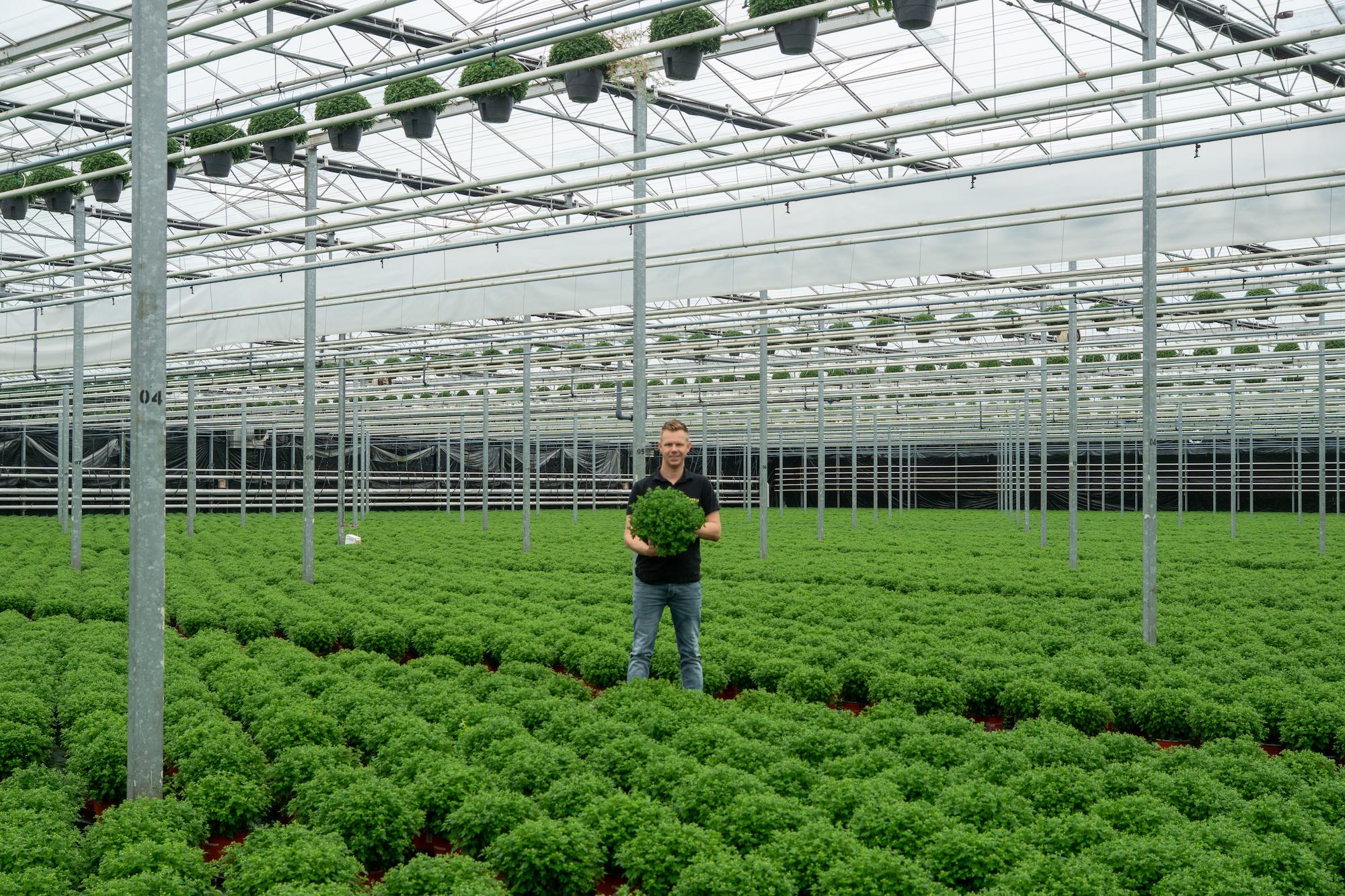
Coen Wouters
Own product lines as a differentiator
A key characteristic of Plant Nursery Wouters is working with its own product lines, such as Festival Colours. “That is a very deliberate choice”, says Coen. “With our own line, we can steer much more effectively on composition, quality, and appearance. We put together mixes that make sense for the consumer and work well together.”
“We are not dependent on a single supplier. We choose what fits best per crop and per product. That makes us both flexible and distinctive.” Extra attention has also been given to the Festival Colours line: the use of slow-release fertilisers ensures consumers enjoy the product for longer. “It may seem like a detail, but those kinds of choices really make the difference.”
Precision in propagation
In the greenhouse, everything revolves around control and precision. Especially during the propagation phase, nothing is left to chance. “That’s where the quality of the final product begins”, Coen underlines. “That’s why we invest heavily in our machinery and in the layout of our propagation departments.”
Dehumidification, lighting, floor heating, fans and modern misting and spraying systems ensure young plants receive exactly what they need. Sowing and potting are largely automated, although flexibility remains essential. “We work with many different pot sizes. That requires machines that can be converted quickly. Efficiency is important, but agility is just as crucial.”

Smart screen use for quality and energy
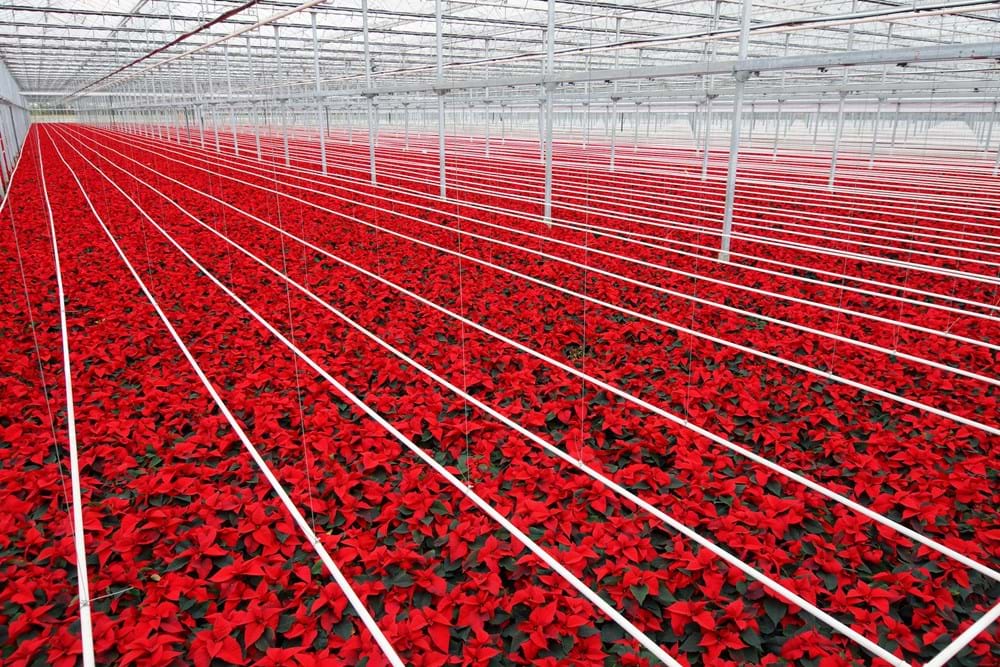
Depending on the location, single or double screen installations have been installed. In the new greenhouse, a double screen is standard. “For certain crops, such as poinsettias, regulating day length is essential”, Coen explains. “With a blackout screen, we can steer flowering very precisely.”
Energy: flexible and future-oriented
When it comes to energy, Kwekerij Wouters consciously opts for flexibility. The company uses biomass heating, CHP, solar panels and (when necessary) gas. “Gas is really a backup for us”, says Coen. “We rely on alternatives as much as possible.”
The company also responds to grid congestion by taking electricity from the grid during peak moments and converting it into heat. “That way, you help both the grid and yourself.” With around 1,100 solar panels, the company generates a large share of its electricity needs during the summer months.
Sustainable growing, step by step
Biological and green crop protection is also receiving increasing attention. In poinsettias, parasitic wasps are used to control whitefly, and various trials are underway with green solutions against thrips and fungal diseases. The company is also looking at more sustainable substrates and improved waste separation. “As a business, you have to take responsibility”, Coen says.
“Je moet als bedrijf verantwoordelijkheid nemen. Niet alles kan in één keer, maar je kunt wel blijven verbeteren.”
People make the difference
With crop specialists, technical engineers, drivers, sales staff, and team leaders, Kwekerij Wouters is an important employer in the region. Added to this is the Cash & Carry, which florists, and garden centers (especially in spring) eagerly visit. “We really value that local contact”, says Coen. “You immediately see what you’re doing it for.”
Successful seasonal switch
Looking back, Nusery Wouters can speak of a successful poinsettia season. “That crop has now been completed”, Coen explains. “The greenhouses were cleared and immediately filled again.” At present, the greenhouses are full of violas for spring, along with the propagation of other spring crops. “That rapid switch is typical of our company. We work with clear seasonal peaks and ensure that each department is optimally prepared for the next crop.”