Go to main content
CS - Highlights - In Conversation With - Ronald Hoek.png

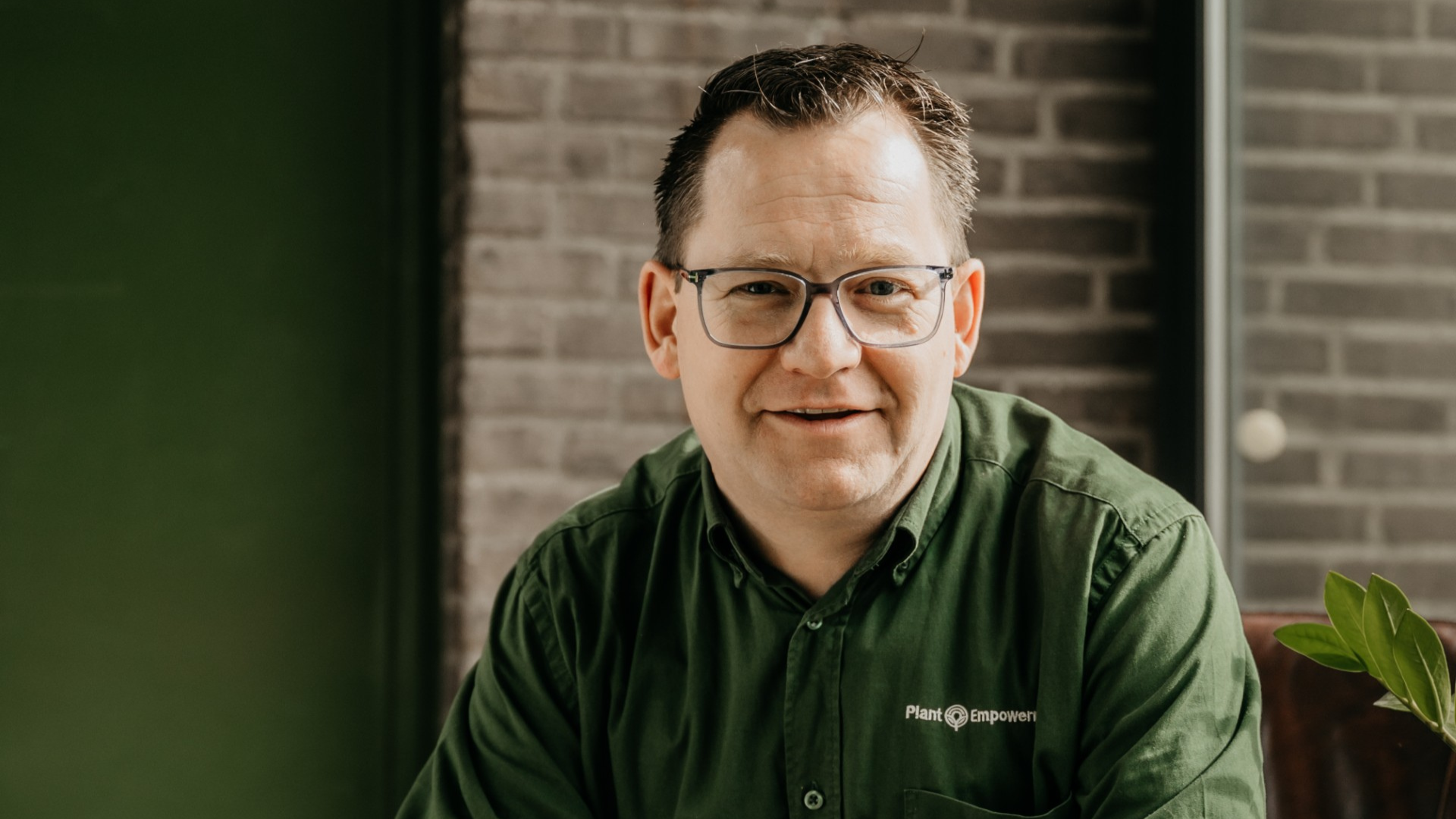
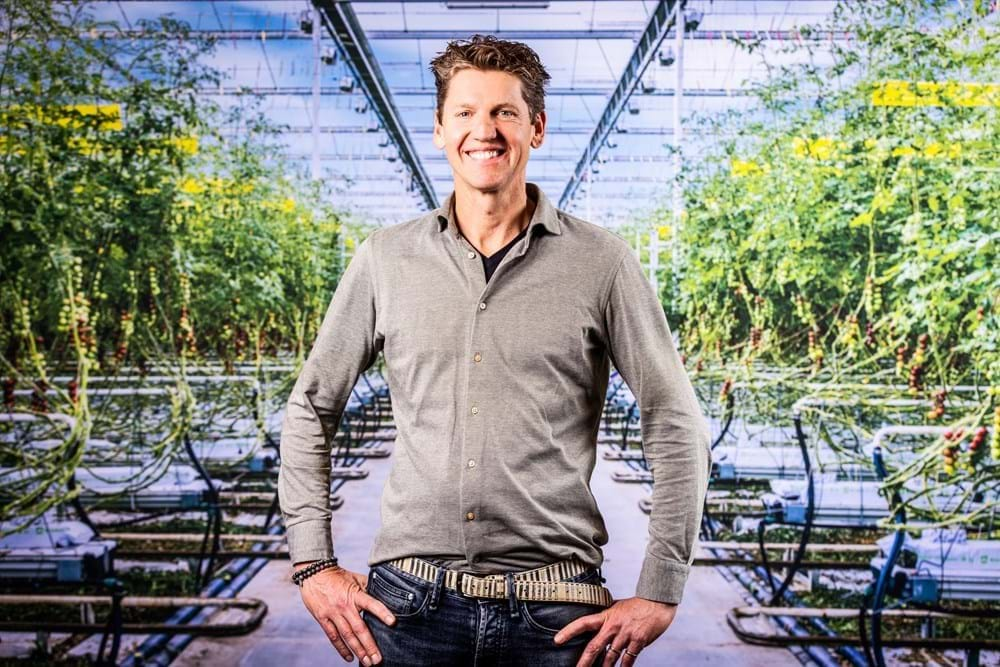
In conversation with… Ronald Hoek

Blue Radix recently won the prestigious GreenTech Innovation Award 2024 with their advanced AI system: integrated autonomous climate and irrigation control. This system, an improvement of the already successful Crop Controller, enables growers to manage their greenhouses more efficiently and sustainably. In this interview, we speak with Ronald Hoek, CEO of Blue Radix , about the developments, challenges and future vision of autonomous growing.


The first question comes from Anja Dieleman (senior researcher at WUR), with whom we spoke last time: “How can the research of a company like yours support developments towards autonomous cultivation control?”

Ronald: “A fun fact is that we originate from AgroEnergy, part of Eneco, focused on greenhouse horticulture. In 2017-2018, we looked at applying algorithms in greenhouses, not only for energy, but also for cultivation. This led us to the very first Autonomous Greenhouse Challenge of Wageningen University. This was an international challenge in which teams had to demonstrate that they could achieve good cultivation results without human intervention. This initiative and the subsequent collaboration with universities such as Wageningen and TU Delft have taught us a lot about sensors, data protocols and the practical application of AI in cultivation. Although the production and research greenhouses have different speeds, the insights from the research remain of great value to us.”


Crop Controller reduces climate computer work by 80% and significantly improves profit, yield and resource use. What inspired Blue Radix to develop Crop Controller?

Ronald: “It all started with our experience in autonomous energy control. We saw the complexity of daily energy decisions for growers and knew that AI could do a lot here. With the Autonomous Greenhouse Challenge, we saw the potential to expand this technology to crop control. The big goal was to relieve growers and tackle the shortage of experienced growers.”

“Growers have to make decisions about energy, climate, irrigation and crop protection every day. This is not only time-consuming, but also stressful, because there is more and more information and data to analyze and every wrong decision can affect the yield and quality of the crops. We wanted to offer a solution that not only analyzes and presents data, but also actually makes autonomous decisions based on that data.”

“The idea was to put the grower at the center and give them the tools to gain more control and insight, without the daily administrative burden. Our ambition was and is to support growers and future-proof the sector by implementing AI-driven technologies that are both sustainable and efficient.” 


What improvements do growers using Crop Controller see in their cultivation results?

Ronald: “Growers see various improvements. Such as better plant quality and higher production. By controlling the climate in the greenhouse more evenly, there is less chance of mildew and the plant grows better. This results in more production than with manual control. We have seen yields increase from 2% to 7%, depending on the circumstances. In addition, we save more energy than expected, between 13% and 18%. This is because AI can control and anticipate more accurately than humans, which leads to less energy consumption and more even plant growth.”


Many growers point to the improved work-life balance as a key benefit of autonomous growing. How does Crop Controller help to reduce the workload for growers and their employees?

Ronald: “Crop Controller reduces the need for growers to continuously monitor their greenhouse climate. We reduce the climate computer work by up to 80%. This means that they do not have to constantly look at their computer or phone to see if everything is going well. Growers report that they sleep better again and experience less stress. This has a positive effect on their work-life balance and makes the profession more attractive. Especially for older growers who are approaching retirement, this system offers a way to continue their work without overload.”


To what extent can autonomous cultivation contribute to the sustainability objectives of the greenhouse horticulture sector?

Ronald: “Autonomous growing contributes significantly to sustainability and this has only increased by integrating our autonomous climate control with autonomous irrigation. By controlling even more precisely, we prevent excessive use of energy and water. Our data shows that we save 15% energy and reduce water and fertilizer use by 10%. This is because AI systems such as Crop Controller continuously optimize and respond quickly to changes, minimizing waste. In addition, AI systems can adjust greenhouse climate settings much more gradually than when this is done manually. Where growers often work in fixed blocks, which can lead to inefficient peaks and troughs in energy consumption, AI ensures smoother transitions. This 'angular' control is therefore reduced, which not only saves energy but also benefits plant health because the conditions are more consistent and predictable.”


How do you see the role of the grower changing with the rise of autonomous cultivation?

Ronald: “In the future, growers will focus more on the big picture and less on daily operations. They will have more time to think about new cultivation methods, innovations and how to best grow their crops. It will become more important to be good at making data-driven decisions and understanding how AI systems work. The grower who works with autonomous cultivation, sits less behind the climate computer and works more on new strategies and technologies to improve their cultivation.”


Enjoyed this conversation?

Keep exploring insights from more industry voices.

CS - Highlights - In Conversation With - Tiffany Meijer.png

04 Nov 2025 | Industry voices

In conversation with...Tiffany Meijer

Tiffany Meijer is Project Manager International Trade – Horti & Food at InnovationQuarter and works at Rotterdam Partners . In her role at both organizations, she supports companies from South Holland in their international ambitions. From her office in The Hague or Rotterdam, she connects innovative Dutch companies with international markets.

CS - Highlights - In Conversation With - Arne van Aalst.png

26 Aug 2025 | Industry voices

In conversation with...Arne van Aalst

Arne van Aalst works as a Key Account Manager for North West Europe at Koppert. In this role, he liaises with major growers (associations) and subsidiaries in the Netherlands, Germany, Belgium, the UK, and Poland. He advises on sustainable solutions in integrated crop protection. In this MasterKas, he shares his vision on sustainable cultivation, European policy, and the future of the sector.

CS2026 Mirjam Boekestijn NL.jfif

26 Aug 2025 | Industry voices

MasterKas with Mirjam Boekestijn

With MasterKas, we speak to people who are shaping the greenhouse horticulture of tomorrow. For this edition, we talk to Mirjam Boekestijn, CEO of Dutch Greenhouse Delta. As the daughter of a family of growers, she grew up among greenhouses. Today, she plays an active role in strengthening the international position of the Dutch horticulture sector. Through Dutch Greenhouse Delta, she brings together companies, knowledge, and networks to create scalable global impact with sustainable food production.

CS - Ton Habraken in greenhouse.png

10 Apr 2025 | Industry voices

Energy and climate requires expert guidance

As greenhouse climate control systems become more complex, cultivation managers are seeking expert guidance more than ever. Many growers are not fully aware of how technologies like LED lighting, double screens, or vertical fans affect the greenhouse climate. They also may not know how to optimize these systems to maximize energy savings without compromising crop quality and production, says Ton Habraken, greenhouse climate expert at Svensson.

CS - Highlights - In Conversation With - Ronald Hoek.png

26 Sep 2024 | Industry voices

In conversation with… Ronald Hoek

Blue Radix recently won the prestigious GreenTech Innovation Award 2024 with their advanced AI system: integrated autonomous climate and irrigation control. This system, an improvement of the already successful Crop Controller, enables growers to manage their greenhouses more efficiently and sustainably. In this interview, we speak with Ronald Hoek, CEO of Blue Radix , about the developments, challenges and future vision of autonomous growing.

CS - Highlights - In Conversation With - Anja Dieleman.png

08 Aug 2024 | Industry voices

In conversation with… Anja Dieleman

Anja is a senior researcher in plant physiology at the Greenhouse Horticulture unit of Wageningen University & Research, with many years of experience in the field. She grew up on a farm in Groningen and initially studied agricultural plant cultivation at Wageningen, but switched to horticulture after discovering her passion for controlled plant growth. Since 2000, Anja has been with the Greenhouse Horticulture unit at Wageningen University & Research.

CS - Highlights - Gretchen Schimelpfenig - Industry Insights - Interview.png

10 Jul 2024 | Industry voices

In conversation with… Gretchen Schimelpfenig

Gretchen Schimelpfenig is one of those people who seem to fit more into their working week than many of us find time for in a month. She works with greenhouse owners on energy projects and accessing rebates and grants, and runs Cornell University’s GLASE Consortium on greenhouse lighting and control, speaks at green industry conferences, and plays first fiddle in the Hildegard String Quartet. From a Vermont forest home, she manages to combine an engineer’s optimism, with a deep-felt mission to reduce the climate impact of horticulture and the built world.

Peet.jpg

11 Jun 2024 | Industry voices

In Conversation with… Peet van Adrichem

He is still actively involved in HortiTech, but now that he is approaching retirement age, he mainly focuses on preparing 'his boys'. In our conversation with Peet van Adrichem we discuss how the company uses Dutch expertise worldwide to stimulate the agricultural sector.

CS - Highlights - Ad van Kester - In Conversation with - Netherlands - 2024.jpg

15 May 2024 | Industry voices

In conversation with… Ad van Kester

Short description about the story that will show as a preview on the card. Remember to tag the correct crop and climate challenges.

CS - Sjaak Bakker - Highlights - In Conversation With - 2024 - Netherlands.jpg

05 Apr 2024 | Industry voices

In conversation with… Sjaak Bakker

Sjaak Bakker was manager of the Greenhouse Horticulture and Flower Bulbs business unit at Wageningen University & Research (WUR) until the end of 2022. Although he recently retired, he is still actively involved in the work. WUR is currently renovating the greenhouses where research and tests are carried out. Due to his extensive experience and expertise, WUR has asked Sjaak to help coordinate these innovations, at least until the end of 2024. He is therefore still using his knowledge and skills to successfully lead this process.

CS - Hugo Plaisier - Cucumbers - Netherlands - Luxous

20 Mar 2024 | Industry voices

The NEN Test: A vital sign for growers with an ancient echo from 3000BC

Today’s NEN direct and diffuse light transmittance test helps growers get the best harvest, like a surprising echo of ancient wisdom from 5000 years ago. Then, stone age farmers in Ireland went to great lengths, and moved a lot of soil and stone, to devise a test that would reveal the precise timing of the Spring and Autumn equinox.

CS - Highlights - Hubspot side panel.png

19 Mar 2024 | Industry voices

In conversation with… Philippe-Antoine Taillon

For this edition of our “In Conversation with…” series, we interviewed Philippe-Antoine Taillon, Expert Advisor in Greenhouse Vegetable and Fruit Crops with the Quebec Ministry of Agricultural Fisheries and Food of Quebec (MAPAQ). A Quebecois who travels the state advising growers on the support they can receive as part of Quebec’s Feed our World policy, Philippe-Antoine Taillon has a key role in implementing three rebate policies for regional horticulture. When we sat down with him, he began by answering the question our previous interviewees asked most often.