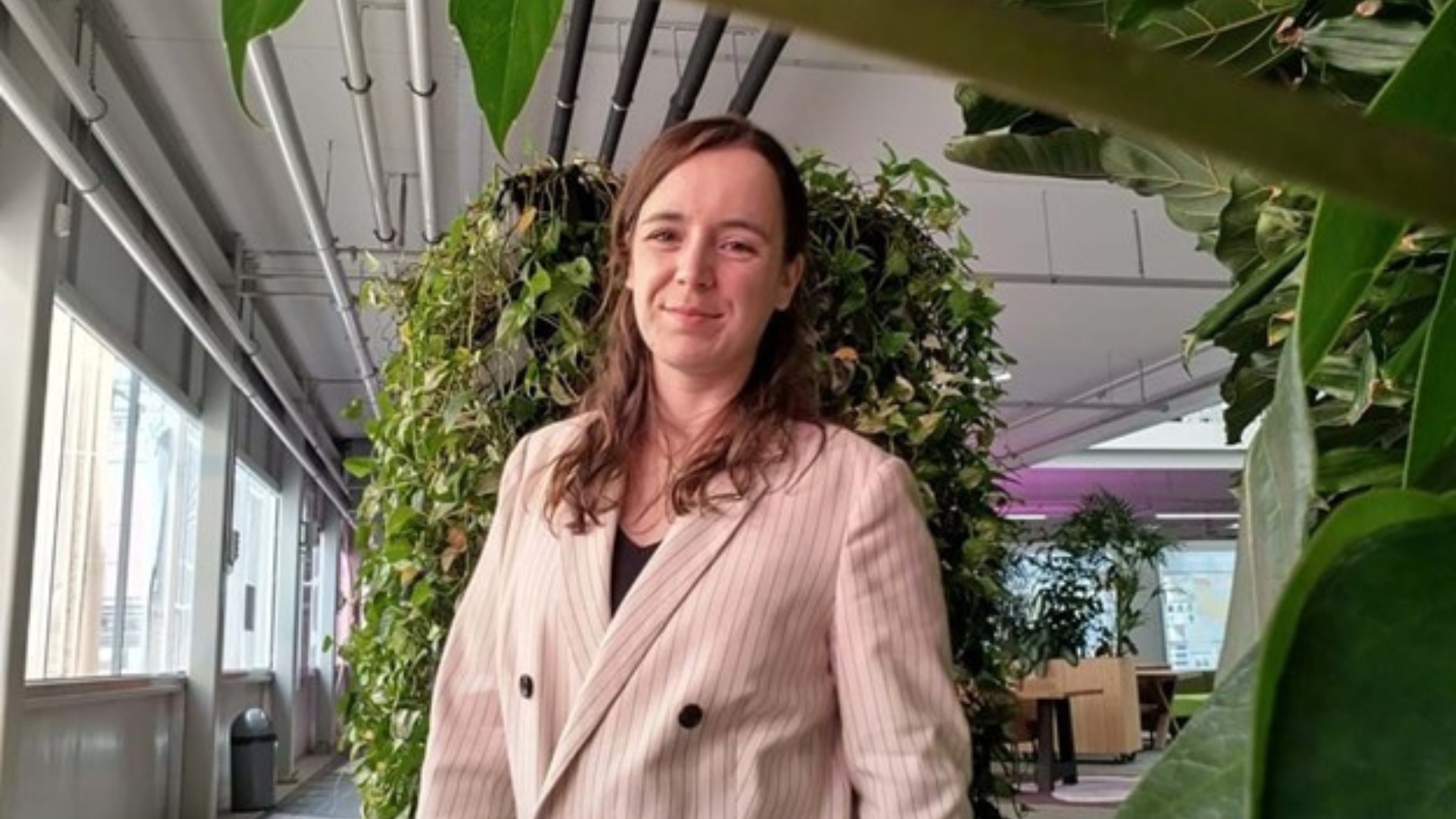
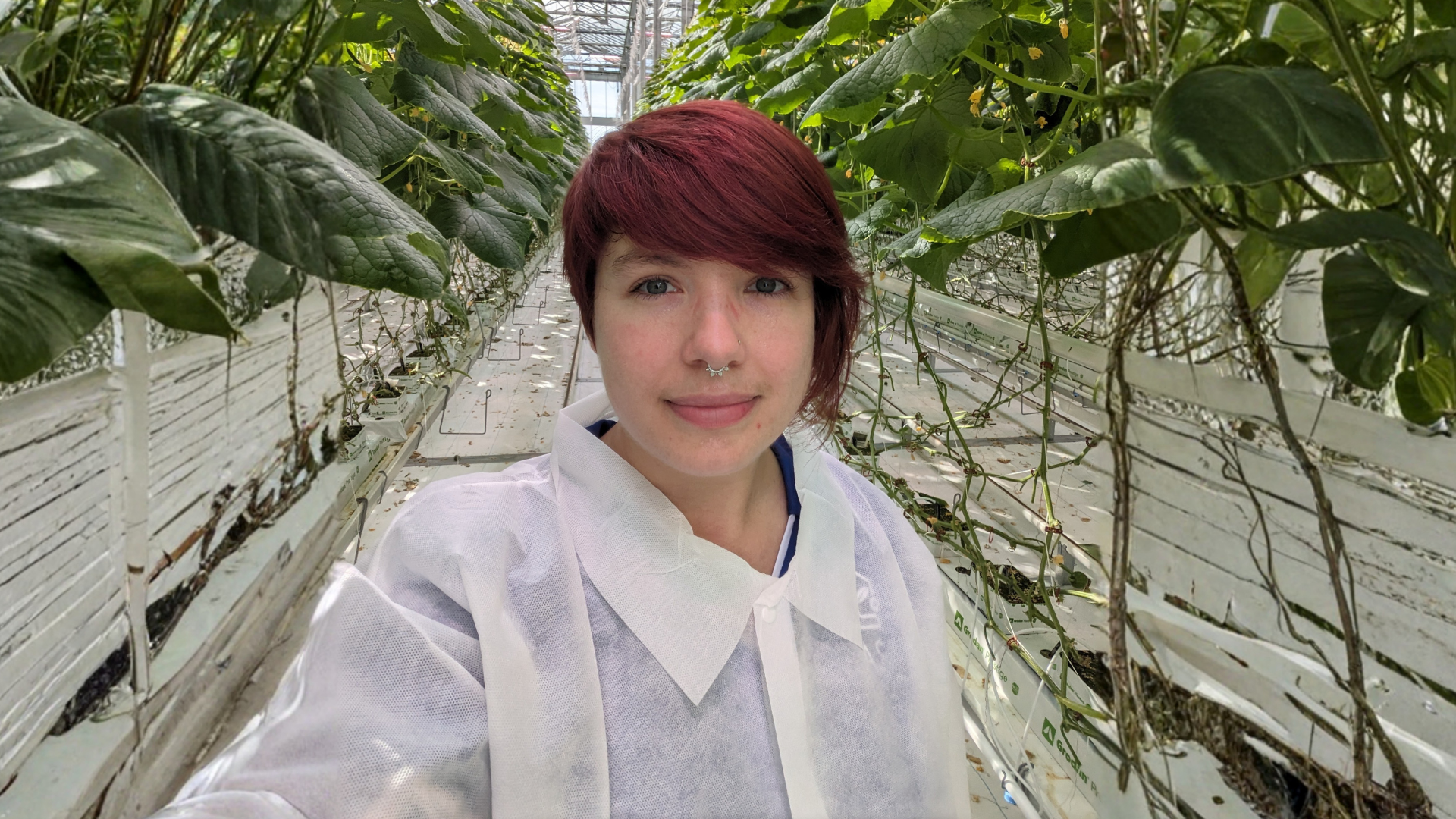
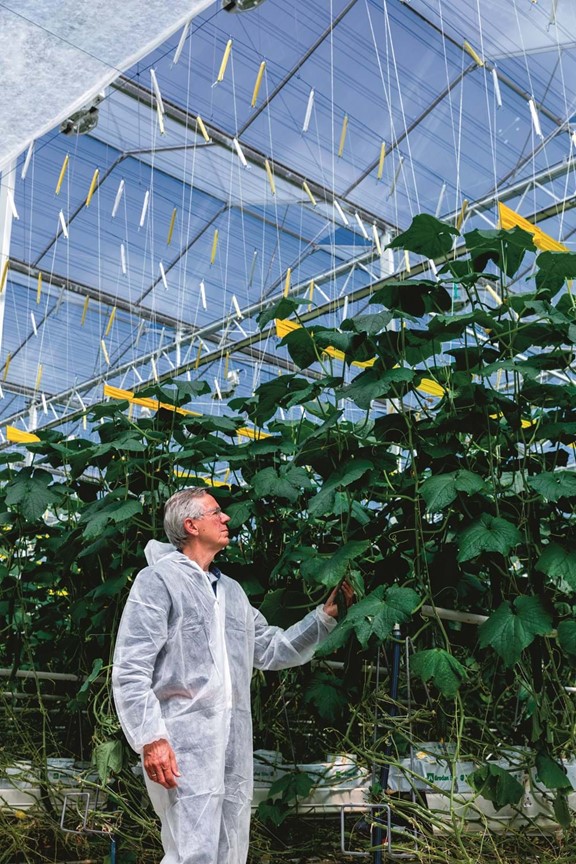
Anja is a senior researcher in plant physiology at the Greenhouse Horticulture business unit of Wageningen University & Research. She has many years of experience in the greenhouse horticulture sector and has specialized in the physiology of greenhouse crops. “I originally came from a farm in Groningen and went to Wageningen to study agricultural plant cultivation there,” she says. “But in my first year I discovered greenhouse horticulture, a sector where much more control is possible and where you can really steer the growth of plants. That really appealed to me, so I switched to horticulture and have remained there ever since.” Since 2000, Anja has worked at what is now the Greenhouse Horticulture business unit of Wageningen University & Research.
The first question comes from Peet van Adrichem, with whom we spoke with for a previous article: “In what ways has your research contributed to a more environmentally friendly approach in greenhouse horticulture, for example through adjustments in the greenhouse climate and cultivation methods?”
Anja: “If you look at the last few years, the application of LED lighting has been a major change in horticulture. We showed more than ten years ago that you can grow perfectly well under LED lighting. We investigated how to adjust the greenhouse climate to the lighting and which spectra work best for different crops. When the energy crisis hit, that knowledge was already available and growers were able to switch quickly. That has ensured that the electricity consumption of growers using lighting has been reduced by half and that is of course a major step towards sustainability.”
How do you see the role of technology and innovation in reducing the environmental impact of the greenhouse horticulture sector?
Anja: “Technology and innovation play a huge role. Think of new greenhouse cover materials, cooling techniques and dehumidification systems. But every technological innovation has consequences for the crop. That is why it is important that we understand and integrate both the technological side and the physiological side of cultivation. For example, when switching to LED lighting, we had to adjust the climate strategy to keep production up to standard. Another good example is the research that is currently underway into techniques to extract and dose CO2 from the outside air and what this means for the crop. The physiological knowledge and application of technology must go hand in hand to help the sector further.”
How have the new systems you have developed, such as autonomous growing systems and LED lighting, helped improve the growth and production of greenhouse crops?
Anja: “The greenhouse horticulture industry has seen a continuous increase in production over the years thanks to innovations such as CO2 dosing, substrate use and better varieties. The switch to LED lighting, for example, has increased lighting levels and enabled year-round production. This ensures continuity in retail supply and a stable product price. Another example is the spectrum research on chrysanthemums, where we discovered that adding far-red light at the end of the day significantly improved the elongation of the plants. These types of innovations help growers to better control the growth and quality of their crops.”
What are some of the biggest challenges you've encountered in developing energy-efficient manufacturing systems?
Anja: “One of the biggest challenges was adjusting the temperature strategy when switching to LED lighting. LED lamps emit less heat than traditional SON-T lamps, which meant that we had to adjust the temperature regimes to optimize the growth of the plants. This also had consequences for the evaporation and the CO2 concentration in the greenhouse. In addition, finding the right light spectrum for different crops was a challenge. What works well for tomatoes does not necessarily work for roses or cucumbers. This requires a lot of research and experimentation.”
How do you see the future of autonomous cultivation systems in greenhouse horticulture?
Anja: “I believe that autonomous cultivation systems will determine the future of greenhouse horticulture. We are just working on projects around autonomous cultivation. And although there are no companies that are 100% autonomous yet, I see that the sector is becoming increasingly interested in data-driven cultivation. The mindset of the sector is changing. More and more companies are looking at how they can use data to optimize their cultivation processes. In five years, we will probably see that elements of autonomous cultivation are applied as standard in many companies.”
As a senior researcher you have contributed to numerous studies. Can you give an example of a successful project that has contributed to sustainability and efficiency in greenhouse horticulture?
Anja: “A good example is our work on spectrum research with chrysanthemums, which I referred to earlier. We discovered that adding far-red light at the end of the day significantly improved the elongation of the plants. This had a huge impact on the production and quality of the chrysanthemums. Another example is the development of new techniques for dehumidifying greenhouses, based on the concepts of closed greenhouses. Although fully closed greenhouses are not yet widespread, the research into these systems has led to improved methods for controlling cultivation and climate that are now being applied in practice as Het Nieuwe Telen (HNT).”
“That’s often the case with the research we do. We like to work with a point on the horizon, with the ideal situation in mind. This ideal situation is often not achieved in one go; it takes time. But elements from the research can often already be applied in practice, so that we can innovate step by step.”
How important is it for you to do research that can be directly applied by growers?
Anja: “I think it is even essential. And also a lot of fun to do. We work closely with growers and suppliers to ensure that our research can be directly applied in practice. We involve growers in our projects from the start, so that we know for sure that we are working on solutions that are really needed and that improve their business operations. This ensures that the knowledge is transferred and applied quickly and effectively.”
What role do suppliers and technology companies play in your research?
Anja: “Suppliers and technology companies are important partners in our research. We have a network of companies within our Club of 100, with whom we regularly consult and collaborate. These companies supply the technologies and materials that we need for our research. In addition, they help us translate the results of our research into practical applications. This partnership ensures that we always have access to the latest innovations and that we can quickly test and implement them in practice.”