As greenhouse climate control systems become more complex, cultivation managers are seeking expert guidance more than ever. Many growers are not fully aware of how technologies like LED lighting, double screens, or vertical fans affect the greenhouse climate. They also may not know how to optimize these systems to maximize energy savings without compromising crop quality and production, says Ton Habraken, greenhouse climate expert at Svensson.
Good advice is expensive, and that can be taken in more than one way. Another saying goes that good advice is worth its weight in gold. This is especially true when it comes to energy savings and greenhouse climate control. With the rise of LED lighting, double screens, and dehumidification, greenhouse cultivation has become more demanding than ever. Margins are tighter, and growers often operate at the limits of what is possible. As operations scale up and sustainability becomes a priority, entrepreneurs must use every tool available to stay profitable, while also managing increasing regulations and taxes.
Ton Habraken: "The CO2 footprint needs to be reduced; this is becoming increasingly clear to producers of food and 'green happiness.' To maintain your 'license to produce' in the future, you really need to take steps in that direction. You can also make distinctions in this regard right now. Ultimately, of course, everyone needs to move towards that. But the solution isn't the same for everyone."
Re-arranging the puzzle
Every situation requires a customized solution, Habraken continues. “You can't just say, 'I'll install a screen and be done with it.' It really has to be a company-specific, location-specific approach. It's not 'one size fits all'; we provide truly customized solutions. We're familiar with all the energy-saving measures and can help minimize consumption. We also link this to the switch from HPS to LED. We're well-informed about the consequences this has for the greenhouse climate. Ultimately, it's also about the right product quality. That can't be compromised. Yet, we see that some companies that have switched to full LED aren't achieving the production or quality they were used to. The puzzle we had figured out reasonably well with HPS, partly because there was an abundance of energy, now needs to be solved again with less energy input and maintaining product quality. That requires increasingly more expertise.”
Reducing the climate impact
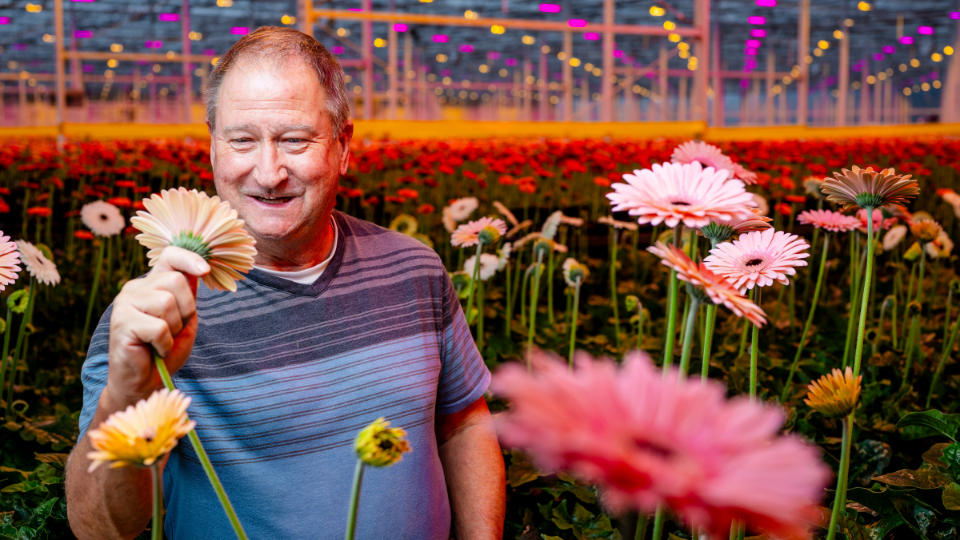
Energy efficiency is an increasingly important topic as customers are now asking for the CO₂ footprint per kilogram, stem, or pot. This data provides valuable insight into the greenhouse horticulture sector’s progress toward reducing CO₂ emissions. Thanks to productivity improvements in the Netherlands, significant strides have already been made. Habraken: “When my father was still growing gerberas, a grower with 250 or 300 stems per m² was already a top performer. Nowadays, certain varieties achieve 800 to 900 stems per m². Energy consumption per m² hasn't changed much, but per plant, it obviously makes a huge difference.”
From gaps to dehumidification
Higher light levels with LEDs require more heat in the greenhouse, which leads to increased humidity. However, gaps in the energy screen combined with a minimum pipe are undesirable because they consume too much energy. That's where dehumidification comes in, Habraken continues. "Growers sometimes think too simply: I'll take one lamp down and hang another, that's it. But suddenly all sorts of strange things start happening in the greenhouse that they hadn't noticed before. Temperature fluctuations arise in the greenhouse. These can be resolved depending on your strategy; which temperatures you use, which pipe network, and in what order. The whole climate and energy puzzle needs to be reworked. You can't keep doing what you've always done. You really have to take a thorough look at each individual company: what's the best solution and what order will I implement it in?"
Vertical ventilation
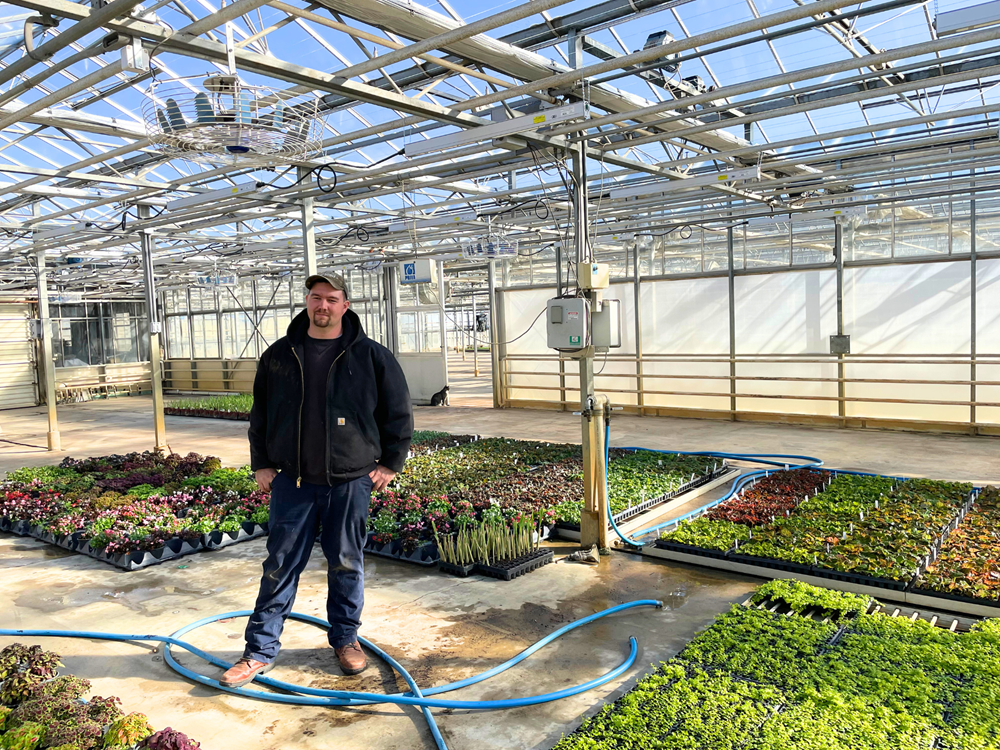
Vertical fans can lead to even greater energy savings, because growers can keep their screens fully closed for more hours. "Besides saving energy, we also know how to keep the climate and the plants active, and how to optimize natural light levels. This is possible with the PARperfect screen solution, among other things. Perhaps not so much in vegetable cultivation, but certainly in ornamental horticulture. Growers who use this tell us they can grow faster and with higher quality. Because they no longer have to move plants from a dark corner to a brighter spot, it also saves labor."