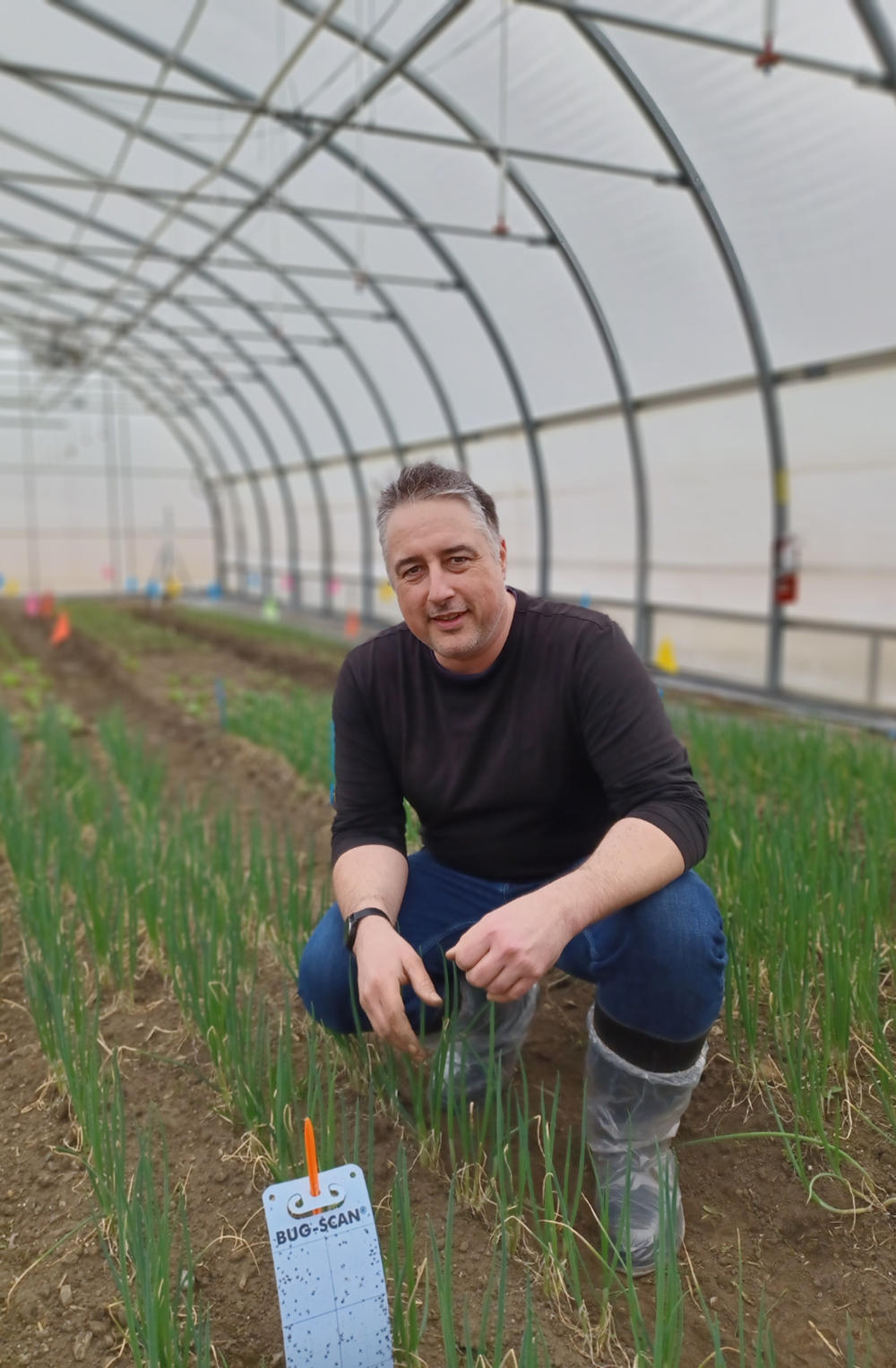
For this edition of our “In Conversation with…” series, we interviewed Philippe-Antoine Taillon, Expert Advisor in Greenhouse Vegetable and Fruit Crops with the Quebec Ministry of Agricultural Fisheries and Food of Quebec (MAPAQ). A Quebecois who travels the state advising growers on the support they can receive as part of Quebec’s Feed our World policy, Philippe-Antoine Taillon has a key role in implementing three rebate policies for regional horticulture. When we sat down with him, he began by answering the question our previous interviewees asked most often.
What’s the trend you are you seeing? What’s new in your part of the world as we enter 2024?
Philippe-Antoine: Well, I’m seeing lettuce troughs with robots moving through them instead of workers. But I suspect that’s a global trend rather than just here in Canada. In Quebec, we are trying to develop the most sustainable greenhouse industry we can with the latest technology in order to increase performance and competitiveness -- and reducing labor requirements is part of that. So there’s a lot of automation and robotization. We also want to promote the energy transition toward the cleaner energies and technologies.
What is the energy supply mix in Quebec and what does cleaner energy mean in your context?
PA: In Quebec, 94% of our electricity comes from hydroelectricity, so it's almost carbon neutral. We want to stimulate the greenhouses that burn natural gas, to go to electricity or to residual forest biomass. We have a lot of forestry in Quebec. We have also have a lot of waste heat coming from other industries, so we try to relay that.
How about the greenhouse product trend?
PA: We see a move to organic greenhouse production. We are trying to maintain our leadership in Canada in organic greenhouse production, as well as increasing the diversity of greenhouse crops and production models.
Could you describe your role at MAPAQ today?
PA: I started in greenhouses and today, if I possibly can, I get out to do field work a couple of days a week. At least in the summer. At the Ministry, I’m a second line expert. So I’m not the first person you’ll likely speak to if you call in with a query to MAPAQ. But if it requires some digging, some analysis, I’m the guy who gets called in.
You have a grower background. Can you tell us about that?
PA: I started with studying Agronomy at Laval University near Quebec and then took a grower job at Savoura greenhouses in St-Janvier near Mirabel, before falling in love with the sheer scale of the large Ontario greenhouses. I worked there as a grower for Lakeside Produces there. I moved back to Quebec and worked for Productions Horticoles Demers, another major grower with a large presence in the region. After that, some consulting. I was at the educational Institute for Agro Food Technology before I started at the Ministry five years ago.
How does an average day look for you?
PA: Well, I have a role in coordinating some networks and curating research and documentation that comes into the Ministry. Sometimes if there’s an emergency, I’ll be part of getting a phytosanitary alert out to growers fast. With the research materials coming in, I try and get them in front of people and energize the network. We do quite a lot of Youtube videos and webinars. Then I will be travelling to growers around the state as well.
What about your work with the State’s rebates for growers?
PA: I advise on three important rebate programs for growers in Quebec. The first one is the Ministerial Initiative for the Development of Greenhouses and Hoophouses. It’s about helping growers become more efficient or diversifying their offering to serve local markets. Then there is the Greenhouse Business Development Support Program. It’s intended for bigger greenhouse businesses who can supply regional or national markets and who wish to increase their volume production. Finally, we have programs that can support growers to make major investments by granting the business a reduction on their energy bills.
I help growers complete their applications and offers guidance as they complete the process of applying. Essentially any new business establishment or upgrade of the structure of existing greenhouses can be supported.
What are these programs actually worth to growers?
PA: The first program is worth about CAD $50,000 and the second is worth about CAD $600,000 per project. That leaves the third program where a power bill is rebated, and that’s worth up to 40% of a grower’s power bill over the lifetime of the program. Growers can make several applications, but their funding will be capped at the total levels above.
For growers hoping to apply for rebates, what are the key dates people need to know?
PA: We will do our best to get even a last-minute application through, but funding from the Initiative for the development of Greenhouses or Hoophouses ends on February 1, 2025. The Greenhouse Business Development Support Program closes for its current funding period on December 15, 2024.
What is the Feed our World policy?
PA: It’s the central policy that drives our actions and programs in horticulture in the region. It was introduced in 2018. It calls for greater food autonomy and sustainability. Part of it is a so-called bio food policy, which has four pillars. The first is to promote local purchasing – think schools and hospitals buying local, organic produce.
The other pillars include boosting local production, including greenhouse production, and into this come also measures to promote labor productivity gains through, for example, the introduction of robotization in the greenhouse. Finally, this measure supports the shift towards more sustainable agriculture, fishing and aquaculture.
The greenhouse parc here is quite old and we want to see it modernized. We’re looking for an increase in production while reducing greenhouse gas emissions.
Do you sometimes come across Svensson in your work?
PA: Absolutely. If you install a screen, you can see a reduction of 15-25% of energy consumption, and that’s an investment that can be made when a greenhouse is new, or in an old greenhouse. Light abatement is also an actively supported area.
Everything is eligible for a grant, including the kind of fans that take interior humidity and put it up above the screen.
It sounds like you still enjoy getting your fingers in the dirt?
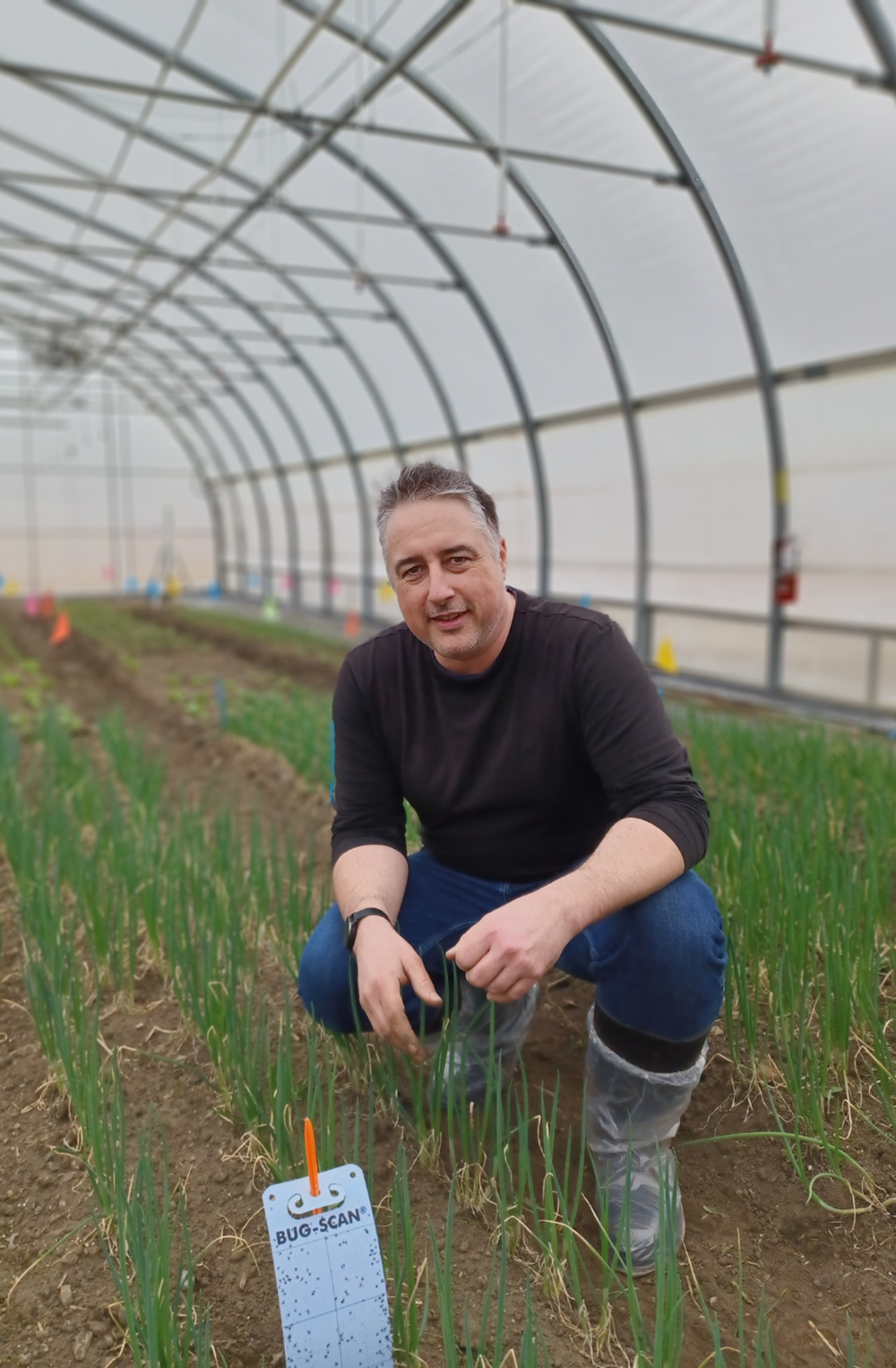
PA: Yes, right now I’m helping some projects where we are working with these small farms that just operate during the summer, say from March to October, and in the winter they aren’t in use. Remember it can be -30°C outside.
But we’re experimenting with putting a lot of covers on the crops, and that’s kind of new. We’re taking measurements and seeing what can survive, how much water they draw up, which is almost nothing. And yet, the spinach, lettuce and celery is quite amazing, and we get green onions and kale. We are studying what diseases affect them during the winter, because there is very little research on this.
“We are testing using hoophouses through the winter months without heating,” he says.
“It’s amazing how some of the greens cope. The kale is amazing for the temperatures it can cope with,” he says.
Philippe-Antione’s passion for growing is still quite clear as we round up the discussion. He mentions his attendance at Quebec Grower Summit hosted by the ACT Group, where he was a speaker in September 2023, and also his interest in local growing initiatives that push some boundaries of what’s possible.