In greenhouse horticulture, data is everywhere. Sensors measure more than ever, climate computers are becoming smarter, and systems are taking over more and more routine tasks. But that doesn’t automatically make growing easier. On the contrary, according to René Beerkens, this era actually demands more plant understanding, sharper choices, and better collaboration.
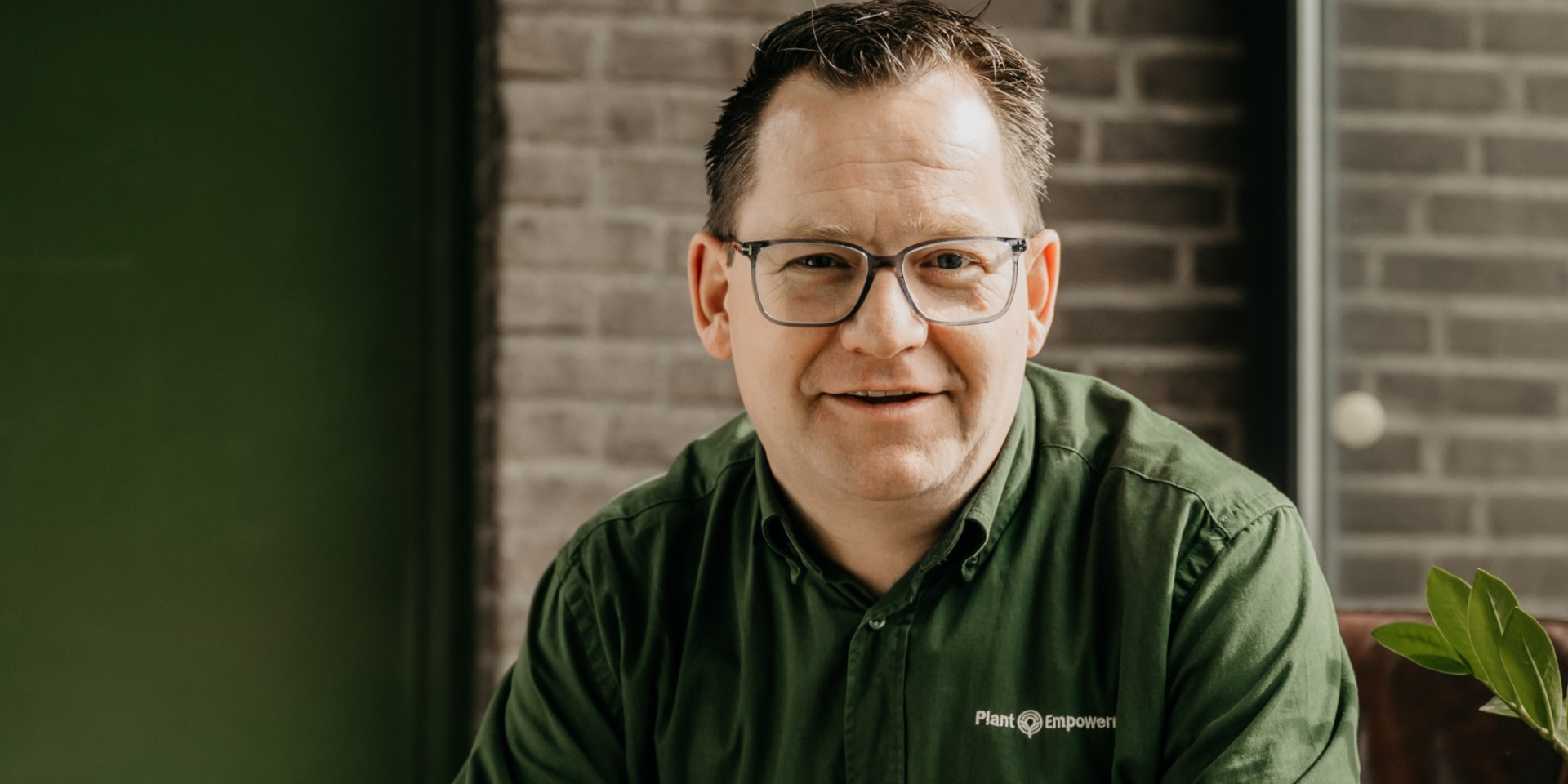
René has been working at Hoogendoorn Growth Management for over 25 years and is active as a Senior Data Driven Growing Specialist. In addition, he is involved as a consultant with Plant Empowerment, where experts from different companies collaborate on a better, more sustainable, and more resilient way of growing. In this MasterKas, he shares his vision on data-driven growing, the changing role of the grower, and the future of technology in the greenhouse.
You’ve been working at Hoogendoorn for over a quarter of a century (congratulations!) and have experienced many developments. Looking at today: how would you characterize this moment in greenhouse horticulture?
René: “We are not in an ordinary phase. The sector is being challenged on all fronts at once. Energy prices, labor shortages, sustainability requirements, legislation and regulations, and digitalization are all coming together. As a result, growing is becoming not only more complex, but also less forgiving. In the past, you could sometimes compensate with experience or intuition. Now it simply has to be right. What I mainly see is scarcity of inputs. Energy is not a given. Labor is not a given. Resources to quickly correct are not a given. At the same time, everything is under a magnifying glass. Public opinion, legislation, and societal pressure play a much bigger role than before.”
“For me, the common thread over the years has been: try to turn every feeling into a number. Not because intuition is worthless, but because it needs to be transferable. In the past, you would walk through the greenhouse with someone and say: this is good or this is not good. But everyone carries their own backpack of experience. Put ten growers and ten advisors in the same greenhouse and you get twenty opinions. Data helps make that conversation more objective.”
“The winners of tomorrow are not the growers who have the most data. They are the growers who can translate data into sharp decisions.”
We have more and more data, sensors, and systems at our disposal. But are we using them well enough? Where do you see the biggest gap between technology and practice?
René: “We don’t have a shortage of technology. We have a shortage of application. Everyone is measuring more, but that doesn’t automatically mean better control. The problem is not the sensors. The problem is often the lack of coherence. Climate, water, energy, and labor are still too often viewed separately, while in the greenhouse they constantly influence each other. Technology without plant understanding creates a false sense of security. You need to know why you are doing something—not just that you can measure it. Otherwise, you end up with dashboards full of numbers but no direction. Then you drown in data.”
“There is also a mindset shift. Growers are increasingly introduced to multiple new techniques at once: LED, new screens, new sensors, different climate strategies. It’s like getting into a Formula 1 car and having to set a lap record on your very first lap. Margins are thin, the room for error is small. Then you need not only technology, but also knowledge, structure, and a team of experts to make the right decisions.”
Data-driven growing sounds logical, but in practice it is often complex. What is, in your view, the biggest misconception?
René: “The biggest misconception is that data takes over the work. That’s not true. Data supports your decision-making. In reality, it mainly shows where things are going well and where they are going wrong. Data-driven growing does not mean measuring more. It means steering more precisely. You first need to be clear about your goals. Only then does data have value.” “You sometimes see growers thinking: if I measure more, I automatically become better. But without a strategy, you just get more numbers. Do you want more production? More plant stability? Less energy? More resilience? More consistent quality? That choice determines how you steer with data. That’s why cultivation strategy is becoming increasingly important. Not adjusting every five minutes, but steering toward goals. How much light does the plant receive? What temperature fits that? How do you balance water, energy, and assimilate production? That’s where data really adds value.”
As systems take over more, what remains the role of the grower?
René: “The grower is not becoming an operator, but a director. Fewer buttons, more decisions. Systems can take over routine tasks, but that makes insight even more important. In standard situations, anyone can produce. The difference is made when things deviate. That’s when you see who truly understands the plant. Technology increases the gap between average and top-level growing.” “I think systems will increasingly offer scenarios. If energy prices rise, what’s the best strategy? If labor is limited, what’s plan B? If the weather changes, how do you anticipate?
Technology can help enormously, but the entrepreneur still makes the final decision. Advisors may specialize, but the grower sees the whole picture: production, labor, energy, market, risk, profit. You need someone who looks at everything and decides: this fits my business.”
Within Plant Empowerment, everything revolves around balance. What makes this approach powerful?
René: “It brings you back to the core: balance in energy, water, and assimilates. No tricks—just understanding. That makes it powerful and sometimes confronting. Its strength is the integrated view. Not just temperature, water, or light—everything is connected. Growers who apply this well achieve more stable and predictable results.” “What’s becoming more important is plant resilience. Not reacting to problems, but preventing them by strengthening the plant. That fits the shift toward more sustainable growing.” “In the Netherlands, we’re very good at maximizing production. We can push a plant to its limits. But now we need to maintain margins to keep plants healthy and resilient. Just like people—you can work 60 hours a week for a while, but not forever.”
“With data, we can anticipate. The plant doesn’t know tomorrow will be sunny—we do. That’s the real value: not just reacting, but anticipating.”
Looking ahead 5–10 years, what will change most?
René: “We are moving from analyzing to predicting. Not just explaining what happened, but steering what will happen. That’s a fundamental shift. AI and models make it possible—but only if you understand the plant. Technology can process complexity in ways humans can’t. Energy, weather, labor, water, nutrients—everything is constantly changing. You can’t manage that purely on intuition anymore.” “But technology should not replace humans. The strength is in the combination. Let technology calculate and predict. Let the grower understand and decide.
Climate computers will increasingly become advisory tools. Not just controlling, but suggesting scenarios. The system may give the first opinion—but the final decision will always remain with the human.”