Go to main content
Peet.jpg

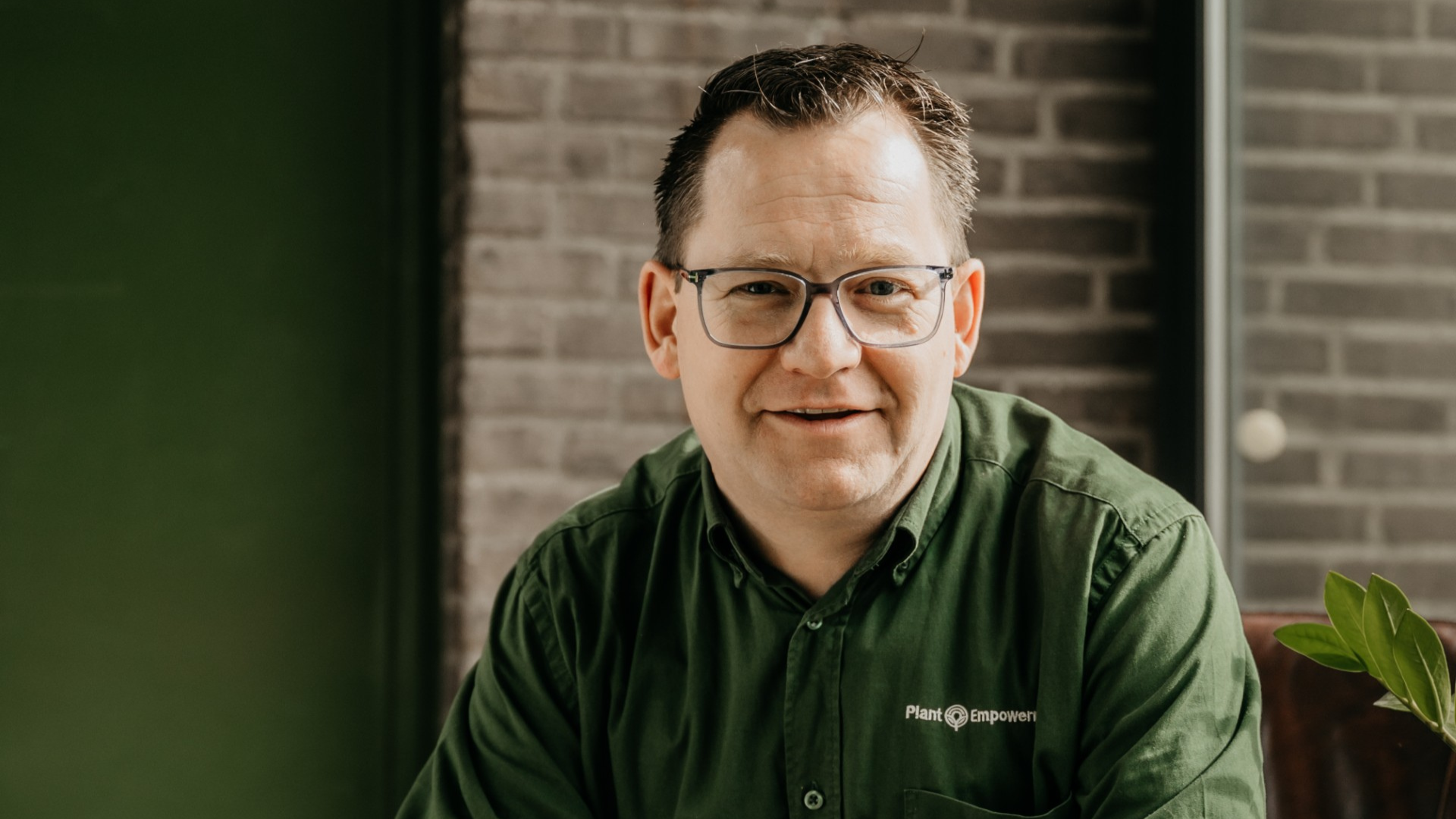
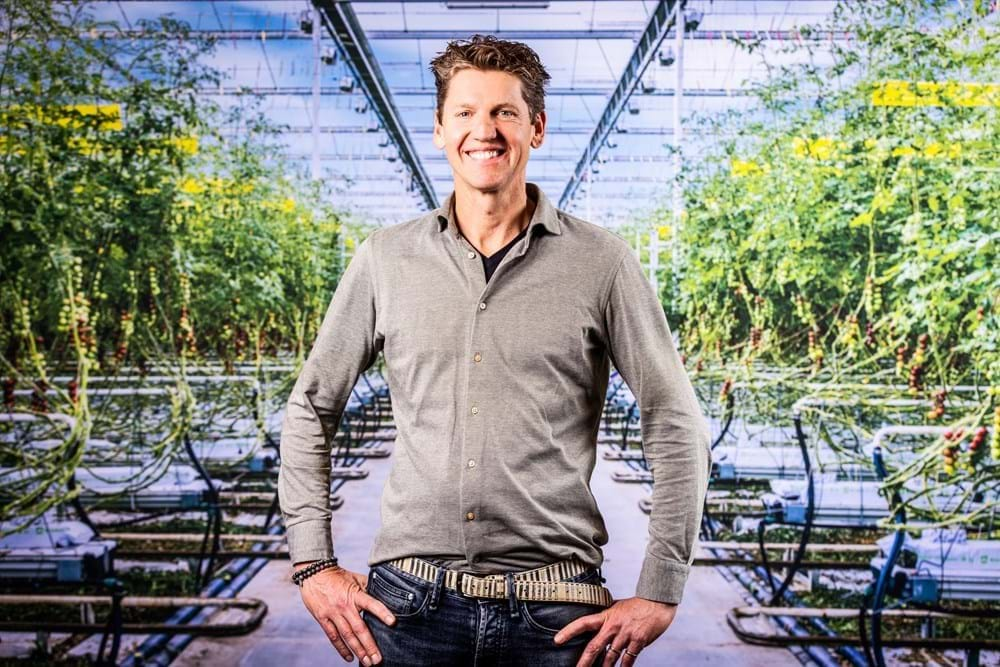
In Conversation with… Peet van Adrichem

He is still actively involved in HortiTech, but now that he is approaching retirement age, he mainly focuses on preparing 'his boys'. In our conversation with Peet van Adrichem we discuss how the company uses Dutch expertise worldwide to stimulate the agricultural sector. Peet emphasizes the crucial role of knowledge building, training and consultancy for foreign growers. We also explore some innovation projects that Peet is proud of and discuss the importance of collaboration within the horticultural sector. In short, a fascinating conversation that is steeped in knowledge and experience.


The first question comes from Ad van Kester, with whom we had a conversation last time: As director of HortiTech, how do you use Dutch expertise to stimulate the growth of the agricultural sector worldwide, especially in tomato cultivation?

Peet: “We build knowledge by conducting research and offering training and consultancy to foreign growers. We try to convey practical knowledge, such as which systems and facilities are really needed, depending on different climate zones. We also train people who are new to the sector and provide remote support by implementing and monitoring self-regulatory systems. Our role is to bridge the gap between theoretical knowledge and practical application. This automatically applies to the tomato cultivation that Ad is talking about, because this is simply the largest market abroad in which the Netherlands is a major player.”


Can you name a project or initiative with which HortiTech is helping the sector grow worldwide through Dutch knowledge?

Peet: “Plantonomy from Priva is a good example of this. Thanks to monitoring and sensors, growers can be helped remotely. Plantonomy is a cloud-based service that uses smart algorithms to control the plant's water management in a biorhythm. As a result, the crop follows a daily rhythm of water absorption and transpiration, resulting in even development of all plant parts and uniform production and quality. The system autonomously controls the climate and watering by controlling the settings relating to irrigation, ventilation, heating, shading and lighting of the greenhouse every five minutes.” 

“I very much believe in the future of AI. Plantonomy is a good example of this. We are involved in several projects aimed at collecting, analyzing and using data to improve efficiency and productivity in the greenhouse horticulture sector.” 


Speaking of innovation, you have collaborated on many innovation projects in your long career, which ones are you most proud of?

Peet: “One of these is our joint initiative with Metazet to promote growing on gutters. When we set up the demo nursery in 2000, this technology was hardly in use. But through our work, in combination with study clubs and collaborations with various parties, we have successfully introduced this method into large-scale horticulture. This has had an enormous impact and has made large-scale cultivation possible.” 

“I am currently also working on a great project that I am proud of and strongly believe in, namely growing tomatoes in water. This innovative system is completely closed, so that the water is efficiently reused. This allows us to grow in a cleaner and more sustainable way than with traditional methods such as rock wool. We are also exploring the possibility of using brackish water, which is an interesting option, especially outside the Netherlands. We are working together with Growers United on this project, and we are very happy with that.” 

“In the past, during the time of the demo nursery, we worked together with participants. That model is different now. Now we choose the best partner to work with for each project, which works very well.” 


How important is collaboration in the horticultural sector?

Peet: "Very important. We live in a time when people seem to be in more of a hurry, but that is not always a good thing. Sometimes it is important to take some time, visit each other and talk. We still take the time to sit down and talk to each other. I believe that by bringing people together, both young and old, and providing space for open conversations and exchange of ideas, we can work together to build a sustainable future for the horticultural sector.” 

“In the new greenhouse that we are currently working on, we consciously create a pleasant corner with nice chairs and good coffee. This invites you to sit down and talk to each other. This is how we often come up with new ideas. If you know that someone is working on a certain project, you can do something with it.” 


With the growing demand for sustainable agricultural practices, how do you see the role of the greenhouse horticulture sector in reducing the environmental impact of food production? And what role does HortiTech play in this?

Peet: “We do much more in greenhouse horticulture than everyone thinks. With the CHPs we use alone, we supply a considerable amount of electricity back to the grid. Not everyone sees or knows that. To make the impact of this visible, you would actually have to turn off all CHPs on a day when the Netherlands needs it, such as the second day of Christmas, for example. Of course we are not going to do that, but just to indicate what the impact is.” 

“At HortiTech we take sustainability and technological innovation for granted and this applies to many greenhouse horticulture companies. There are still gardeners who grow the old-fashioned way and pollute. That is a shame and unnecessary. Added together, that's still about 500 hectares in total. And that's quite big. That must and can be done differently, but that will take time. And don't forget that in the meantime 'green' companies are constantly increasing.”

Enjoyed this conversation?

Keep exploring insights from more industry voices.

CS - Highlights - In Conversation With - Tiffany Meijer.png

04 Nov 2025 | Industry voices

In conversation with...Tiffany Meijer

Tiffany Meijer is Project Manager International Trade – Horti & Food at InnovationQuarter and works at Rotterdam Partners . In her role at both organizations, she supports companies from South Holland in their international ambitions. From her office in The Hague or Rotterdam, she connects innovative Dutch companies with international markets.

CS - Highlights - In Conversation With - Arne van Aalst.png

26 Aug 2025 | Industry voices

In conversation with...Arne van Aalst

Arne van Aalst works as a Key Account Manager for North West Europe at Koppert. In this role, he liaises with major growers (associations) and subsidiaries in the Netherlands, Germany, Belgium, the UK, and Poland. He advises on sustainable solutions in integrated crop protection. In this MasterKas, he shares his vision on sustainable cultivation, European policy, and the future of the sector.

CS2026 Mirjam Boekestijn NL.jfif

26 Aug 2025 | Industry voices

MasterKas with Mirjam Boekestijn

With MasterKas, we speak to people who are shaping the greenhouse horticulture of tomorrow. For this edition, we talk to Mirjam Boekestijn, CEO of Dutch Greenhouse Delta. As the daughter of a family of growers, she grew up among greenhouses. Today, she plays an active role in strengthening the international position of the Dutch horticulture sector. Through Dutch Greenhouse Delta, she brings together companies, knowledge, and networks to create scalable global impact with sustainable food production.

CS - Ton Habraken in greenhouse.png

10 Apr 2025 | Industry voices

Energy and climate requires expert guidance

As greenhouse climate control systems become more complex, cultivation managers are seeking expert guidance more than ever. Many growers are not fully aware of how technologies like LED lighting, double screens, or vertical fans affect the greenhouse climate. They also may not know how to optimize these systems to maximize energy savings without compromising crop quality and production, says Ton Habraken, greenhouse climate expert at Svensson.

CS - Highlights - In Conversation With - Ronald Hoek.png

26 Sep 2024 | Industry voices

In conversation with… Ronald Hoek

Blue Radix recently won the prestigious GreenTech Innovation Award 2024 with their advanced AI system: integrated autonomous climate and irrigation control. This system, an improvement of the already successful Crop Controller, enables growers to manage their greenhouses more efficiently and sustainably. In this interview, we speak with Ronald Hoek, CEO of Blue Radix , about the developments, challenges and future vision of autonomous growing.

CS - Highlights - In Conversation With - Anja Dieleman.png

08 Aug 2024 | Industry voices

In conversation with… Anja Dieleman

Anja is a senior researcher in plant physiology at the Greenhouse Horticulture unit of Wageningen University & Research, with many years of experience in the field. She grew up on a farm in Groningen and initially studied agricultural plant cultivation at Wageningen, but switched to horticulture after discovering her passion for controlled plant growth. Since 2000, Anja has been with the Greenhouse Horticulture unit at Wageningen University & Research.

CS - Highlights - Gretchen Schimelpfenig - Industry Insights - Interview.png

10 Jul 2024 | Industry voices

In conversation with… Gretchen Schimelpfenig

Gretchen Schimelpfenig is one of those people who seem to fit more into their working week than many of us find time for in a month. She works with greenhouse owners on energy projects and accessing rebates and grants, and runs Cornell University’s GLASE Consortium on greenhouse lighting and control, speaks at green industry conferences, and plays first fiddle in the Hildegard String Quartet. From a Vermont forest home, she manages to combine an engineer’s optimism, with a deep-felt mission to reduce the climate impact of horticulture and the built world.

Peet.jpg

11 Jun 2024 | Industry voices

In Conversation with… Peet van Adrichem

He is still actively involved in HortiTech, but now that he is approaching retirement age, he mainly focuses on preparing 'his boys'. In our conversation with Peet van Adrichem we discuss how the company uses Dutch expertise worldwide to stimulate the agricultural sector.

CS - Highlights - Ad van Kester - In Conversation with - Netherlands - 2024.jpg

15 May 2024 | Industry voices

In conversation with… Ad van Kester

Short description about the story that will show as a preview on the card. Remember to tag the correct crop and climate challenges.

CS - Sjaak Bakker - Highlights - In Conversation With - 2024 - Netherlands.jpg

05 Apr 2024 | Industry voices

In conversation with… Sjaak Bakker

Sjaak Bakker was manager of the Greenhouse Horticulture and Flower Bulbs business unit at Wageningen University & Research (WUR) until the end of 2022. Although he recently retired, he is still actively involved in the work. WUR is currently renovating the greenhouses where research and tests are carried out. Due to his extensive experience and expertise, WUR has asked Sjaak to help coordinate these innovations, at least until the end of 2024. He is therefore still using his knowledge and skills to successfully lead this process.

CS - Hugo Plaisier - Cucumbers - Netherlands - Luxous

20 Mar 2024 | Industry voices

The NEN Test: A vital sign for growers with an ancient echo from 3000BC

Today’s NEN direct and diffuse light transmittance test helps growers get the best harvest, like a surprising echo of ancient wisdom from 5000 years ago. Then, stone age farmers in Ireland went to great lengths, and moved a lot of soil and stone, to devise a test that would reveal the precise timing of the Spring and Autumn equinox.

CS - Highlights - Hubspot side panel.png

19 Mar 2024 | Industry voices

In conversation with… Philippe-Antoine Taillon

For this edition of our “In Conversation with…” series, we interviewed Philippe-Antoine Taillon, Expert Advisor in Greenhouse Vegetable and Fruit Crops with the Quebec Ministry of Agricultural Fisheries and Food of Quebec (MAPAQ). A Quebecois who travels the state advising growers on the support they can receive as part of Quebec’s Feed our World policy, Philippe-Antoine Taillon has a key role in implementing three rebate policies for regional horticulture. When we sat down with him, he began by answering the question our previous interviewees asked most often.