Our current priorities include employee wellbeing, energy conservation, automation, and overall operational efficiency.
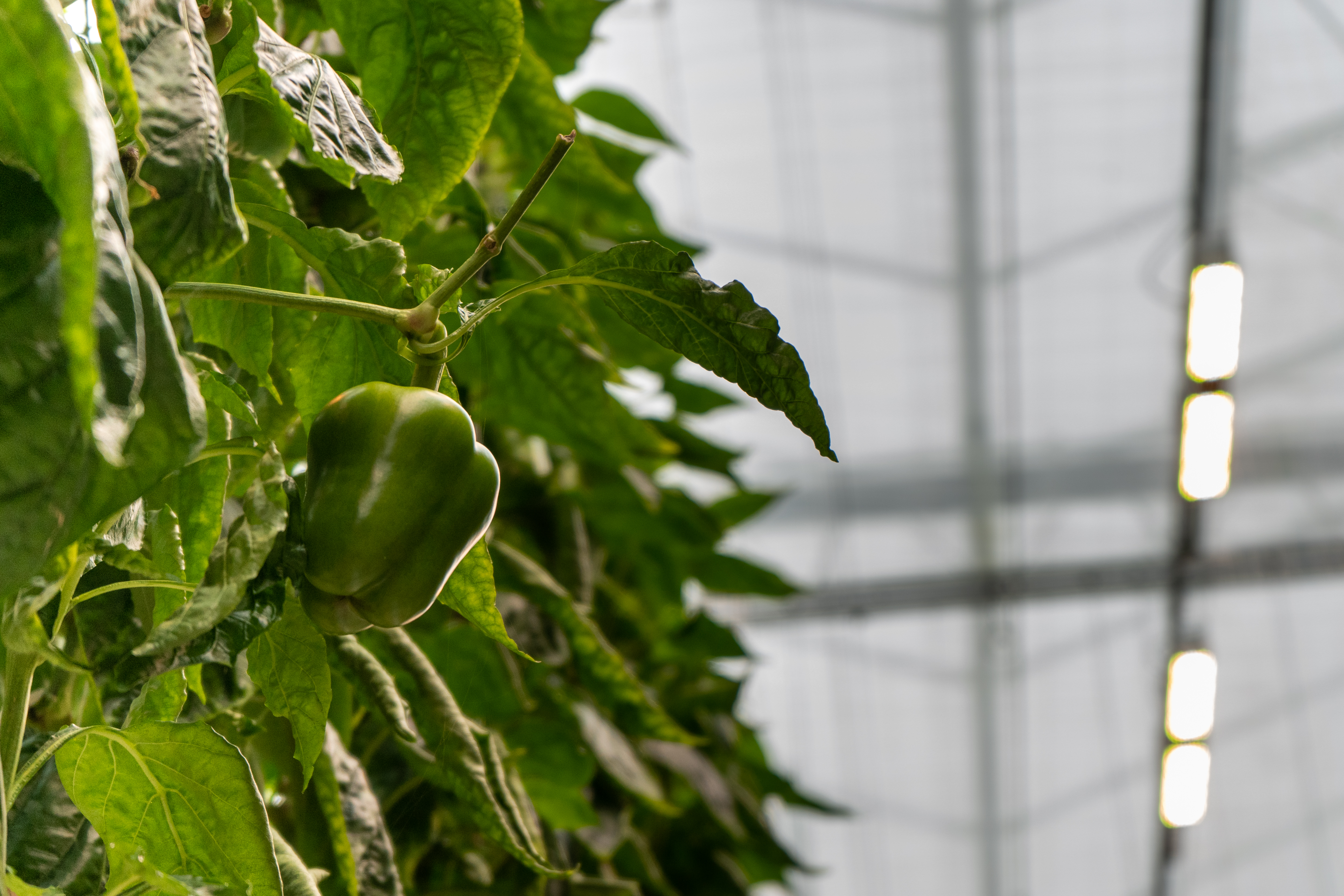
Allegro Acres: An industry trailblazer in sustainability
-
- Greenhouse:
- Allegro Acres
-
- Location:
- Ontario, Canada
-
- Crop:
- Peppers
-
- Challenge:
- Energy savings, sustainability
-
- Solution:
- Luxous 1147 FR, Obscura 9950 FR W
JUNE 2022
Allegro Acres began in 1999 with a clear vision: to produce healthy, locally grown food while minimizing environmental impact. More than two decades later, the family-owned pepper greenhouse in Ruthven, Ontario, is widely recognized as a leader in sustainable greenhouse horticulture. Gene Ingratta, president of Allegro Acres, shares what sustainability means in practice, the challenges Canadian growers face, and how the industry can continue moving forward.
Laying the groundwork for a sustainable future
Over the years, Allegro Acres has taken a comprehensive approach to sustainability, embedding it into daily operations and company culture. From energy management to employee wellbeing, sustainability is treated as a long-term commitment rather than a single initiative.
“For Allegro Acres, sustainability is rooted in who we are and how we do business,” Ingratta explains. “Our current priorities include employee wellbeing, energy conservation, automation, and overall operational efficiency.”
A defining characteristic of the operation is its focus on continuous improvement. “We’re always trying to be better than we were yesterday,” says Ingratta. “That means learning, adapting, and finding ways to produce the highest-quality peppers as efficiently as possible.”
Measurable gains in efficiency and resource use
This proactive mindset has delivered tangible results. After installing a LUXOUS 1147 screen for energy conservation and light diffusion, combined with an OBSCURA 9950 screen for light abatement, Allegro Acres achieved a 40 percent reduction in heating energy use.
Lighting efficiency has also improved significantly. By adopting Sollum’s smart dynamic LED lighting for winter pepper production, the greenhouse recorded a 40 percent reduction in electricity consumption compared with traditional HPS systems.
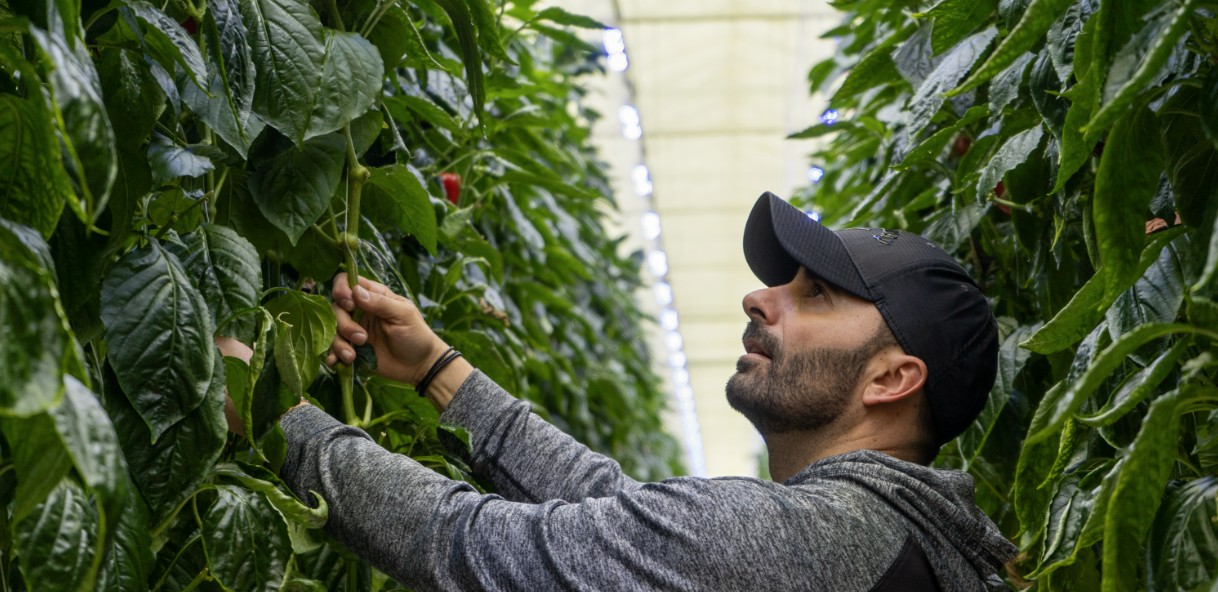
Further gains came through improved crop protection and monitoring. The installation of insect netting, together with an Ecoation monitoring system, has allowed the team to detect pest pressure earlier and respond more precisely with biological controls. This has reduced overall crop protection inputs while improving consistency.
To address water use and summer working conditions, Allegro Acres also installed a high-pressure misting system from MJ TECH. The system helps moderate greenhouse temperatures while improving comfort for both plants and employees.
Balancing ambition with real-world challenges
Despite these successes, Ingratta emphasizes that building a sustainable greenhouse business is not without obstacles. “It’s in everyone’s best interest to be as sustainable as possible to ensure a better future,” he says. “But the main challenges are cost, availability, and access to accurate, transparent information.”
While government programs can help offset some of these barriers, Ingratta believes further support is needed to accelerate adoption across the industry.
Looking ahead: Sustainability beyond the greenhouse
Although Allegro Acres remains highly focused on refining its own operations, Ingratta sees broader opportunities for improvement across the horticultural sector. “We need greater emphasis on employee wellbeing, both physical and mental,” he says. “We also need a more cooperative produce sales sector, better public understanding of locally grown food, more locally developed automation and technology, and stronger government support.”
Curious what made it all work?