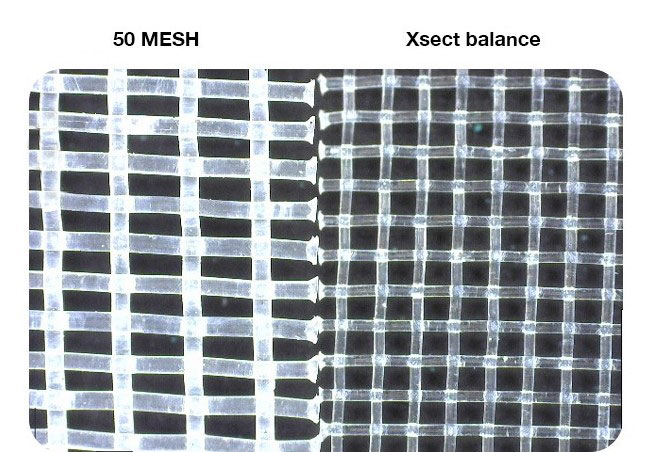
We concluded that the investment pays for itself in less than one year. As a result, we decided to replace the 50 mesh net with Xsect Balance in three additional greenhouses.

Improved climate, yield and quality at Villa Santiago
-
- Greenhouse:
- Agroindustrias Villa Santiago
-
- Location:
- Nayarit, Mexico
-
- Crop:
- Tomato, Pepper
-
- Challenge:
- Insect protection, temperature
-
- Solution:
- Xsect Balance
AUGUST 2021
Agroindustrias Villa Santiago has improved greenhouse climate control and increased both yield and fruit quality in grape tomato production by installing the Xsect Balance insect net. Located in Compostela, in the state of Nayarit, Mexico, the operation faced persistent challenges with high temperatures and excess humidity in passive greenhouses during the summer production season.
Growing tomatoes in a warm, humid climate
Agroindustrias Villa Santiago is part of the Chaparral Agricultural Group and is dedicated to the production of tomatoes and peppers in multiple varieties. The company places a strong emphasis on food safety, product quality, and the continuous improvement of its production processes.
To meet summer market demand, a greenhouse project was established in Compostela, a region characterized by warm temperatures year-round. During the hottest months, from April through June, average maximum daytime temperatures can reach 35 °C. Rainfall occurs throughout the year, with the highest precipitation typically recorded between June and October.

While the region does not experience the extreme summer temperatures seen in other Chaparral production areas, the combination of frequent rainfall and consistently warm days creates a challenging environment for greenhouse tomato cultivation. Managing temperature and humidity balance inside passive greenhouses is therefore a critical concern.
Evaluating a high-airflow insect net
With technical guidance from Invermex, Agroindustrias Villa Santiago evaluated a Svensson climate improvement proposal focused on replacing conventional insect netting. The team compared the climatic performance of Xsect Balance, a high-porosity insect net designed to maximize airflow, with the conventional 50 mesh net commonly used in perimeter vents.
A controlled trial was conducted over two consecutive production cycles, from 2019 to 2021. The objective was to assess whether improved air exchange could reduce temperature and humidity levels without compromising pest exclusion.
Trial setup and climate monitoring
Three greenhouses were monitored during the trial. Two were equipped with Xsect Balance insect nets—one with air recirculation and one without—while a third greenhouse using conventional 50 mesh netting served as the reference.
Ambient temperature and relative humidity were recorded using a climate monitoring unit. Monthly evaluations were carried out, combining climate data with yield measurements expressed in kilograms per square meter.
Measured climate improvements and yield gains
The results showed clear climatic benefits from the high-porosity net. Both greenhouses equipped with Xsect Balance consistently recorded lower temperatures than the greenhouse using conventional mesh. During the hottest hours of the day, temperature reductions ranged from 3 to 5 °C.
Yield performance also improved. Greenhouses fitted with Xsect Balance achieved yield increases of 12 percent in the 2019–2020 cycle and 10 percent in the 2020–2021 cycle compared with the conventional 50 mesh greenhouse.
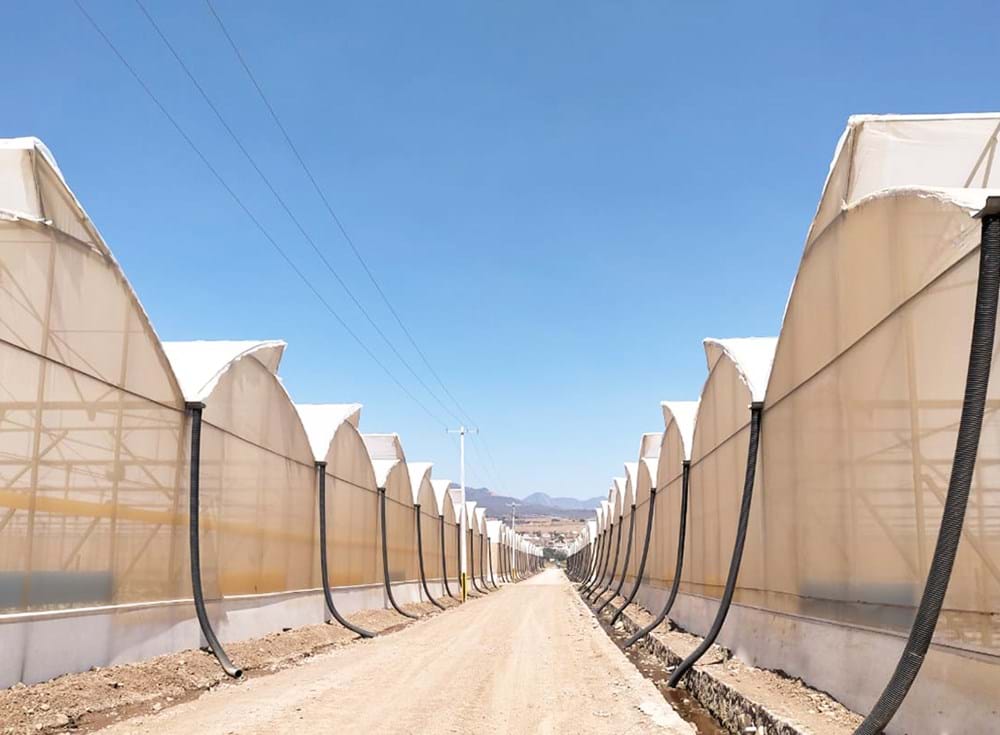
When compared with earlier production cycles from 2015 to 2019, overall performance increased by more than 30 percent, representing a gain of approximately 4.5 kg per square meter. These improvements were attributed to better temperature management and humidity control made possible by the higher airflow of the Xsect Balance net.
A fast return on investment
Based on the trial results, Agroindustrias Villa Santiago evaluated the return on investment for the technology. “We concluded that the investment pays for itself in less than one year,” says Carlos Palazuelos, general manager of Agroindustrias Villa Santiago. “As a result, we decided to replace the 50 mesh net with Xsect Balance in three additional greenhouses.”