

Yes, I do. Every transformation starts with an individual or a small group developing something new—a solution to a problem or an answer to a latent demand. In that phase, it’s all about innovation and creating value, often financed through R&D and supported by a higher price.
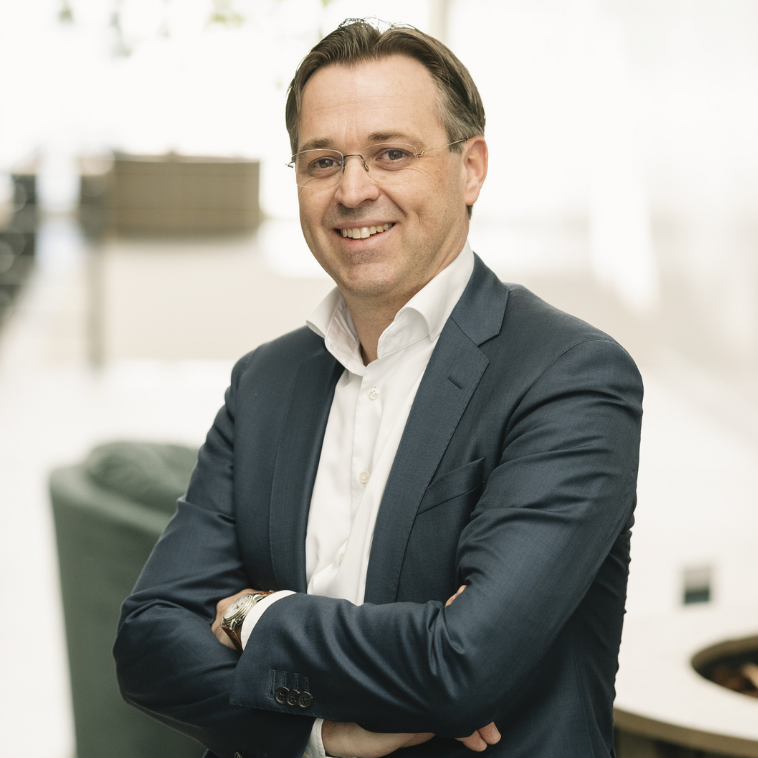
MasterKas with Marck Hagen
In the previous edition of MasterKas, Mirjam Boekestijn of Dutch Greenhouse Delta spoke about the future of greenhouse horticulture. One of her key observations: collaboration is no longer a choice, but a necessity. In doing so, she touches on a sensitive issue: the need for consolidation and cooperation within the sector. But what does that mean in concrete terms?
In this edition, we continue that conversation with Marck Hagen, CEO of Atrium Agri—an organization that is itself right in the middle of this development. With a group of specialized companies under one roof, active in everything from greenhouse construction to climate and data, Atrium Agri is working on scale, collaboration, and international strength, without losing its entrepreneurial spirit.
We increasingly hear that consolidation in greenhouse horticulture is inevitable. Do you see it that way as well?
“But once an innovation is adopted more broadly, the game changes. It’s no longer just about the idea, but about scale: production, sales, and organization need to become more efficient to make it affordable and accessible to a larger market. That’s where consolidation emerges—not as a goal in itself, but as a logical result of a sector maturing. Anyone who wants to remain relevant must be able to scale up or position themselves smartly within that scale.”
Atrium Agri itself is a consolidation of companies. How do you ensure you benefit from economies of scale without losing entrepreneurship?
Within Atrium Agri, we also want to remain relevant to the market. We do this by developing and introducing innovations that solve concrete problems for the customer. Think of reducing the use of raw materials and energy, but also limiting the labor and knowledge required on the work floor. Automation, robotization, and greenhouse management are still in their infancy, but are already proving their value.
“As you mentioned, by being a group of companies, we are both complementary and resilient. We can oversee and serve the full spectrum without taking unmanageable risks. At the same time, the underlying companies retain their own dynamics and entrepreneurial spirit.
“In addition, we organize a number of functions at the group level, such as Finance, Legal, HR, and ICT. By allowing these to work efficiently together, we leverage economies of scale and can take joint steps more quickly, for example in deploying new (AI) tools in our processes. This allows us as a group to achieve efficiency gains that individual companies would find more difficult to realize.
“Both elements reinforce each other: scale enables investment and acceleration, while entrepreneurship ensures that new opportunities continue to be identified and seized.”
We live in a ‘geopolitical pressure cooker.’ What does that mean in concrete terms for the greenhouse horticulture sector and the way companies organize themselves?
For us, it means that new projects are under significant pressure. Insurers and financiers are very cautious, causing project starts to be delayed due to paperwork—particularly around risk mitigation, which has become an additional focal point. Risk has suddenly become the first item on everyone’s agenda, whereas in the past, the sector would only start discussing potential obstacles at the end of the process. Due to uncertainty, you have to operate carefully and vigilantly.
“On the other hand, opportunities are also emerging, as more production will need to be localized and the global population continues to grow.”
Many companies still operate fairly autonomously. Where do you think the sector is missing opportunities when it comes to collaboration?
Marck: “Autonomous? In a sector historically full of cooperatives? From purchasing groups to sales organizations, and from financial structures to advocacy, our sector isn’t really that autonomous. The real question is whether we are still using the right forms of collaboration. Are they based on today’s economic reality? Are they driven by subsidies, sustainability, market demand, or efficiency? In practice, these factors are increasingly intertwined.
“In a rapidly changing world, this calls for a different way of collaborating—more integrated, with shared responsibility across the entire chain. There are still plenty of opportunities here, particularly in better aligning interests and organizing scale and knowledge more intelligently.
“At the same time, you also see that not everyone moves along. Those who neither lead nor consciously follow will ultimately fall behind. Sometimes that is a conscious choice an entrepreneur is at peace with, but it doesn’t make the outcome any less finite.”
Demand is shifting from individual products to complete solutions. How does that change the role of companies in the value chain?
Marck: “This is also a shift driven by the market itself. Our home market, specifically the Netherlands, is no longer a real growth market for Atrium Agri. At the same time, we are involved in the majority of projects still being realized here. Innovation happens precisely here, because we are constantly challenged to the limit on themes such as labor, knowledge, energy, and raw materials.
“The customer in the Netherlands often knows very well what they want. Our role there is more about refining and optimizing—making things just that little bit better. In that context, it’s more often about price and trust in specific expertise than about fully outsourcing a project.
“Internationally, we see a different picture. There, demand is clearly shifting toward multiscope and turnkey projects, where one party is responsible for the whole under an EPC contract. That fundamentally changes the role of companies in the value chain.
“It’s no longer just about supplying a component, but about organizing and managing the entire project and the associated risks. That requires scale, collaboration, and integration of knowledge. In our case, we have bundled that expertise within the group and can also carry part of the financial risk. This reduces uncertainty for the customer and allows us to respond to the shift toward complete solutions and customer comfort.”
Is the Dutch greenhouse horticulture sector keeping up quickly enough with global developments, or are we falling behind?
Marck: “That’s a difficult question. By adapting and continuously implementing improvements—such as geothermal energy, LED lighting, and robotization—you certainly keep pace with developments. At the same time, if you could start completely from scratch, you could innovate much more radically and disruptively. In practice, however, you work with existing structures and assets, and you can only do what is possible within that context.
“Technically, the biggest leaps are made in new construction. That’s where real progress can be achieved. But the reality is that the sector develops gradually, greenhouse by greenhouse.
“Globally, we are at the forefront as a greenhouse horticulture sector. But when compared to other industries, there is still room to accelerate. That’s not surprising, because our sector scales in a fundamentally different way. A greenhouse doesn’t come off a production line like a car or a phone—each project is, to some extent, custom-made.”
From one grower to another.
Read real stories from growers upgrading their greenhouse screens.
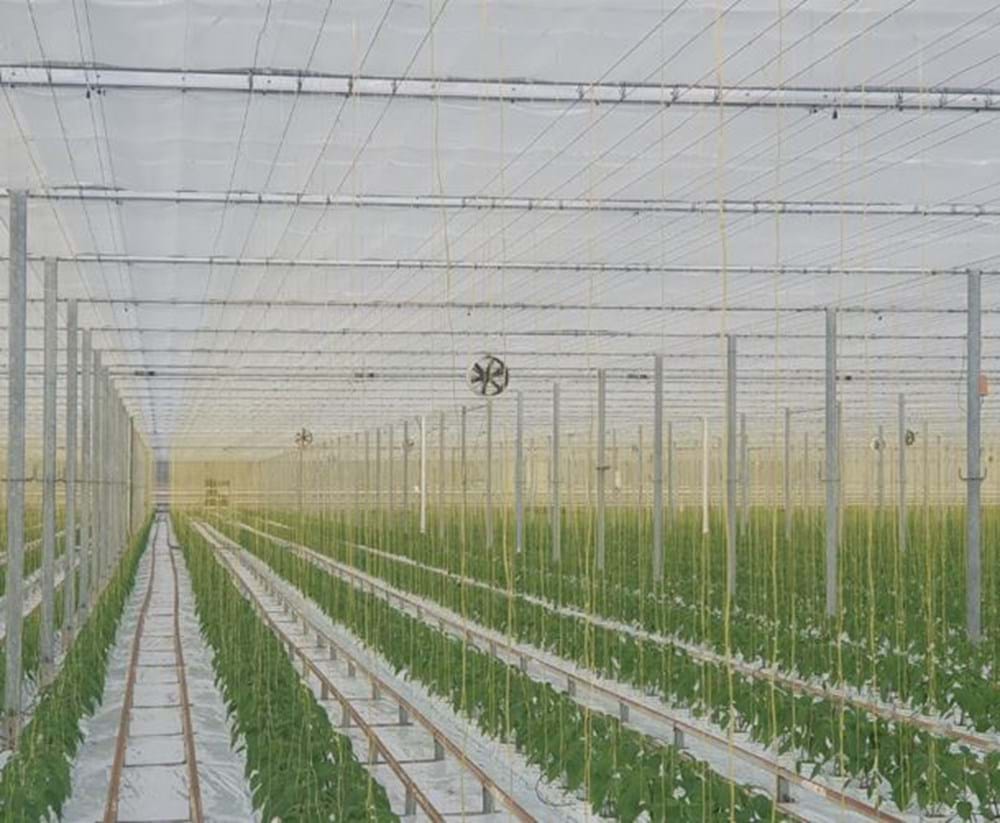
26 Nov 2024 | Peppers
Maatschap Janssen in the Netherlands
A significant change was recently implemented at the bell pepper greenhouse of Gijs Janssen, the 22-year-old son of Reinier Janssen, in Nootdorp. Gijs and his parents decided to replace the existing climate screen and add a second one, both from Svensson. This project took place in January and February of this year and is an important step for the bell pepper grower to save energy.


18 Jul 2023 | Tomato
Gebr. J. & W. van Wijk in Netherlands
Discover how Wouter van Wijk upgraded his tomato greenhouse with a Luxous 1147 FR energy screen to extend closure time and save energy while maintaining excellent climate conditions.
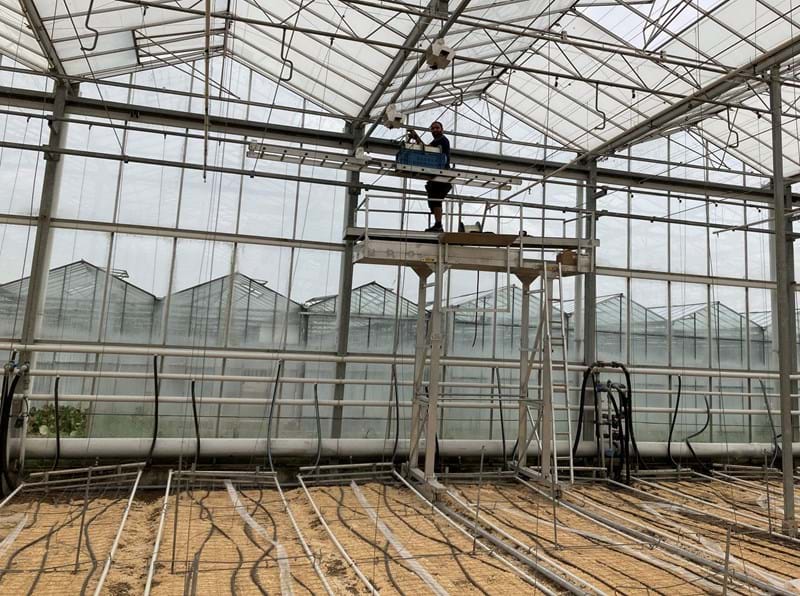
02 Feb 2023 | Cut flower
Barendse Freesia in the Netherlands
An ambitious replacement project has created new opportunities at Barendse Freesia
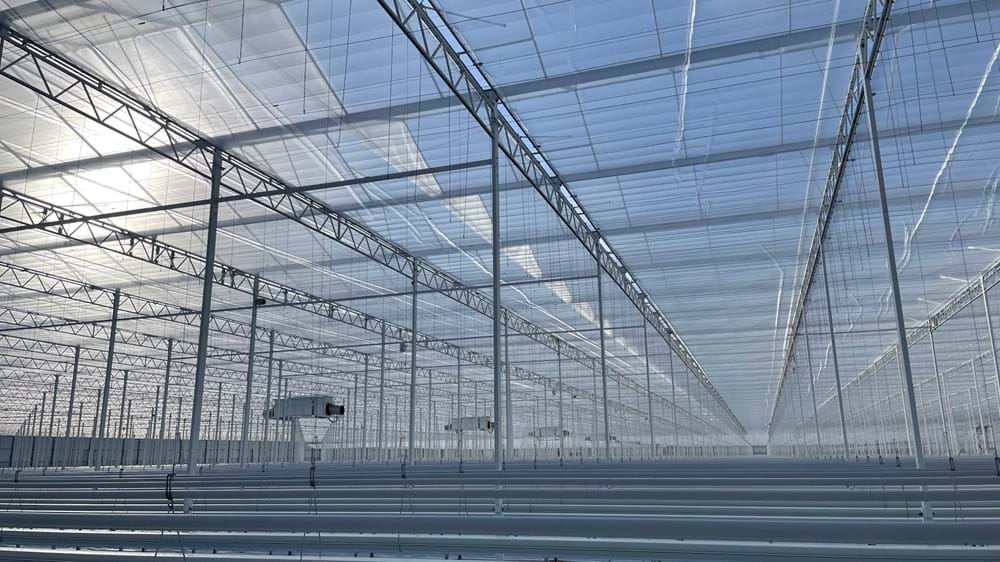
10 Jul 2022 | Tomato
Schenkeveld in the Netherlands
Learn how Schenkeveld installed double energy screens using Luxous 1147 FR across its Schiphol greenhouses to improve energy savings and enable year-round climate control.