Energy savings plus dehumidification
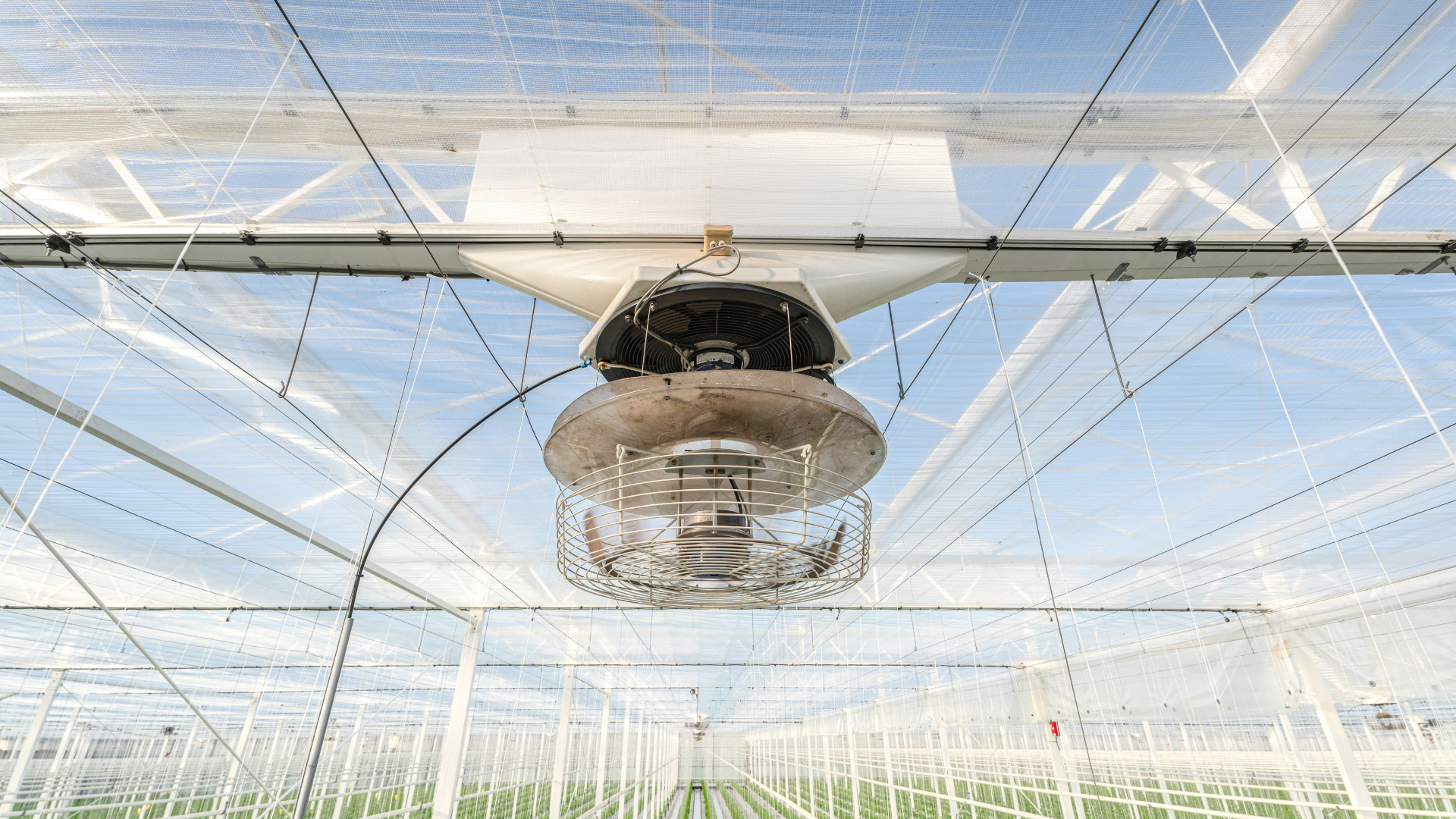
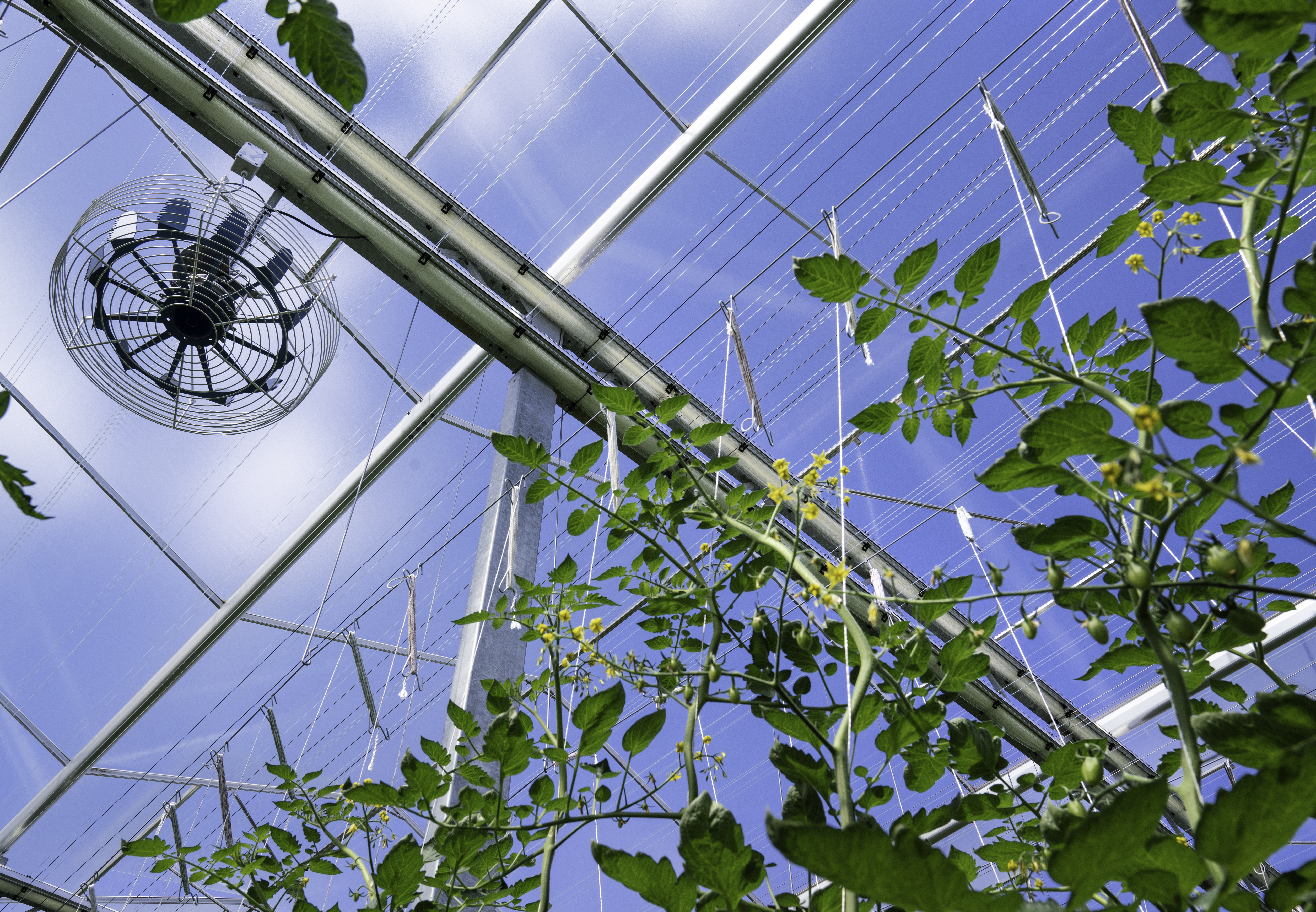
One of the key benefits of the energy screen mentioned above is its moisture permeability, allowing moisture to be released. This effect can be enhanced by ventilating on the same side above a closed screen. However, with a double screen, moisture exchange naturally decreases, which can temporarily lead to excessively high humidity when crop evaporation is high and the weather is mild. In such cases, leaving a gap in the screen becomes necessary, but this can create horizontal temperature differences within the section. To avoid this, many growers opt for a dehumidification system that eliminates the need for gaps and maintains a consistent greenhouse climate. A great example of such a system is ClimaFlow, a vertical ventilation system that uses Ventilationjets to blow dry air from above the screen into the greenhouse. This air is then mixed with the greenhouse air below the screen by vertical ClimaFlow fans placed under the jet. This system is characterized by improved air circulation and distribution throughout the crop, effectively preventing moisture-related issues. Additionally, its low power consumption makes it an extremely energy-efficient solution for dehumidification.
Improved light quantity and quality
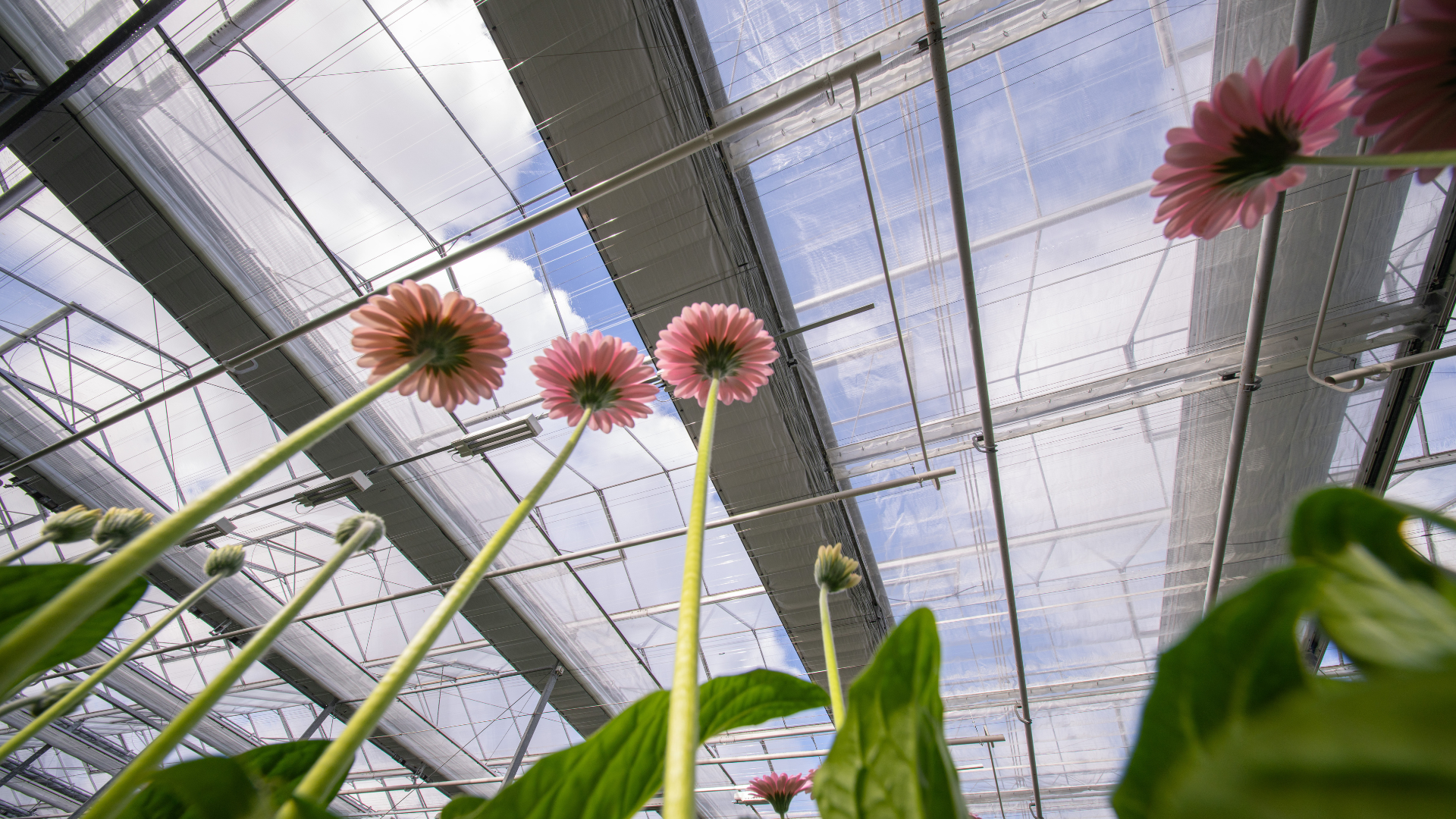
When evaluating screens, it's not just the quantity of light they let through that matters—quality aspects are important too. Beyond the light spectrum, it's crucial to consider how well the incoming light is diffused. A simple principle applies here: the more diffuse the light, the better the plants grow. Joris explains, “Diffuse light is distributed more evenly over all leaves and penetrates deeper into the crop. This means more leaves can participate in photosynthesis, as research from WUR has shown.”
The materials used for greenhouse covers and climate screens play a significant role in this. Some materials allow light to pass through effectively, while others excel at spreading the light, making it more diffuse. The Hortiscatter value, which ranges from 0 to 100%, indicates how well the light is distributed—the higher the percentage, the better the light distribution. Joris adds, “WUR research found that under the same conditions, a 10% increase in Hortiscatter can boost crop growth and production by 2 to 8%, depending on the cultivation. So, it’s definitely worth considering this when choosing a climate screen.”
The NEN standard outlines how to determine this value, ensuring a fair comparison between glass and screens.
Sun protection and hortiscatter
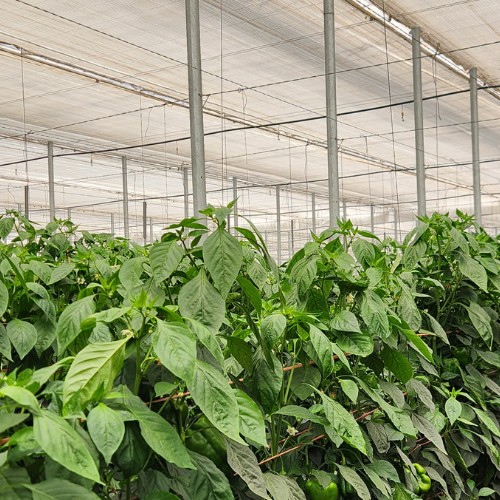
For a climate screen designed mainly for energy savings, the (diffuse) light transmission is crucial. On the other hand, if the screen’s primary purpose is sun protection, the Hortiscatter becomes particularly important. Sun protection is needed when the sun is shining brightly, with a lot of direct light. A Harmony screen excels in this regard by providing high-quality diffuse light. It’s a win-win: the intense sunlight is softened and converted into diffuse light, which means the plant benefits greatly from what remains.