A closer look at strawberries
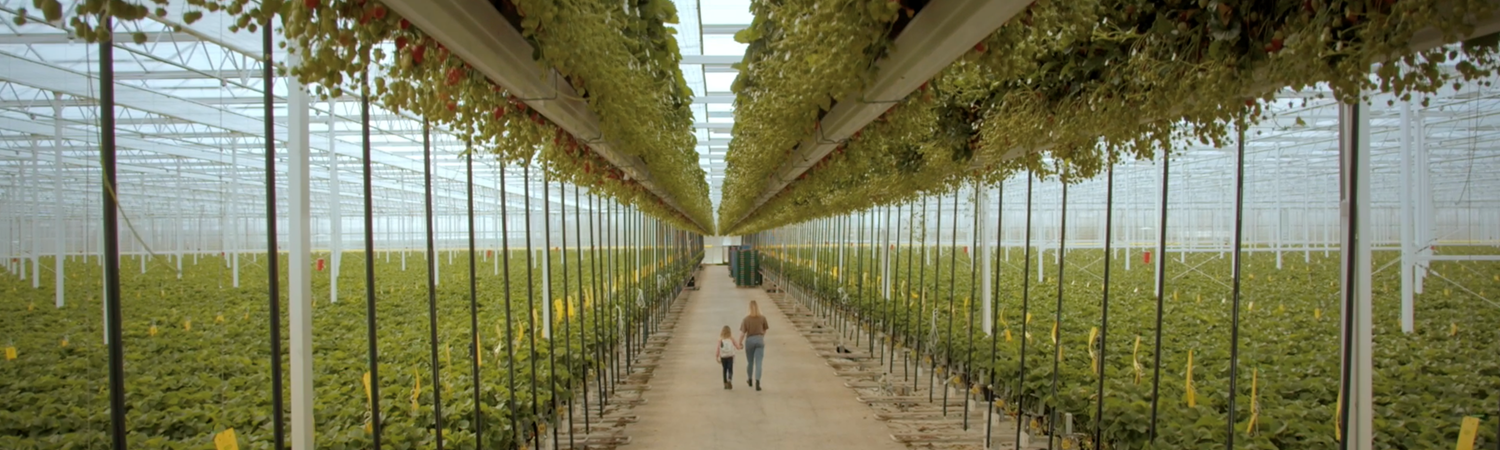
Jongenelen says that they screen quite intensively at ISFC. Sometimes they also push the boundaries. “That can be a risk to quality, but you have to push those boundaries in research.” A good example of this is the research of sustainable strawberry cultivation. This concerns the variety Elsanta; a June bearer that is planted in August and has a production wave in the autumn and again between mid-April and June. The volume of production in the spring is about double that of the autumn. In total, this produces about 12 to 15 kilos of strawberries per m2 per year. The energy consumption for this crop traditionally amounts to about 15 cubic meters of gas per m2, on a balance of about 40 to 45 euros per m2. “If the gas costs one euro, you have already spent a third of your turnover on gas. That's quite painful; all other costs must also be deducted. That leaves very little return on the crop.”
Halving energy consumption
That is why the ISFC, together with several innovation partners, started a project in August 2022 to investigate how Het Nieuwe Telen can be translated into strawberry cultivation and how energy consumption can be halved.
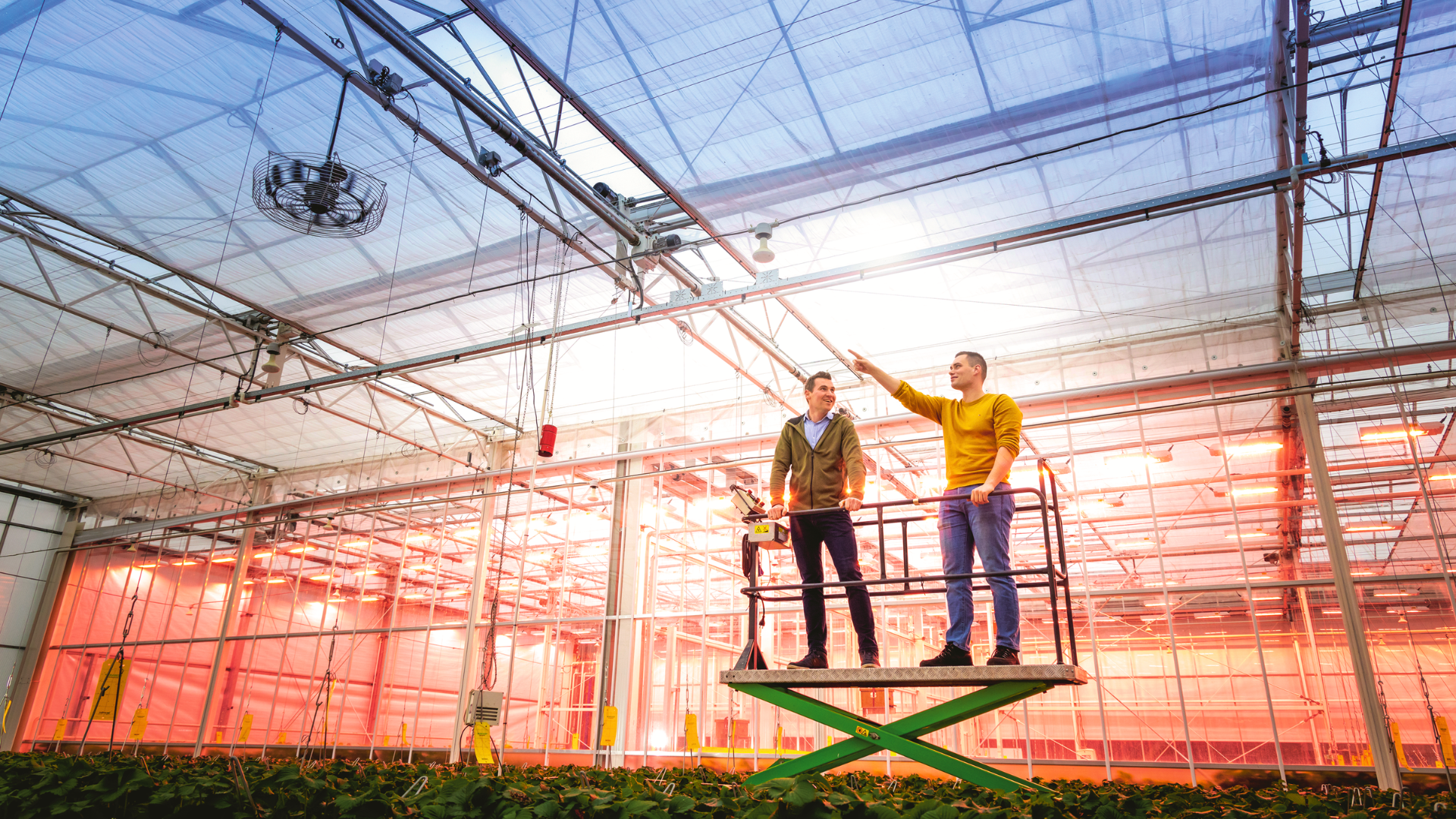
In order to compare with traditional cultivation, the same planting date and comparable plant quality have been used. Jongenelen indicates that the first step was planned cultivation based on light. “We used climate screens to prevent radiation, omitted the minimum pipe and installed vertical ClimaFlow fans from Svensson. ” Vermonden explains that the air movement stimulates evaporation and redistributes the heat that hangs against the screen at the top of the greenhouse. “The fans therefore ensure an even and active greenhouse climate. Because the fans have an energy-efficient motor, it takes relatively little energy to activate the plants and to keep the greenhouse climate uniform.”
In addition, the heating surface has been enlarged (more pipes in the department), which means that lower pipe temperatures can be used. “As a result, the boiler works more efficiently. Moreover, this also opens the door for a heat pump, which heat water to 40 to 45°C. That makes the switch from gas to electricity possible,” says Jongenelen.
Perfect timing
The preliminary results show that with a production of 4 kilos per m2 in the autumn, just enough production was achieved. Jongenelen: “It's not bad, but we had hoped for more. Nevertheless, the yield in the entire strawberry cultivation was somewhat lower than average due to the fairly warm October month. In addition, we were sometimes just a little too frugal with heating, which meant that we had some settlement problems.” On the other hand, only 2.5 cubic meters of gas per m2 has currently been used, while there was quite a bit of heat demand “So we are well on schedule to stay below that 7.5 cubic meters. We even hope to stay below 5 cubic meters.” We now have to wait and see what the crop will do in the coming weeks. “But when I see how strong it is, how high the trusses have reached and how many noses there are per metre, that certainly gives us confidence. ” Jongenelen emphasizes the importance of this type of research; “Current times call for innovation and good entrepreneurship. Naturally, changes must not be at the expense of cultivation (quality). But there is nothing wrong with using less energy in a responsible way.” According to him, this mainly concerns a combination of various measures. “Only with a climate screen or a larger heating surface you don't make a crop more efficient. It is precisely about the combination of measures.” Vermonden agrees wholeheartedly. He sees that there is increasing demand for systems to optimize and control the greenhouse climate. The demand for ClimaFlow is even increasing exponentially. “The energy uncertainty, but also the more extreme climate conditions, cultivation schedules and varieties demand solutions.”