After analyzing the preliminary results from trials at our Tuxca site, where we tested Svensson’s Xsect Balance insect screen, we decided to implement the same solution here in Colima.
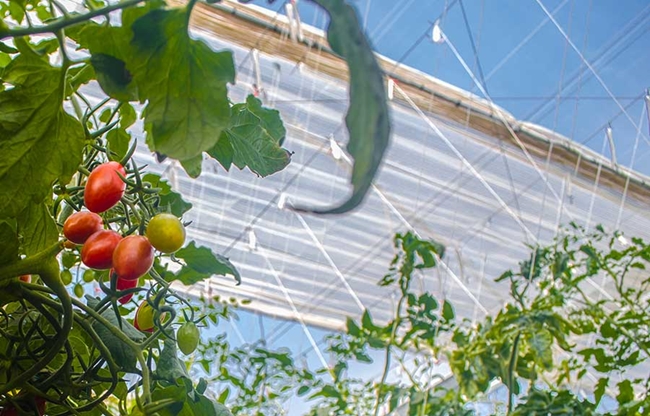
Best is the standard at NatureSweet Tomatoes for both climate and crop
-
- Greenhouse:
- NatureSweet
-
- Location:
- Colima, Mexico
-
- Crop:
- Cherry tomatoes
-
- Challenge:
- High temperature, extreme humidity
-
- Solution:
- Xsect Balance, Harmony 3015 O E
AUGUST 2018
NatureSweet is the leading grower of premium tomatoes for North America, delivering on its promise of “tomatoes raised right.” To ensure consistent quality and superior flavor year-round, NatureSweet continually invests in innovation and technology to support its high production standards.
Founded in 1990, NatureSweet has steadily expanded its vine-ripe tomato production and is now recognized as the largest greenhouse grower in North America. The company operates 566 hectares of sustainable greenhouses across six production sites, including five locations in Mexico and one in Arizona. This scale allows NatureSweet to meet the growing demand for premium tomatoes across the North American market.
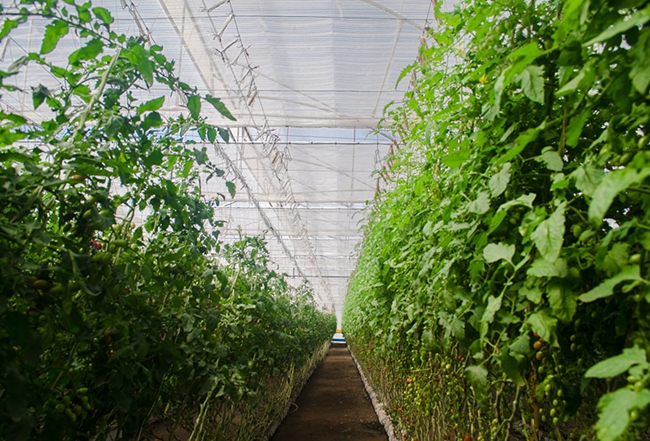
“Here, we don’t do things hastily or take the easy way. We do things the right way, and we never shy away from trying something new if it means better results. It’s because of this philosophy that you can taste the difference in our tomatoes. We do things differently than our competition,” says Manuel Matias, General Manager at NatureSweet’s Colima operation.
Climate challenges at the Colima site
The NatureSweet team at the Colima site, located in central-western Mexico, has long faced extreme climate challenges. Among all NatureSweet operations, Colima presents the most demanding growing conditions.
Cloudy summers combined with temperatures reaching up to 37°C and humidity levels approaching 100 percent place significant stress on both crops and greenhouse operations.
“Growing in these climatic conditions meant that our production cycles were much shorter compared to our other sites,” explains grower Miguel Vega. “Pollination issues, disease pressure, and excessive plant stress led to early crop losses, forcing us to replant and carry out additional work to maintain plant density and compensate for lost production.”
Rethinking climate control in passive greenhouses
At the Colima operation, conventional whitewashing was no longer sufficient to reduce excessive temperature and humidity levels. As a result, NatureSweet’s research department began evaluating alternative solutions, including structural greenhouse modifications such as window adjustments and increased column heights. Many of these options came with significant cost implications.
Here, we don’t do things hastily or take the easy way. We do things the right way, and we never shy away from trying something new if it means better results.
“After analyzing the preliminary results from trials at our Tuxca site, where we tested Svensson’s Xsect Balance insect screen, we decided to implement the same solution here in Colima,” explains Matias. “The high porosity of Xsect Balance allowed for improved ventilation, which was critical in our climate.”
In passive greenhouses, climate control options are limited, leaving growers highly dependent on natural conditions. After reviewing both technical performance and economic feasibility, NatureSweet decided to go further than simply replacing conventional insect nets.
One greenhouse block was equipped with Svensson Xsect Balance insect screens, while a second block combined Xsect Balance with a mobile, open-structure, light-diffusing Harmony shade screen. This dual approach aimed to further enhance ventilation while improving solar radiation control.
By increasing porosity and managing incoming radiation more effectively, NatureSweet was also able to eliminate the need for roof whitewashing.
Early results and future outlook
“By significantly extending our cultivation cycles, we’ve improved our competitiveness in line with NatureSweet group standards,” says Vega. “While we are still fine-tuning the management of the automated screen system, we believe the return on investment is well within reach and that this solution will prove to be highly cost-effective.”
Although results are still preliminary after the first two growing cycles, noticeable improvements have already been observed. Greenhouse climate conditions are now more favorable for both crop performance and for the people working at the Colima site.
Further trial results and insights will continue to shape NatureSweet’s climate strategy moving forward.
Curious what made it all work?