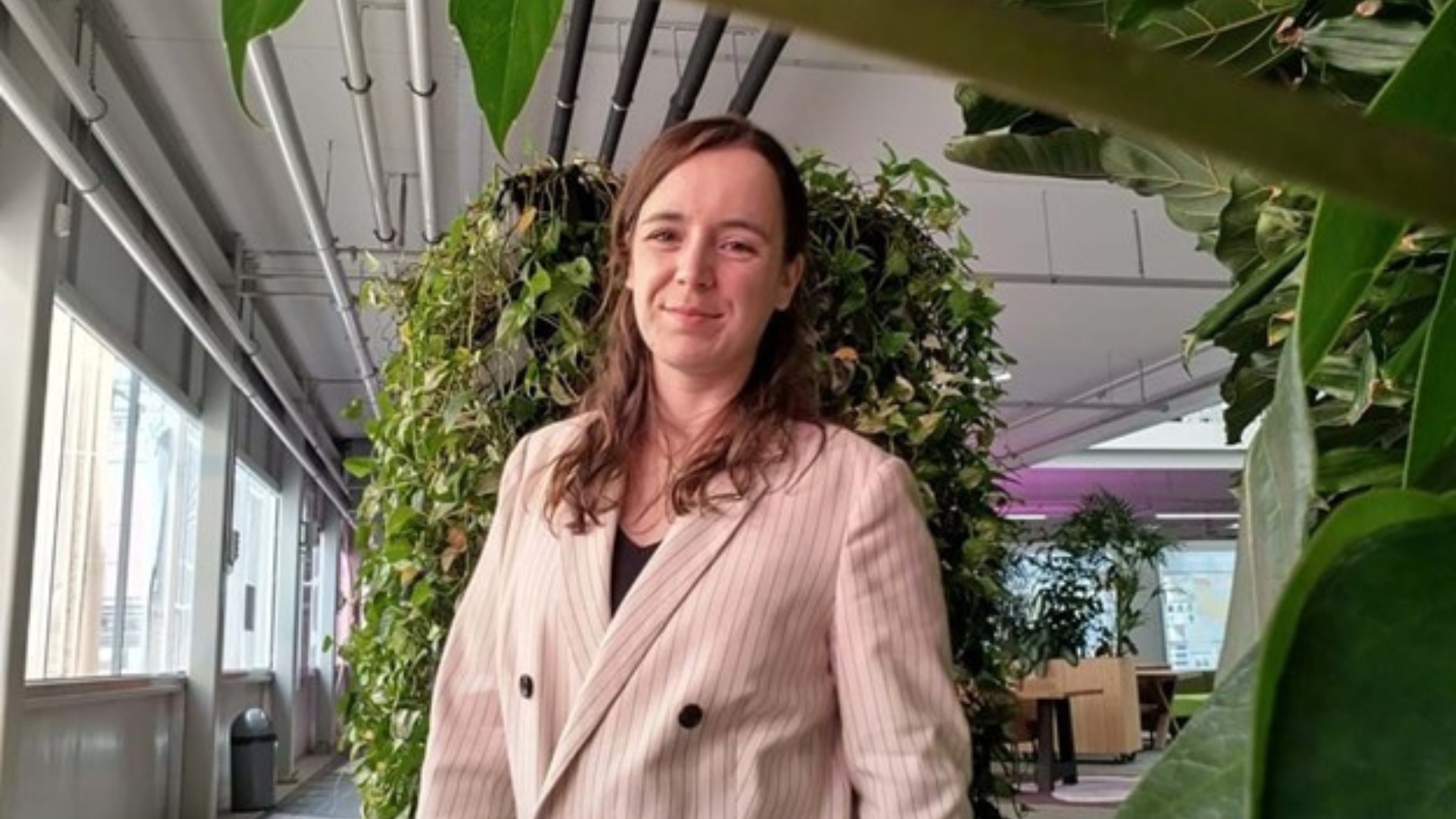
With MasterKas, we speak to people who are shaping the greenhouse horticulture of tomorrow. For this edition, we talk to Mirjam Boekestijn, CEO of Dutch Greenhouse Delta. As the daughter of a family of growers, she grew up among greenhouses. Today, she plays an active role in strengthening the international position of the Dutch horticulture sector. Through Dutch Greenhouse Delta, she brings together companies, knowledge, and networks to create scalable global impact with sustainable food production.
Mirjam speaks with conviction about the strength of the Dutch sector, but also about the pressure it is under. About food security, international cooperation, and the importance of innovation. And about the underlying question: how do we ensure that the Netherlands remains relevant in the future?
When you look at horticulture globally: where do we stand today, in your view?
Mirjam:
“What characterizes this moment for me is that there is a tremendous amount of international attention for horticulture, while at the same time the sector is under pressure. Geopolitics plays a major role, power blocs are shifting, investors are more hesitant, and interest rates are high. At the same time, food security is very high on the agenda of many governments. That makes it a time full of opportunities, but also a challenging one. In this context, the difference is made by parties that approach international growth in a structured and collaborative way.
You still see global growth in horticulture, but it varies greatly by region. In Northwestern Europe and North America, the focus is mainly on high-tech greenhouses and closed systems. In other regions, such as parts of Southern Europe and North Africa, growth is mainly in low- and mid-tech solutions like tunnels and plastic greenhouses. High-tech greenhouse horticulture is still limited there.
What I also see is that technology and innovation remain the driving forces. That is one of the strengths of this sector: there is always a challenge, but also always the willingness to find solutions. At the same time, we have to be realistic. The sector is currently facing difficulties. In the past, when one market declined, another would perform well. Now, many regions are struggling simultaneously. The United States is uncertain, China is becoming more complex, and the Gulf region is politically and economically challenging. This puts real pressure on the sector.”
The Netherlands is internationally known as a leader in greenhouse technology. What makes the Dutch model so strong, and what should we be mindful of?
Mirjam:
“Our strength is not just in technology. It is the combination that makes the Netherlands strong. It is about technology, knowledge, cultivation systems, business models, organization, logistics, and financing—this complete ecosystem. That integrated approach is what sets us apart. We don’t export individual greenhouses; we export complete food production systems. That means we must operate internationally not as separate companies, but as one ecosystem.
That is exactly what Dutch Greenhouse Delta aims to position internationally. What we should not underestimate is that we need scale to continue innovating. In the Netherlands, this is sometimes taken too lightly. If we lose sufficient acreage and practical application here, it will ultimately affect our innovative strength. We would lose the environment where we can test, improve, and further develop technology.
At the same time, we must remain alert. We should not look at the world too much through rose-colored glasses. We sometimes still think too much from our own perspective, while demand in other markets may be very different. We must not only hold on to what we already know, but also learn to localize better: to better align with local conditions, different climate zones, customer needs, and ways of working.
In addition, we don’t have to do everything alone. Other countries are also developing knowledge and capabilities. India has a lot of engineering talent, and Japan is leading in robotics. So we must not think too narrowly. The Netherlands has a lot to offer, but we will also need to collaborate smartly to stay ahead.”
Many of your projects focus on food security. What role can greenhouse horticulture play in feeding a growing global population?
Mirjam:
“I believe greenhouse horticulture can play a major role in this. As a sector, we truly have something valuable when it comes to producing food more efficiently and sustainably. Especially when you consider climate change, water scarcity, and the growing demand for consistent quality and food safety, controlled environment agriculture offers enormous opportunities.
However, greenhouse horticulture alone is not the complete solution. It is closely connected to other sectors in which the Netherlands is strong, such as water, energy, and logistics. In many countries, water is a major issue, or the logistics chain is underdeveloped. If you really want to structurally improve food security, you have to look beyond just the greenhouse. That is why we always look at the full system: from production and technology to logistics and financing.
What you also see, especially in Africa and parts of Asia, is that economies are growing, the middle class is expanding, and with that, the demand for safe, reliable food of consistent quality. That presents a major opportunity for controlled environment agriculture. However, these opportunities do not come without challenges.
In many countries, there are still many smallholders, limited knowledge of greenhouse cultivation, restricted access to financing, and underdeveloped sales markets. In some places, interest rates for these kinds of projects are extremely high, as if they were high-risk ventures. In addition, traditional markets still dominate in many countries, making it difficult to build a stable business case for greenhouse-grown products.
So yes, the opportunities are significant. But it requires time, knowledge, collaboration, and investment to build these systems properly.”
Dutch Greenhouse Delta operates across multiple continents. What are the biggest differences you see between projects in the Netherlands and those elsewhere in the world?
Mirjam:
“For me, the biggest difference is not even the greenhouse itself. If you stand in a greenhouse in Japan built with Dutch technology, it may not look that different at first glance. The real difference lies in the surrounding context. Abroad, you are much more likely to deal with governments, large investors, or corporations, rather than a grower or family business that knows exactly how everything works.
That means the customer is different. And that requires a different approach from Dutch companies: more collaboration, different forms of organization, and thinking from a total system perspective. In the Netherlands, we are used to working with growers who understand the technology, who know cultivation, and who know exactly what they need. In many international projects, clients want to be fully unburdened from A to Z. They are not necessarily looking to buy a greenhouse or a climate system—they simply want a good, safe, and profitable product on the shelf.
This requires something different from our sector. You need to think much more integrally and reason from the end goal. In addition, culture and context play a huge role. How a company is managed, how employees are treated, how decisions are made—these differ greatly by region.
That is also what makes international work so interesting. You constantly have to reassess: what does this market need, what works here, and what does not?”
Looking ten years ahead: what will the work of a grower look like? What will change the most?
Mirjam:
“I think the grower of ten years from now will be even less like the traditional grower we once knew. That shift is already happening. It is no longer just about someone working in the greenhouse and focusing primarily on the crop. It is increasingly becoming a professionally organized business, where commerce, data, technology, and strategy play a much larger role.
We are likely moving further toward autonomous greenhouses and data-driven cultivation. That does not mean people will disappear, but their role will change. The grower will increasingly become an entrepreneur, a director of processes, surrounded by cultivation specialists and technical experts.
In the Netherlands, we are already quite advanced in this. In other countries, the pace will differ, but I do believe we will eventually see the same trend worldwide. Consolidation will also continue. In many places, it will become difficult for very small companies to remain structurally profitable.
What I hope is that in ten years, we will not only have a stronger sector, but also one that looks to the future with more confidence. We have been in what people call ‘the tougher years’ for some time now. I hope we can move beyond that and that the Netherlands can truly take on a key role in addressing the global food security challenge ahead.
And that we do so as a sector—together, public and private—with greater confidence and greater appreciation. Also domestically. International growth requires direction and collaboration; it does not happen automatically.”