Go to main content
CS - Climate Screens - Greenhouse.jpg

Guidelines for smarter climate screen selection

Screen selection has always been one of the topics domestic greenhouse growers care about most. In recent years of production practice, accumulated experience and continuously changing external conditions have led us to re-examine: Can we maximize the use of climate screens and enable them to perform to their full potential in the greenhouse? Thus, the “smart” selection of screens becomes the first step toward success. As growers, we can also stay informed of the latest “trends” to guide future screen selection.


Focus on environmental uniformity and stability

In the past, growers aimed to achieve climate goals through greenhouse equipment. For example, when determining shading rate, we considered the maximum outdoor solar radiation, the light transmission of the greenhouse covering, and the crop’s light requirements. These are fundamental goals. Today, growers increasingly value the uniformity and stability of the overall greenhouse environment. For high-shading-demand crops such as seedlings, Phalaenopsis, and anthurium, growers hope to reduce direct-light streaks caused when shading screens are used, as these directly impact crop quality and uniformity. By choosing high-diffusion screens (Hortiscatter > 80%), we can effectively improve this issue.

CS - Highlights - Ying Ying - Screen Selection - Chart.png Figure 1: Scattering effects for different Hortiscatter values; the image on the left shows a Hortiscatter value of 100%, and the image on the right shows 67%.

Environmental stability refers to the ability to handle extreme outdoor weather and rapid fluctuations, reducing climate variability inside the greenhouse. Generally, having two or more types of screens increases buffering capacity. For example, low-shading screens like Svensson’s Luxous series can remain closed longer during day–night transitions, minimizing sudden temperature changes, whereas night-use thermal screens (Tempa series) may cause temporary fluctuations when opening or closing.

CS - Highlights - Luxous - Yings article - Screen Selection.jpg Figure 2: Different types of thermal screens; the image on the left shows Luxous, and the image on the right shows Tempa.
CS - Highlights - Tempa - Yings article - Screen Selection.jpg

Achieving “have this, have that, and have more”

For growers with year-round production needs, effective energy savings involve not only winter heating but also summer cooling, while also optimizing the greenhouse climate. To enhance the adaptability of double-screen combinations, Svensson introduced the PARperfect system, which maintains high insulation while adding flexible shading and uniform light distribution. For semi-closed greenhouses, it can improve cooling efficiency. From a long-term planning perspective, using one screen combination to adapt to multiple crops and growth stages provides strong guidance for future screen selection.

CS - Highlights - Yings article - PARperfect - Screen selection.gif Figure 3: Svensson PARperfect variable shading double-layer screen solution

Addressing pain points and exploring solutions

Through deep conversations with growers, we find many are not fully satisfied with their existing screen configurations—often because they missed the discussion phase during greenhouse design. For example, greenhouses growing light-loving solanaceous crops may choose thick insulation materials, which absorb moisture, increase system weight, and reduce light when retracted. However, test data show that material thickness does not necessarily correlate with insulation performance. Aluminum screens provide better nighttime insulation and retract compactly. When using multiple insulation layers, it is difficult to evaluate the benefit of the third or fourth layer, as it depends on outdoor conditions. Energy simulation tools can help growers compare options and choose effectively.


Customized screen solutions

Successful project replication is not simply copying existing systems. Every project is unique and deserves a tailored solution. In a Yunnan sweet-pepper greenhouse case, Svensson recommended a 20% shading thermal screen instead of a high-transmission Luxous screen. The region has strong winter sunlight, and young seedlings require shading. Monitoring showed the screen provided year-round benefits—insulation, shading, humidity retention. This demonstrates that custom screen selection maximizes product performance. Growers must consider cost–benefit and project needs to choose the most suitable solution.

CS - highlights - Yings article - Chart - Rong Rong - Screen Selection.png Figure 4: Rongrong Farm in Yuxi, Yunnan, opted to use shade screens with a shading rate of 20%; the image on the right shows the distribution of screen usage duration.

We believe future screen selection will evolve toward more specialized, diversified, and customized solutions that meet growers’ refined needs. Only then can we make full use of high‑quality equipment for advanced cultivation. Svensson is ready to support growers with professional tools and expertise.

From one grower to another.

Explore real-world stories of growers who perfected their climate with the right screens.

CS - Obscura 10070 WB BW - Netherlands - EveryD Flowers - Gerberas.png

20 Mar 2026 | Gerbera

EveryD Flowers in the Netherlands

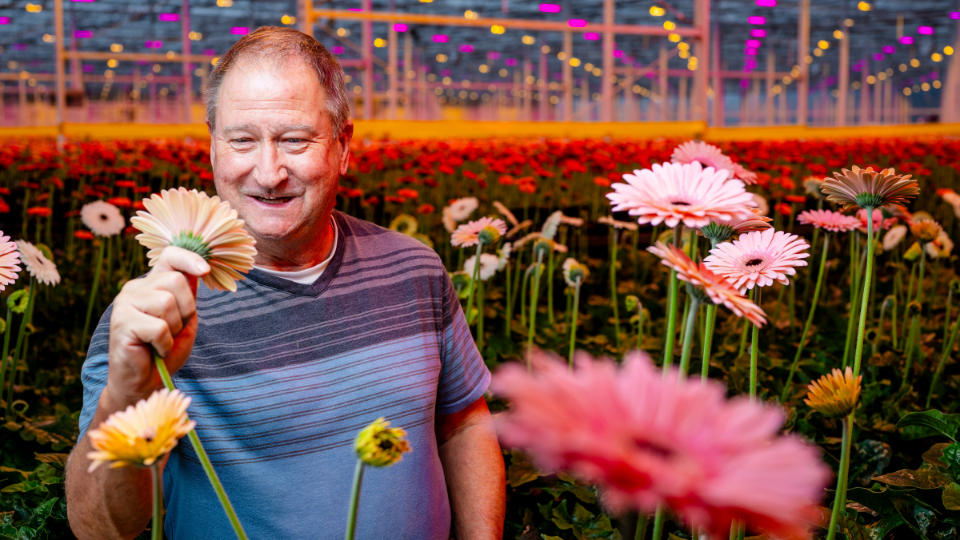
Gerbera nursery EveryD Flowers recently expanded from 12 to nearly 16 hectares. An existing rose greenhouse on Oostlaan in De Lier was completely converted into a gerbera greenhouse. Two Svensson climate screens were installed in the new greenhouse: an Obscura 10070 FR WB+BW blackout screen and the transparent energy screen Luxous Light FR. The installation was carried out by El Flaco Scherminstallaties, with whom EveryD Flowers has been collaborating for some time.

CS - Terry Pastorek - Article Card - Gerberas - Canada.png

10 Feb 2026 | Gerbera

Hollandia Greenhouse in Canada

Hollandia Greenhouses is one of North America’s largest producers of Gerbera daisies, growing approximately 30 million blooms each year in a high-tech greenhouse in Pitt Meadows, British Columbia. The operation uses advanced controlled environment agriculture, including precise light, photoperiod, and climate control, to deliver consistent flower quality and reliable vase life.

CS - ANSU Orchids - Netherlands - Orchids

29 Oct 2025 | Orchid

ANSU Orchids in the Netherlands

ANSU Orchids upgraded to Obscura 9970 FR A as a way to manage energy savings and shade with precision.

CS - Haoyu Group - Tomatoes - Luxous - Harmony - Energy Monitor - China - Grower.png

16 Jul 2025 | Tomato

Haoyu Group in China

The privately held Haoyu Group has entered greenhouse growing, begun constructing its own glasshouses and pioneered new approaches to sustainable growing in just six years. It is now working with Svensson's Energy Monitor on advanced algorithmic screen control.

CS - Ridge Farms - Canada - Tomatoes - Emilio Mastronardi - Grower

10 Jul 2025 | Tomato

Ridge Farms in Canada

At Ridge Farms, Emilio Mastronardi uses Svensson screens to cut energy use by 47%, protect crops in summer, and grow better-tasting tomatoes - all while tapping into automation and rebates to modernize sustainably.

CS2026 Moors NL.jpg

23 Jun 2025 | Peppers

ANSU Orchids in the Netherlands

ANSU Orchids upgraded to Obscura 9970 FR A as a way to manage energy savings and shade with precision.

CS - Honghe Chuangsen - Yellow Gerbera - Flower Greenhouse

13 May 2025 | Gerbera

Honghe Chuangsen in China

At Honghe Chuangsen’s gerbera greenhouse in Yunnan, double layers of Svensson’s diffuse Harmony screens create softer light and cooler conditions—improving flower quality, protecting petals from harsh radiation, and supporting energy savings across changing seasons.

cs - Hinova ceiling - knod-pdi-dubbel-scherm-en-hinovafan.jpg

02 Oct 2024 | Energy saving

Understanding light to choose an energy screen

Discover how the NEN 2675:2018 standard guides more accurate comparisons and better decisions for greenhouse growing.

CS - Armela Farms - Abu Dhabi - United Arab Emirates - Pieter Mol - Leafy Greens - PARperfect.png

27 Aug 2024 | Leafy Greens

Armela Farms in United Arab Emirates

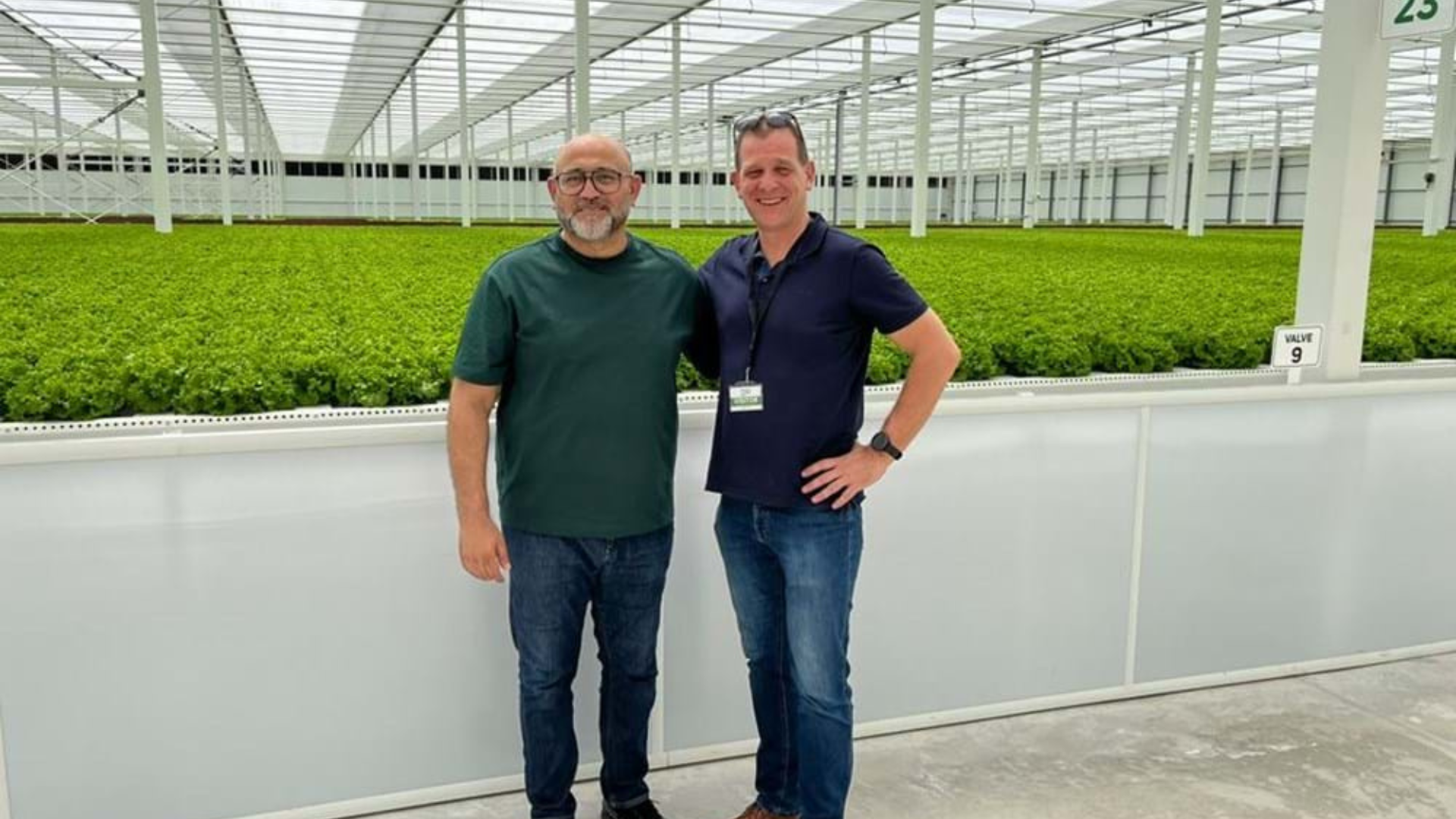
With its hydroponic cultivation of pesticide-free red and green lettuces, Armela Farms is on a mission to promote healthy living in the United Arab Emirates by offering consumers fresher, tastier and longer-lasting greens. The high-tech greenhouse, designed and constructed by Van der Hoeven, includes Svensson’s unique PARperfect double-screen solution. Yazan Abu Jaish, COO of Armela Farms, explains how this technology supports the sustainable, year-round production of 4.5 tonnes of premium-quality and uniform lettuces per day.

case-study_enrique-peña_3.jpg

31 Jul 2024 | Peppers

Enrique Peña in Spain

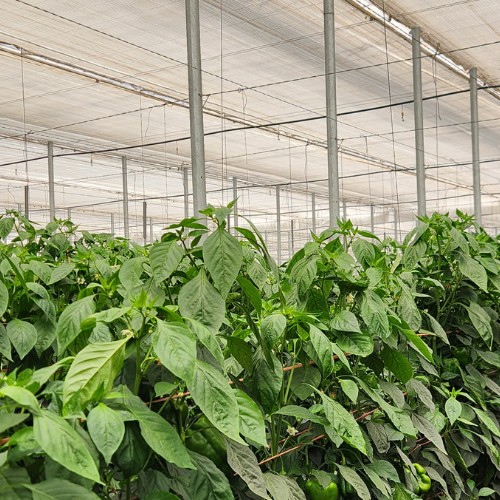
In Almería, Spain — a region recognized as a pioneer of modern agriculture and home to vast hectares of greenhouses — grower Enrique Peña is tackling the challenges of pepper production with Svensson Climate Solutions

CS - Bergcamp - PARPerfect - Netherlands - Grower - Flowers.jpg

17 Jul 2024 | Potplants

Bergcamp Growers in the Netherlands

Pot plant growers Robert and Walter van den Berg left nothing to chance with the recent construction of a 4.3 hectare greenhouse. Only the best systems were good enough and for that reason, the brothers opted for the PARperfect screen solution from Svensson.

CS - Tangchao Horticulture - China - Grower - PARperfect - Flowers

22 May 2024 | Potplants

Tangchao in China

The Xiamen Tangchao Horticultural Breeding Center is preparing for the 2024 Xiamen International Flower Trials, aiming to showcase top-tier flower varieties. Leveraging advanced climate control technology from Svensson, they prioritize delivering high-quality seedlings and optimizing greenhouse functionality. Recognized for their seedling quality and sustainable practices, Tangchao remains committed to collaboration for further growth and expansion.