

Expensive equipment is not always necessary. First ensure that there is sufficient air movement within the crop. That is more important than relying on active dehumidification.
An even climate above active dehumidification
Some growers still operate with a minimum heating pipe of 40 °C or open a screen gap when humidity rises by 5 percent or more, observes Ton Habraken, greenhouse climate expert at Svensson.
“Not necessary at all, and certainly not in combination with our ClimaFlow System. That works far more effectively and at lower cost. Be cautious with dehumidification units placed inside the growing area as well. They can over-activate the plants, which actually consumes far more energy than needed.”
According to Habraken, a traditional “growth pipe” set to 40 or 45 °C should really belong to the past, yet he still encounters it in practice. With current energy prices, however, the approach is becoming increasingly rare.
“Growers often set a minimum pipe temperature of around 30 °C to create air movement through the crop. That can easily require about 25 W/m² per hour. A minimum pipe of 40 °C quickly doubles that to around 40–50 W/m² per hour,” he explains.
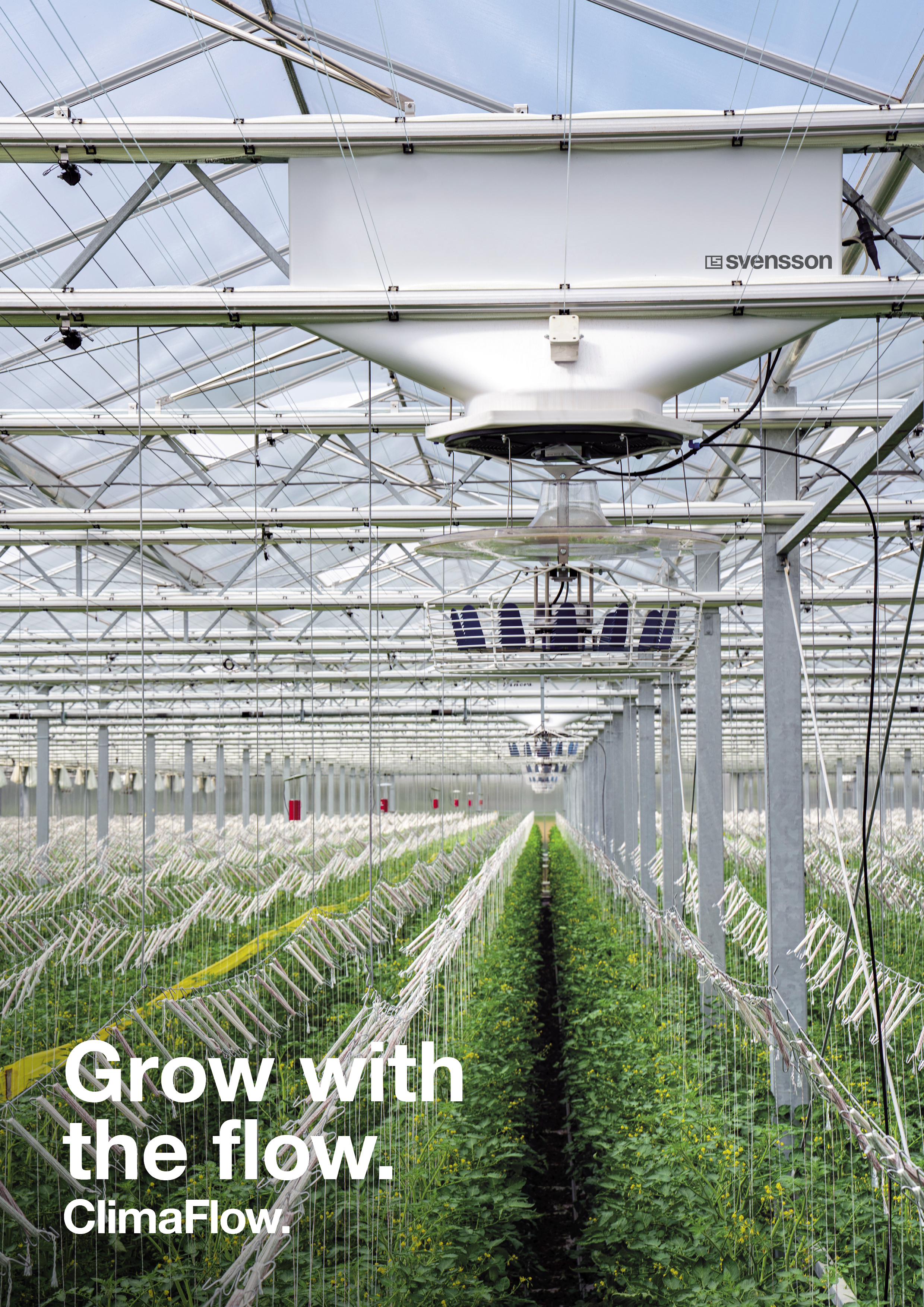
“That’s a significant energy input, while the energy is not needed at that moment to maintain the greenhouse temperature. It’s used purely to create air movement through the crop. Yet the same air movement can be created with a vertical fan that only consumes about 1 W/m² per hour.”
Air movement first
Creating the right air movement in and through the crop is therefore essential.
Since 1 June, Svensson has owned Hinova, and all systems are now marketed under the name ClimaFlow. The ClimaFlow System provides an effective and efficient way to improve the greenhouse climate, particularly in greenhouses equipped with double energy screens.
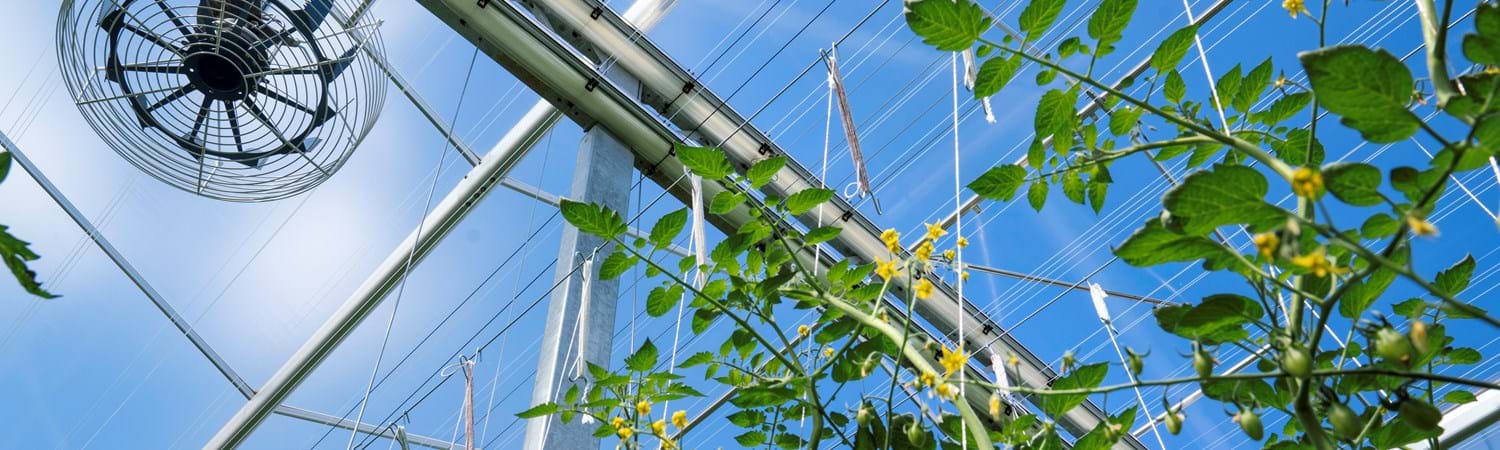
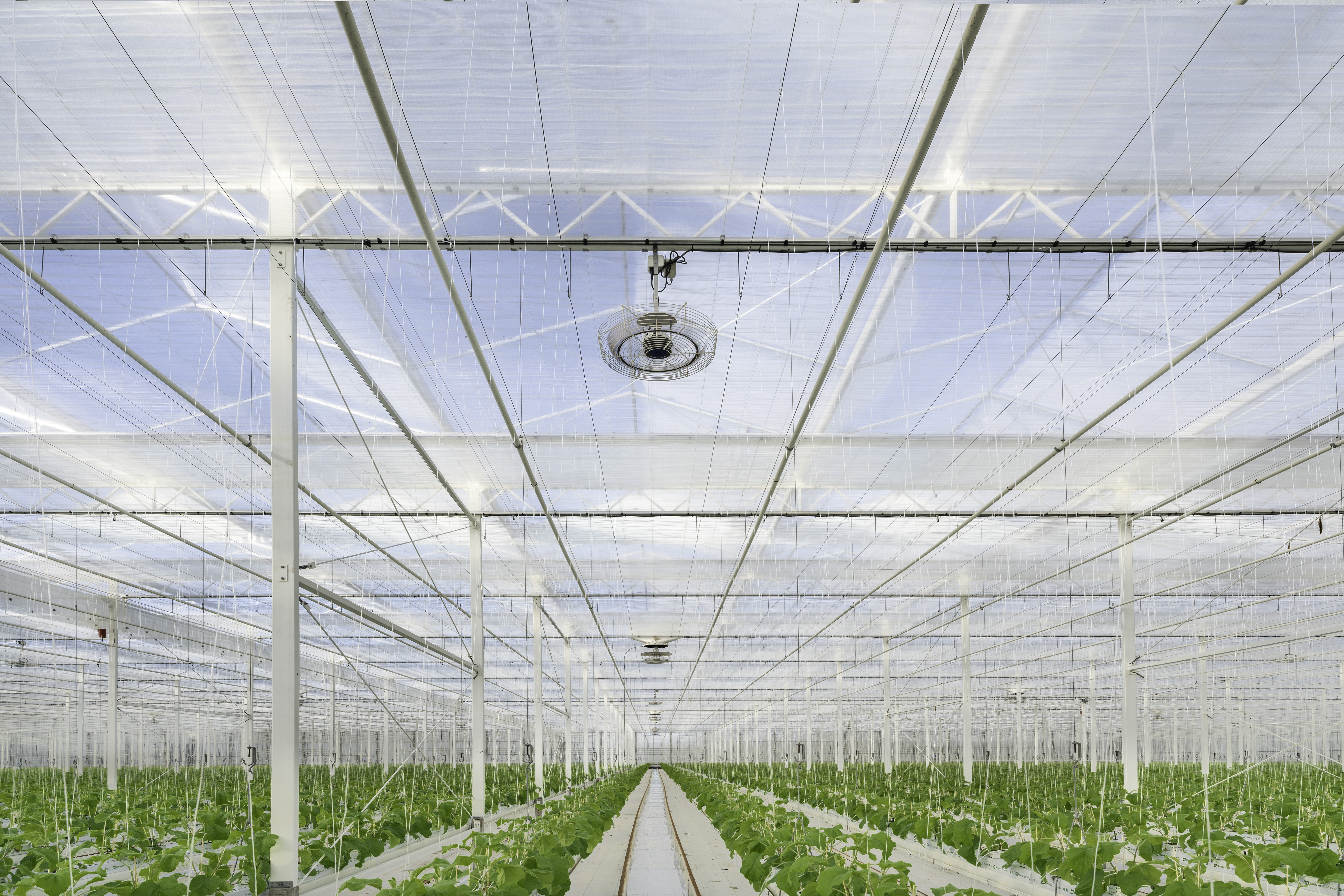
In essence, the system consists of two separate components. The ClimaFlow Fan creates a controlled vertical airflow through the crop, producing a gentle breeze that improves the microclimate, removes moisture from the crop, and keeps plants active.
In addition, the VentilationJet draws drier air from above the screen and brings it into the greenhouse when humidity needs to be reduced.
“But the first step is actually the most important,” Habraken emphasizes. “You need controlled air movement through the crop. From an energy perspective, that is far more efficient than using a growth pipe.”
Air movement versus active dehumidification
More and more growers are investing in hybrid or full LED lighting and double energy screens, sometimes combined with mechanical dehumidification systems.
“That combination can work well,” says Habraken. “But expensive equipment is not always necessary. First ensure that there is sufficient air movement within the crop. That is more important than relying on active dehumidification.”
Incorrect or premature use of dehumidification systems often results in unnecessary energy consumption.
“When dehumidification is applied in the wrong way or too early, you often use far more energy than needed. It’s better to ensure good air movement so that the plant remains active and you can steer growth effectively.”
Growing more precisely with humidity
Another advantage of the ClimaFlow System is that opening a screen gap for humidity control can often become unnecessary.
The system has already proven itself in many fruiting vegetables such as tomato, cucumber, aubergine, and sweet pepper, but also in crops like strawberry, kalanchoë, and gerbera.
Because the system continuously mixes and redistributes air within the greenhouse, growers can maintain a more uniform climate while keeping screens closed for longer periods. This not only improves crop conditions but also helps reduce energy consumption.
From one grower to another.
Explore real-world stories like this.
21 Nov 2024 | Tomato
Wim Peters Nursery in Netherlands
Wim Peters Kwekerijen is dedicated to sustainable, future-focused cultivation, with cultivation specialist Henk van der Loos playing a pivotal role. Henk has been involved in the development of Svensson's innovative ClimaFlow system from the start. In this article, he shares his insights on ClimaFlow and how it has elevated tomato cultivation to new heights.

14 Nov 2024 | Product
ClimaFlow now eligible for Enbridge Gas Incentives in Ontario
Svensson is excited to announce that ClimaFlow is now eligible for incentives with Enbridge Gas in Ontario, providing a valuable opportunity for greenhouse growers to save on energy costs. Here’s how everything you need to know.
22 Apr 2025 | Peppers
Twin Creeks in Canada
Discover how Twin Creeks improved climate uniformity, crop performance, and energy efficiency with ClimaFlow, double Luxous screens, and Energy Monitor.