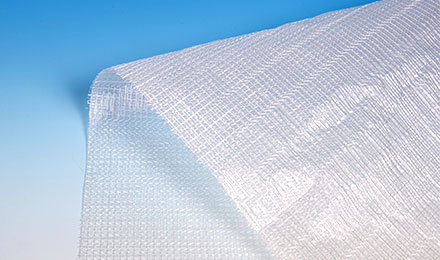
Even if we close the upper Obscura screen to a lower percentage, sometimes as much as 25% to screen out excess sunlight, it does not lead to light or shadow bands at crop level.
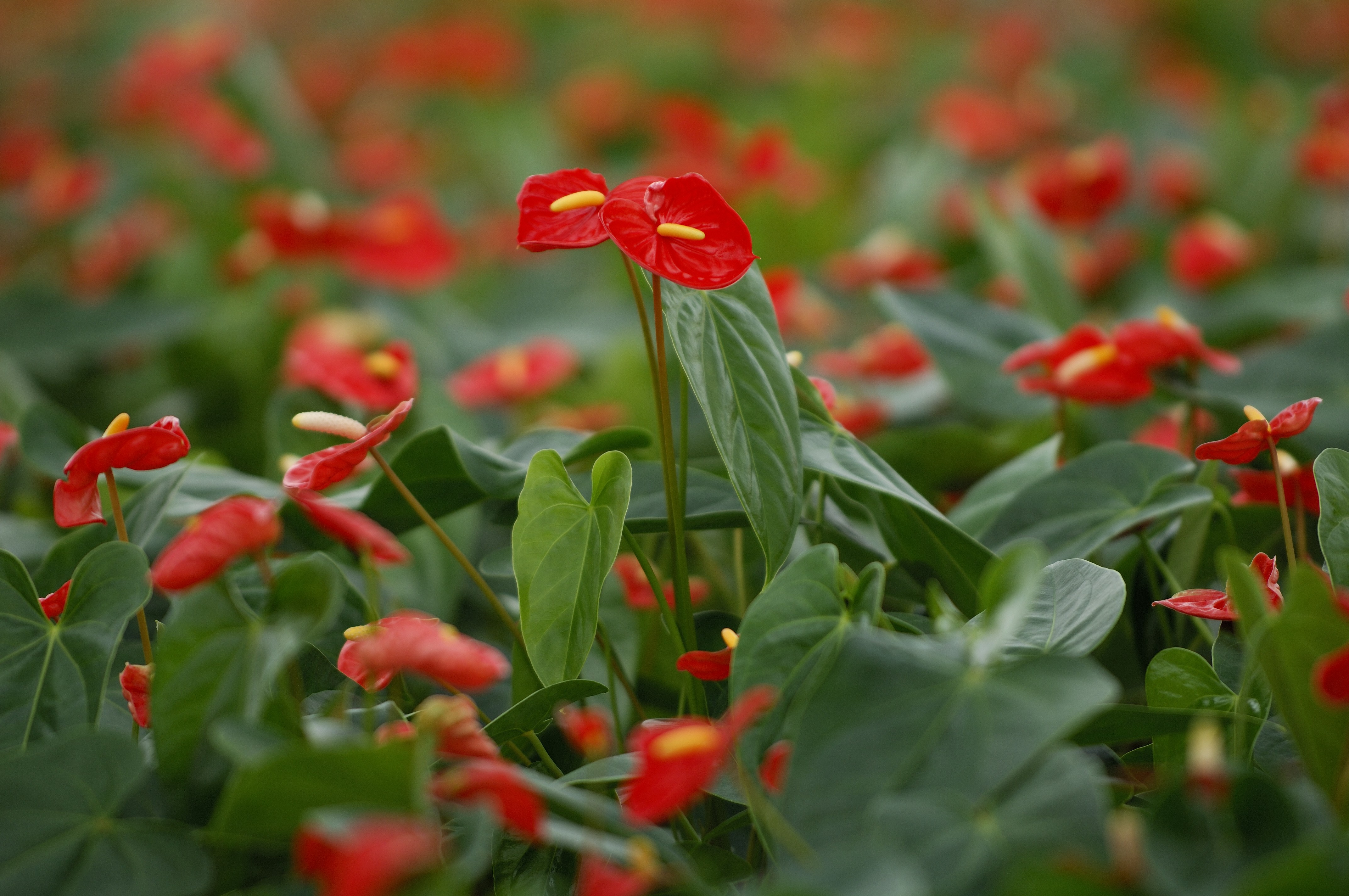
Eternal spring with PARperfect at Anthura
-
- Greenhouse:
- Anthura
-
- Location:
- Bleiswijk, Netherlands
-
- Crop:
- Anthurium, orchid
-
- Challenge:
- Light control
-
- Solution:
- Obscura 9950 FR W, Luxous 1547 D FR, Harmony 5747 FR
APRIL 2022
Anthura’s goal is to create spring in its greenhouses all year round — the ideal conditions with the ideal light level. With Svensson’s PARperfect screen solution, the anthurium and orchid specialist can achieve the desired amount and diffusivity of light at crop level regardless of the season, while saving energy. The result: higher quality plants.
Light level and uniformity are essential ingredients for an optimal greenhouse climate, says Patrick Romeijn, production manager at Anthura. For years, Anthura has worked daily with climate screens and light control: screening out excess light in summer and saving energy in winter. The company also wants to meet current and future requirements for light emissions.
Since spring 2021, Anthura has applied the PARperfect solution in its 2-hectare phalaenopsis breeding greenhouse in Bleiswijk, Netherlands. Although the screens have been installed for less than a year, the experiences are positive. “We see a higher growth rate and better crop quality,” says head grower Peter Vogel.
Anthura has more than ten years of experience using multiple climate screens. When the Cyclamenweg location in Bleiswijk was built in 2009, diaphragm screens were deliberately chosen. “With these screens, by sliding two cloths over each other we could quickly and continuously increase or decrease the screen percentage,” explains Patrick Romeijn.
No light and shadow bands
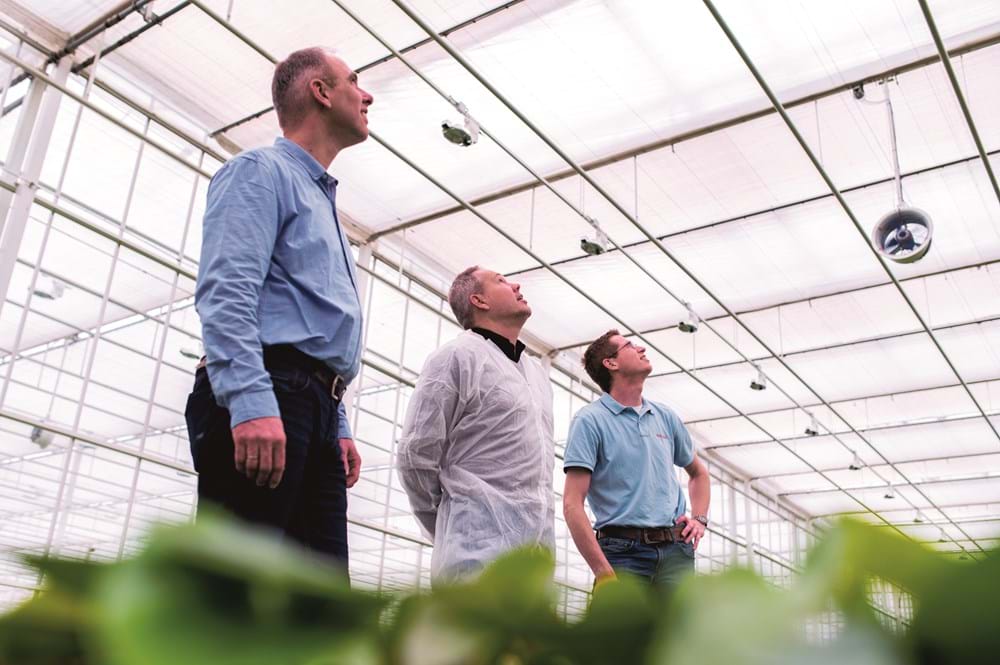
In consultation with Svensson and greenhouse installer Huisman Scherming, the team chose a solution with three screen installations: Obscura 9950 FR W as the upper screen, Harmony 5747 FR in the middle, and Luxous 1547 D FR at the bottom. The intermediate Harmony screen provides good light spread through its diffusion properties, resulting in high uniformity of light at crop level, says Vogel.
“Even if we close the upper Obscura screen to a lower percentage, sometimes as much as 25% to screen out excess sunlight, it does not lead to light or shadow bands at crop level. This allows cultivation at a higher average light level, leading to good growth and quality with less risk of light stress.”
The experience with this three-screen concept was so positive that it was chosen again when renovating the phalaenopsis breeding greenhouse. By then, Svensson had brought PARperfect to market, allowing screen levels to be continuously controlled from 20% to 100%. Anthura chose Obscura 9950 FR (top), Harmony 2047 FR (middle) and Luxous 1147 FR (bottom).
The Harmony PARperfect climate screen delivers a high degree of diffusivity at a lower screen percentage, explains Svensson advisor Bart Bakker. “In PARperfect, the position of the screens is continuously adjusted based on the intensity of solar radiation. The light level at crop level is kept constant, regardless of the season or time of day.”
Energy savings without light loss
Thanks to the high diffusivity of the PARperfect climate screen, light distribution at crop level is optimal, Patrick Romeijn believes. “The grower’s biggest challenge is light and shade bands in the greenhouse. The trick is to choose the right screen combinations so that you have the correct light level at crop level.”
“In the PARperfect solution, the upper Obscura screen is often used to screen out excess sunlight — in summer we go up to 70%. Because of Harmony’s diffuse properties, this works without creating uneven light. We can therefore maintain a slightly higher average light level with diffused light.”
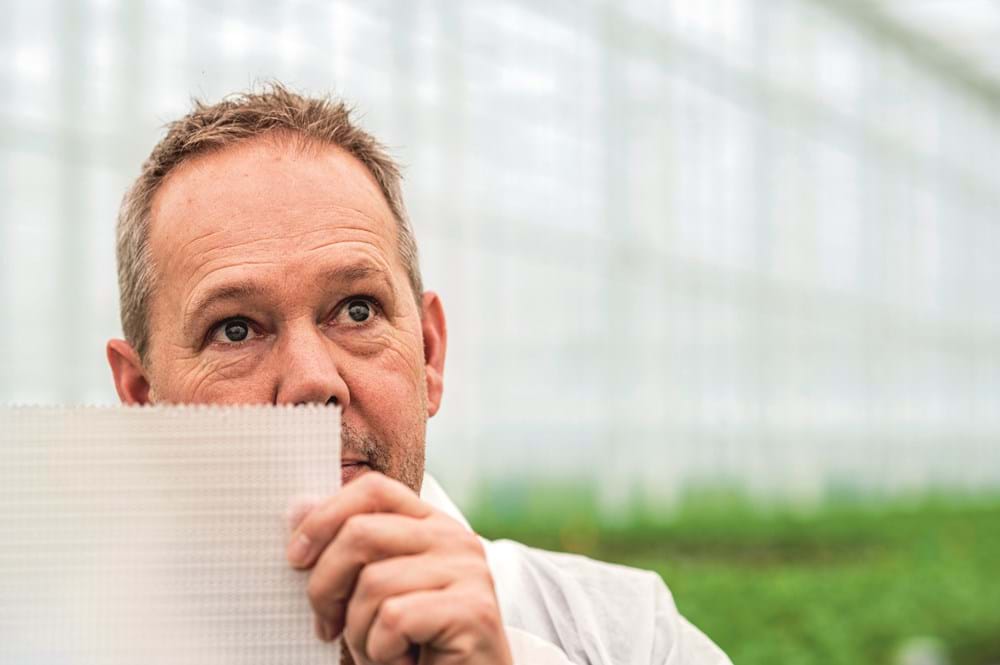
In autumn and winter, the lower screen can be closed again and in low sunlight the Harmony screen is used, adds Vogel. “This delivers energy savings with little light loss. We can also allow a higher PAR sum so that the plant enters winter with more reserves.”
A Priva climate computer controls the climate screens based on PAR sensors in the greenhouse. “The challenge is to stay in control; you need a minimum screen setting for that,” says Romeijn. “Priva measures the internal light intensity and opens or closes the screens to reach the desired values.”
Logistical teamwork in installation
Installing the screens was a rewarding and challenging task for Huisman Scherming, says commercial director Dave Boer. “We spent several months installing the screens. The objective was that the plants should not be affected by our work — not by the installation itself, nor by temperature differences, excess sunlight, humidity, or light emissions. This required excellent communication between Anthura and Huisman. The greenhouse is divided into sections, and we worked per section. Anthura and Huisman have worked together for thirty years, so we know what we have in common.”
PARperfect also fits perfectly with Anthura’s desire to save energy. That was an essential condition to make the energy picture add up, especially during the energy crisis, concludes Romeijn. “With the screen configuration, we can make all sorts of screen combinations. We can keep a screen closed continuously without too much light loss at crop level and achieve an optimal light level without disadvantaging energy consumption.”
This article was first published in Kas Magazine in January, 2022.
Curious what made it all work?