


Maintaining quality, that’s what it’s about.
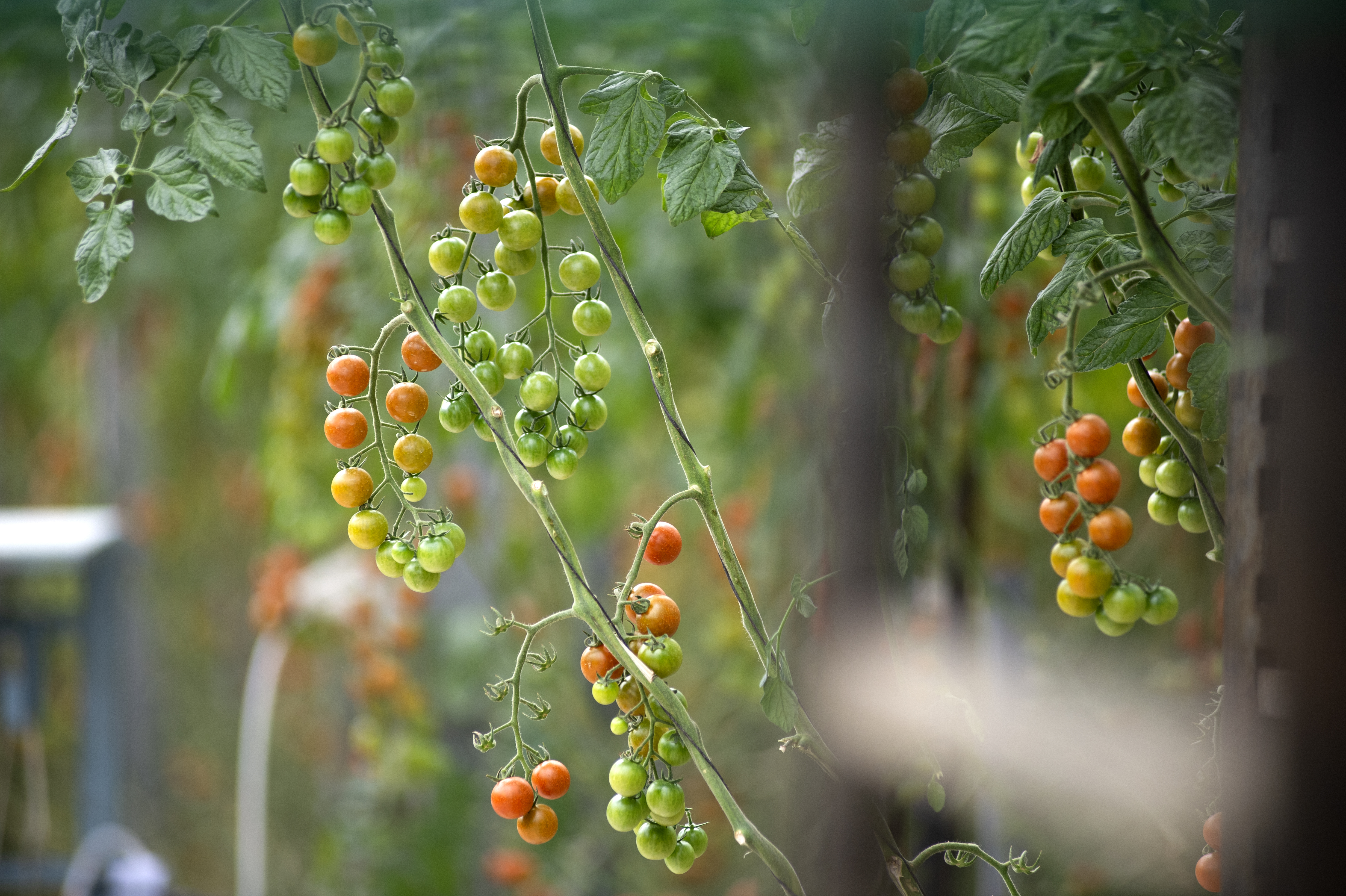
The Spanish way with Dutch knowledge: Year-round at Looije in Águilas
-
- Greenhouse:
- Looije OPFH
-
- Location:
- Murcia, Spain
-
- Crop:
- Cherry tomatoes
-
- Challenge:
- Full 12-month cultivation
-
- Solution:
- Luxous
JULY 2019
In southern Spain, most greenhouses are covered with plastic rather than glass. Despite this, tomato grower Vincent Looije, from the well-known Dutch horticultural family, is building new glass greenhouse complexes in Águilas using Dutch cultivation knowledge — with a focus on quality over quantity.
Vincent speaks fluent Spanish with his team and emphasizes how important the Spanish culture has become to him. He prefers to be called a grower, not chief or director: “Cultivating is my thing.”
His mission is to help consumers enjoy healthy food, and he says, “Our mission is to make the consumer enjoy healthy food. In addition, we try to do something for humanity, make a contribution.”
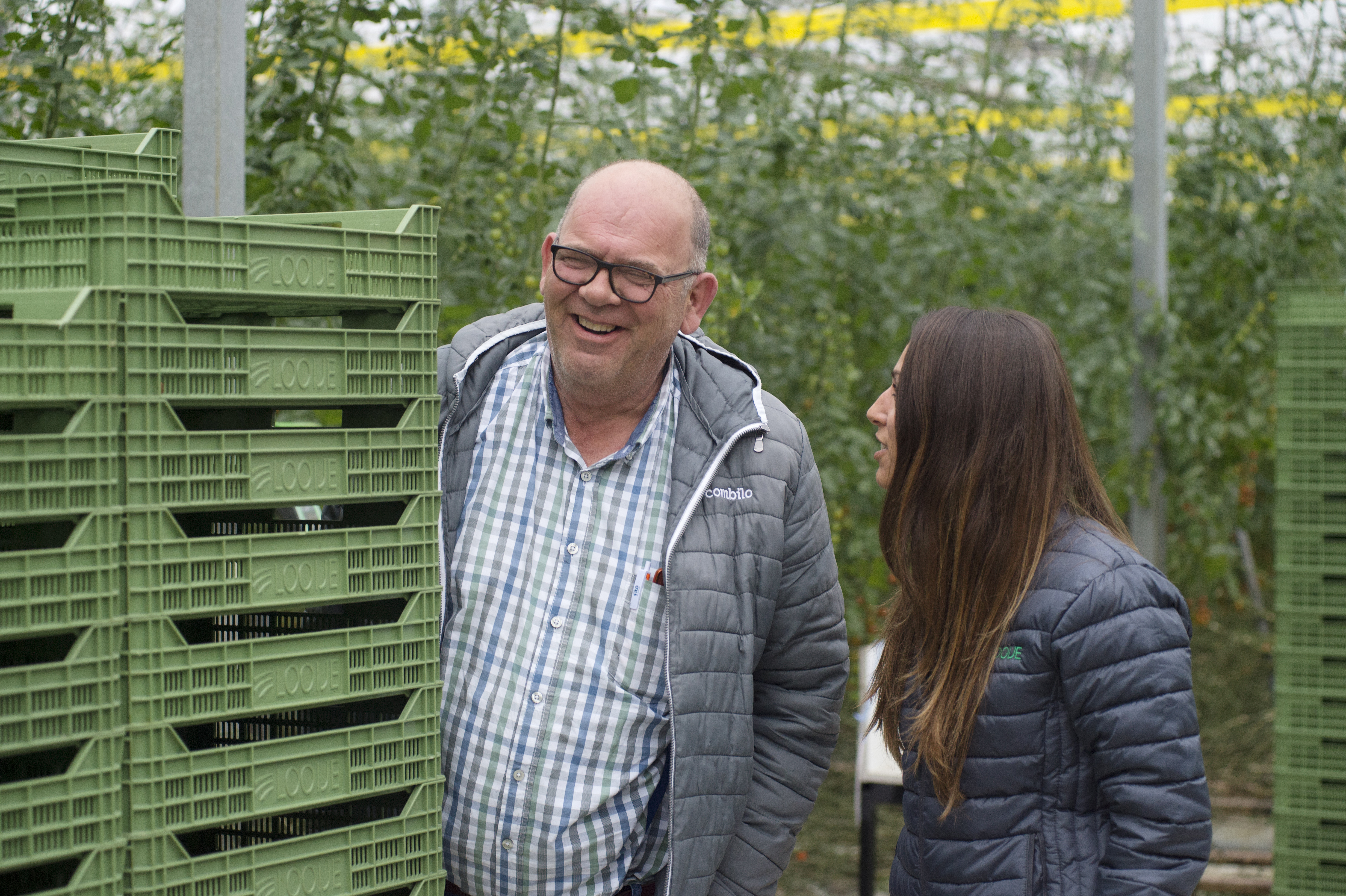
At Looije OPFH, twelve growers from the region around Águilas (between Almería and Murcia) are associated in a cooperative. Their aim is to grow high-quality cherry tomatoes focused on flavor rather than volume.
“The goal is to grow high-quality cherry tomatoes. It’s about flavor and less about quantity. By collaborating we achieve that,” says Vincent Looije, sitting in the late afternoon sun in front of his greenhouse.
Vincent and his brother began growing tomatoes in Águilas around the turn of the century so they could cultivate tomatoes twelve months a year. At that time, they were still growing without supplemental lighting in the Netherlands, so tomatoes were grown in Spain during winter.
In 2017, the Spanish operation became fully independent from the Dutch parent company Looije Kwekers. Building a successful business in Spain was initially difficult, but their breakthrough came when they chose to focus only on quality tomatoes and leave mass production to others.
“Our products go to cutting facilities where ready-to-eat salads for supermarkets are made. The tomato has to be flawless.”
Quality goes before growth
Vincent stands in front of the greenhouse where it all began over twenty years ago. Today, there are two greenhouse complexes totalling nearly eight hectares, but there is no space left to expand on the current site — a common problem for Spanish growers.
While growers in the Netherlands often invest in new technology to maximize kilos per hectare, growers in this part of Spain tend to build more plastic greenhouses. The southern part of Spain is even called the plastic sea, with approximately 32,000 hectares of plastic greenhouses.
Because of this, Looije acquired a nearby 27-hectare site in January last year.
“Step by step we will build greenhouse complexes there totaling eighteen hectares. This year we are starting with the first expansion of five hectares… Growing is not a goal. Maintaining quality, that’s what it’s about.”
Looije is also investing 4.5 million euros in a packing and loading facility where about seven million kilograms of Sarita cherry tomatoes will be packaged and stored under climate-controlled conditions for later transport. Roughly 30 percent of the production goes to the Netherlands, with the remainder supplied to other European countries before staying local in Spain.
Modern greenhouse climate control
Vincent emphasizes that climate control is the key to a uniform growing environment, especially overnight, to avoid large temperature drops. He says that you can’t neglect heating, so they also use CO₂ enrichment and substrate cultivation — further modernizing their operation compared with many other Spanish growers.