


 Cut measure


Designing sounds
Everything you need to know about sound-rated textiles
What are the benefits, how are the textiles constructed, and how do we test them to ensure they truly work?

Hanger
Cut sample
Sample card
Cut measure
Total
No products in cart
The frequency tells us what tone the sound has. A high-frequency sound is squeaky or sharp, while a low-frequency sound is rumbling or muffled. The frequency is measured in hertz (Hz) and indicates how many oscillations per second a sound wave has. 1 Hz means one oscillation per second. The human ear can, at best, perceive sounds ranging from 20 to 20,000 Hz. Above 20,000 Hz is ultrasound, below 20 Hz is called infrasound. Many animals, however, can perceive a much wider frequency range. For example, dogs can perceive high-frequency sounds up to 60,000 Hz. That's why they react to special whistles that are completely silent to us.
There are sound enthusiasts (audiophiles) who claim that tones outside the audible range still matter in film and music contexts. They believe that infrasound is good for bass reproduction because it makes the room "breathe," while ultrasound adds "spatial information," such as the guitarist in a live recording standing behind the singer. Quite advanced, in other words.
While we are on the topic of music and HiFi, we might as well mention how sound frequencies are handled in a speaker. Most expensive speakers are divided into at least three components that manage different frequency ranges: bass (about 20–200 Hz), midrange (about 200–2,000 Hz), and treble (about 2,000–20,000 Hz). In English, the bass component is named after a dog's bark (woofer), and the treble is named after bird chirping (tweeter). Voices lie in the midrange, and it is also where our ears are most sensitive, i.e., best at perceiving nuances in sound.
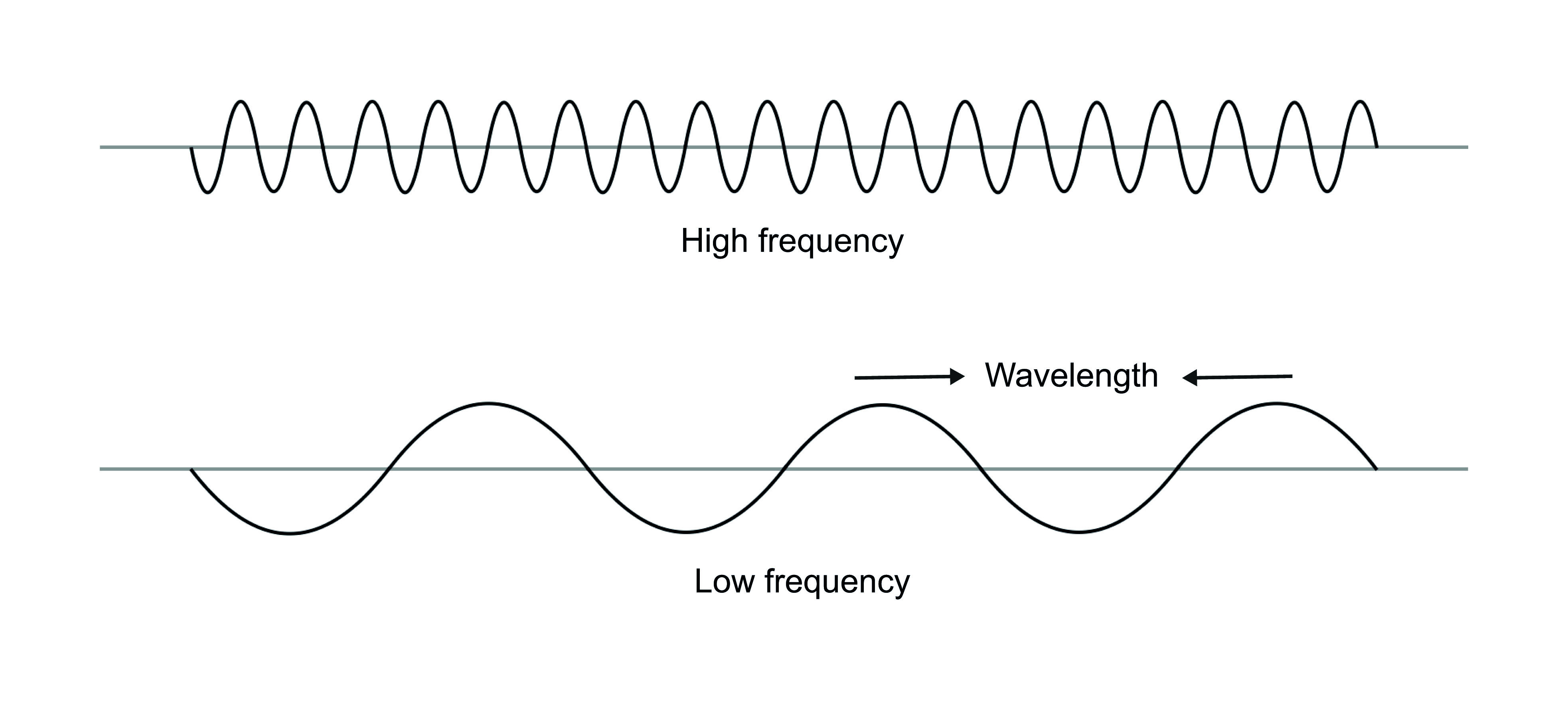
Because low-frequency tones have longer wavelengths, they pass through different materials more easily than high-frequency tones. That is why you hear the bass from your neighbour's speakers but not the treble. For the same reason, a sound absorber becomes more effective the more high-frequency the sound is. Low tones are also more omnidirectional than high tones. Therefore, it matters less where a subwoofer in a sound system is placed. The ear cannot determine where the sound is coming from anyway.
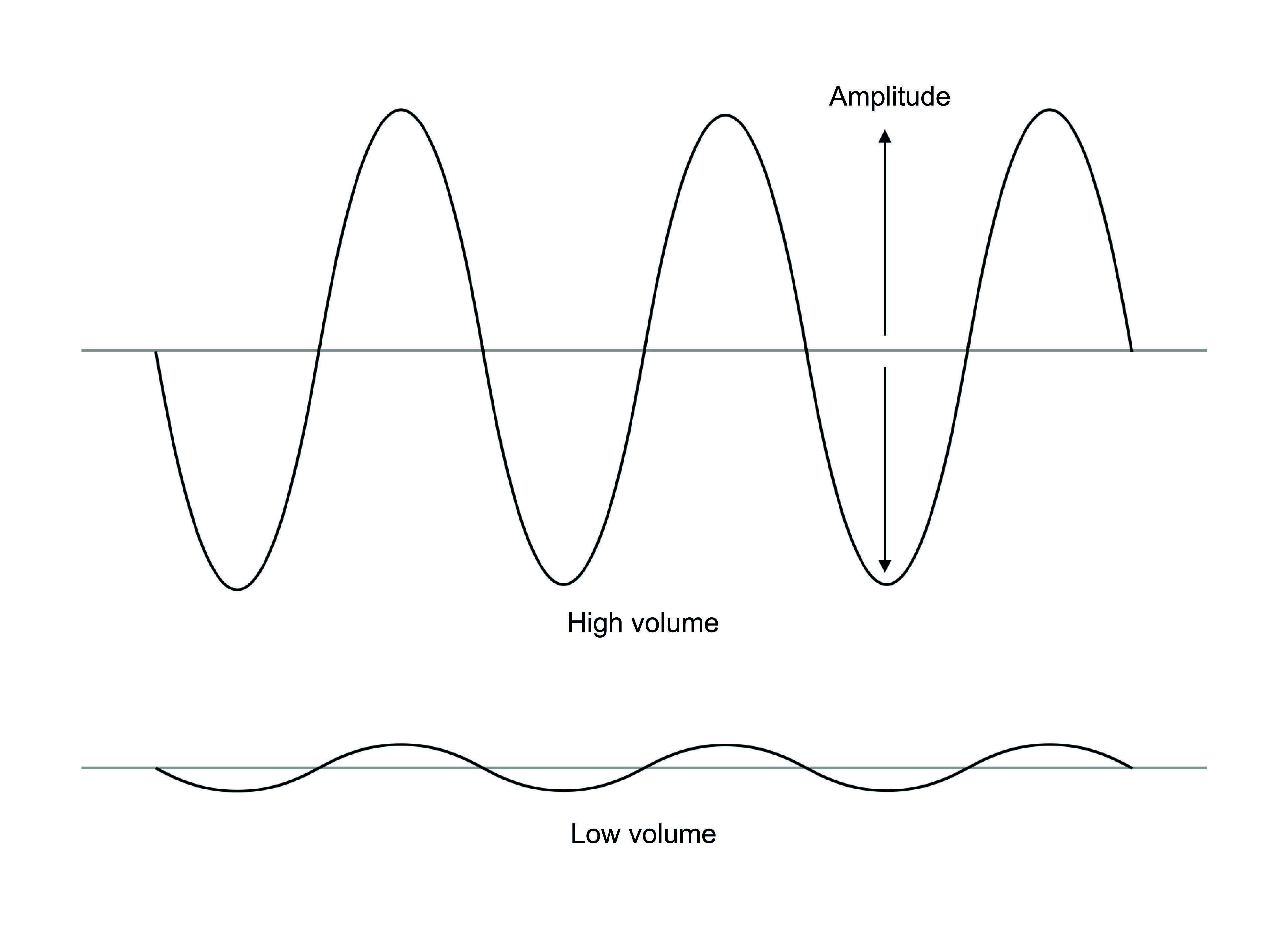
Sound volume, sound level, or sound intensity refers to how loud or how much it sounds. The height of the peaks and the depth of the valleys in a sound wave are called amplitude. The value describes pitch, which is the same as volume. This is measured in decibels (dB), and 0 dB is the threshold for what a human ear can perceive. Around 85 dB, the sound volume starts to become harmfully loud, the pain threshold is at 130 dB, and at 180 dB, the eardrum ruptures.
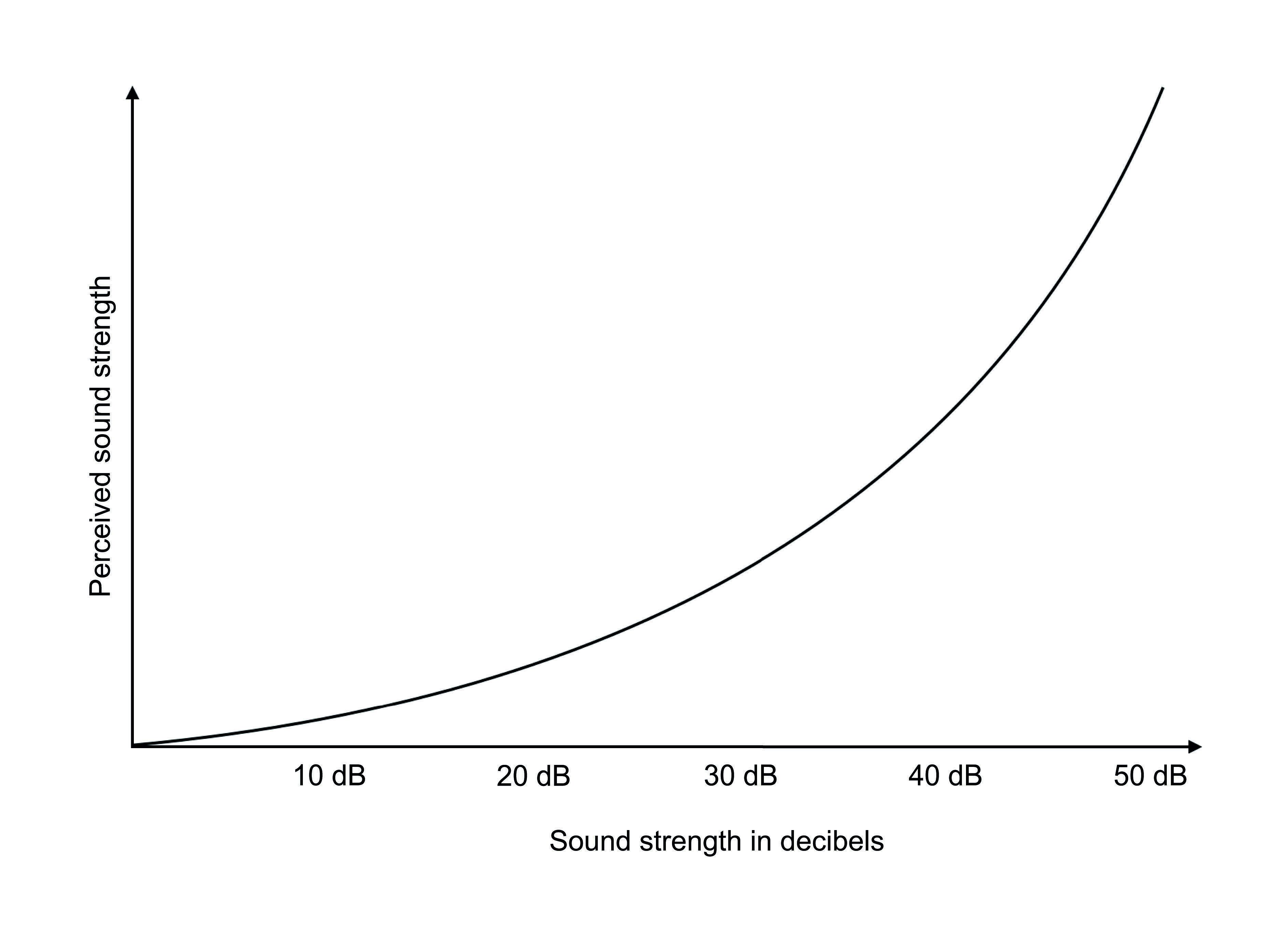
10 dB – Breathing
20 dB – Mosquito
30 dB – Whisper
40 dB - Refrigerator
60 dB - Conversation
70 dB - Vacuum cleaner
80 dB - Truck
90 dB - Lawnmower
100 dB - Helicopter
110 dB - Rock concert
120 dB – Police siren
130 dB - Jet plane
160 dB - Gunshot
The denser a material is, the faster sound travels through it. In air, sound waves travel at approximately 340 m/s, which corresponds to 1,224 km/h or mach 1. In water, it is about 1,500 m/s and in metal, it can be up to about 6,300 m/s depending on the type of metal. When an aircraft exceeds the speed of sound, it breaks the sound barrier. A pressure wave is created, and when it hits the ground, it results in an explosion-like sonic boom that can shatter windows and damage entire buildings. Therefore, it has long been prohibited to operate civil aviation at supersonic speeds where there are built-up areas.
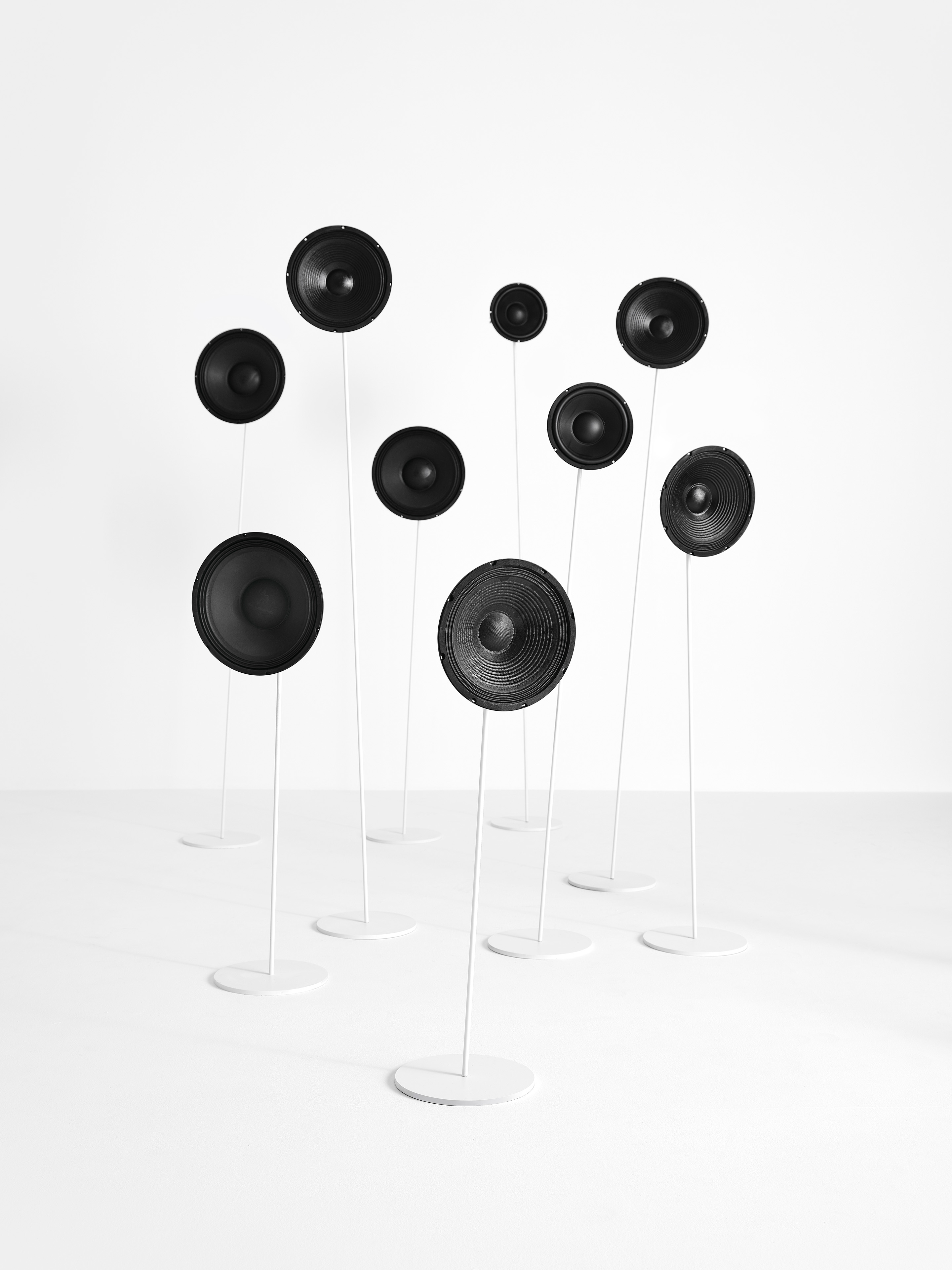
Thanks to the knowledge of the speed of sound, we can measure distances in different ways. For example, a sonar sends sound waves down and then calculates how long it takes for them to bounce back. Since we know how fast sound travels in water, the sonar can tell us how deep it is.
We can also use the speed of sound to calculate how far away a lightning strike is. Since it takes approximately 3 seconds for sound to travel 1 km and light travels incredibly much faster (about 300,000 km/s), we can count how many seconds it takes for the thunder to reach us after we've seen the lightning. If it takes 3 seconds, it is therefore 1 km away.
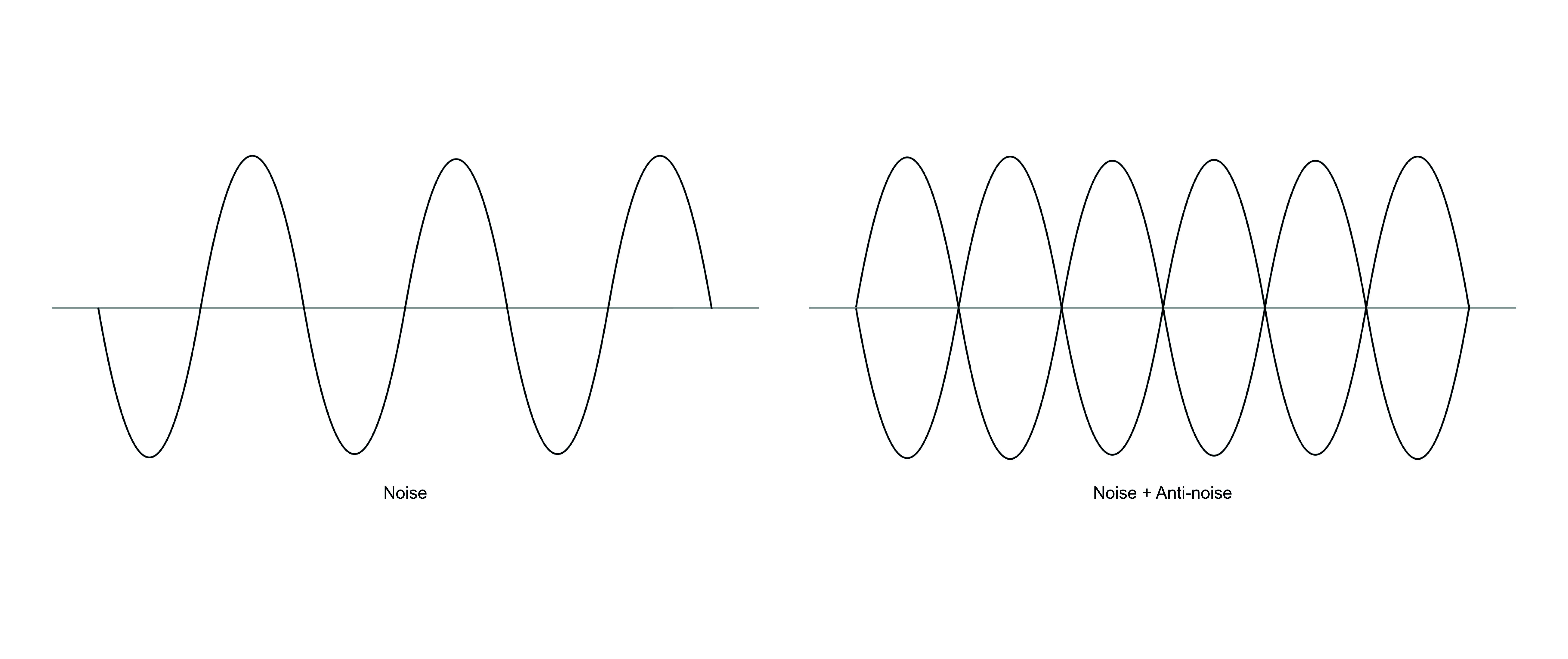
Another somewhat magical technique based on sound knowledge is the active noise cancellation found in some headphones. For it to work, a microphone is used to capture sound waves from background noise or disturbances. The exact same sound waves, but completely inverted, are then sent out through the headphones. The result is silence, and you don't have to hear the noise in the office, on the bus, or whatever it may be. This technology is also used in some cars and airplanes.
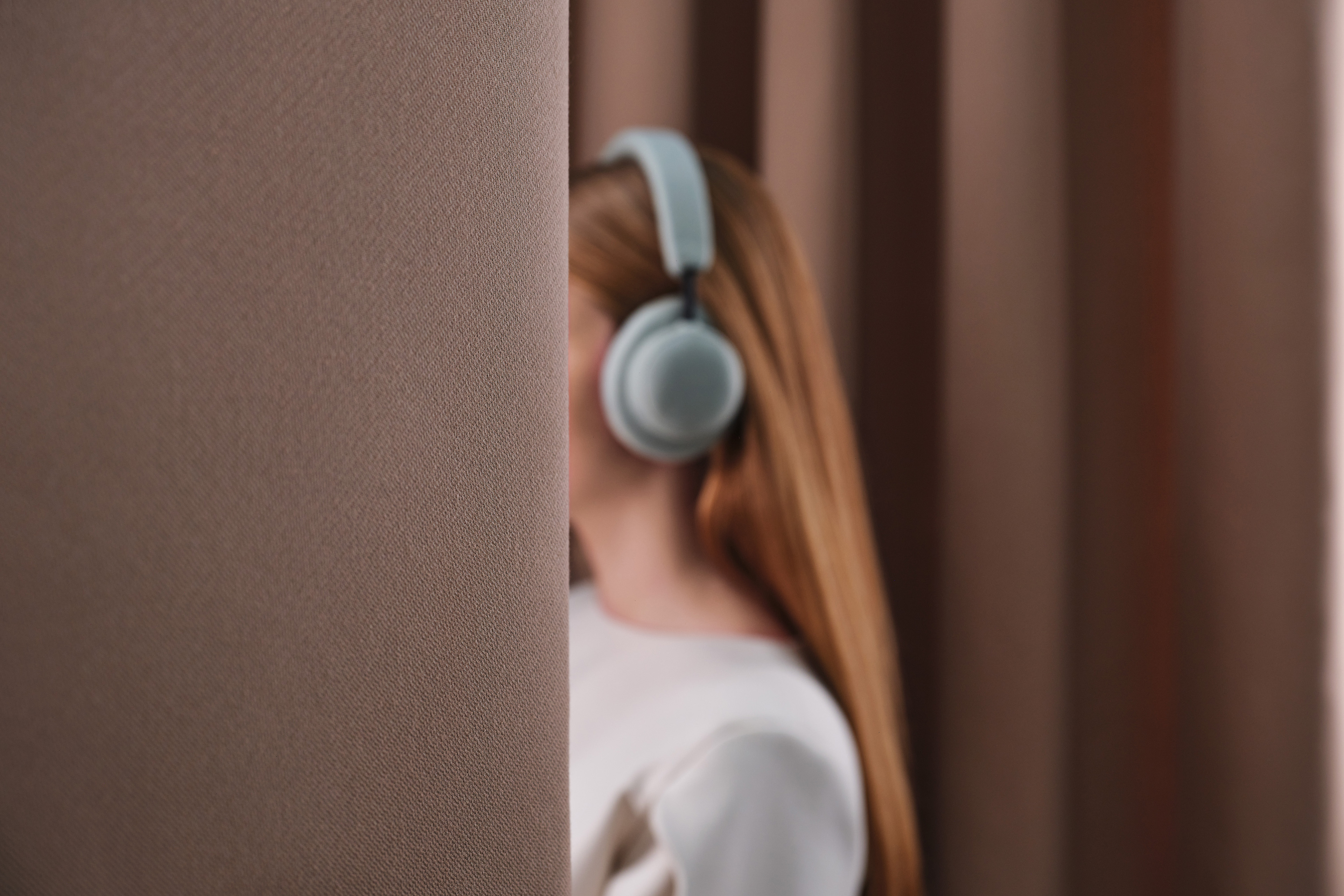
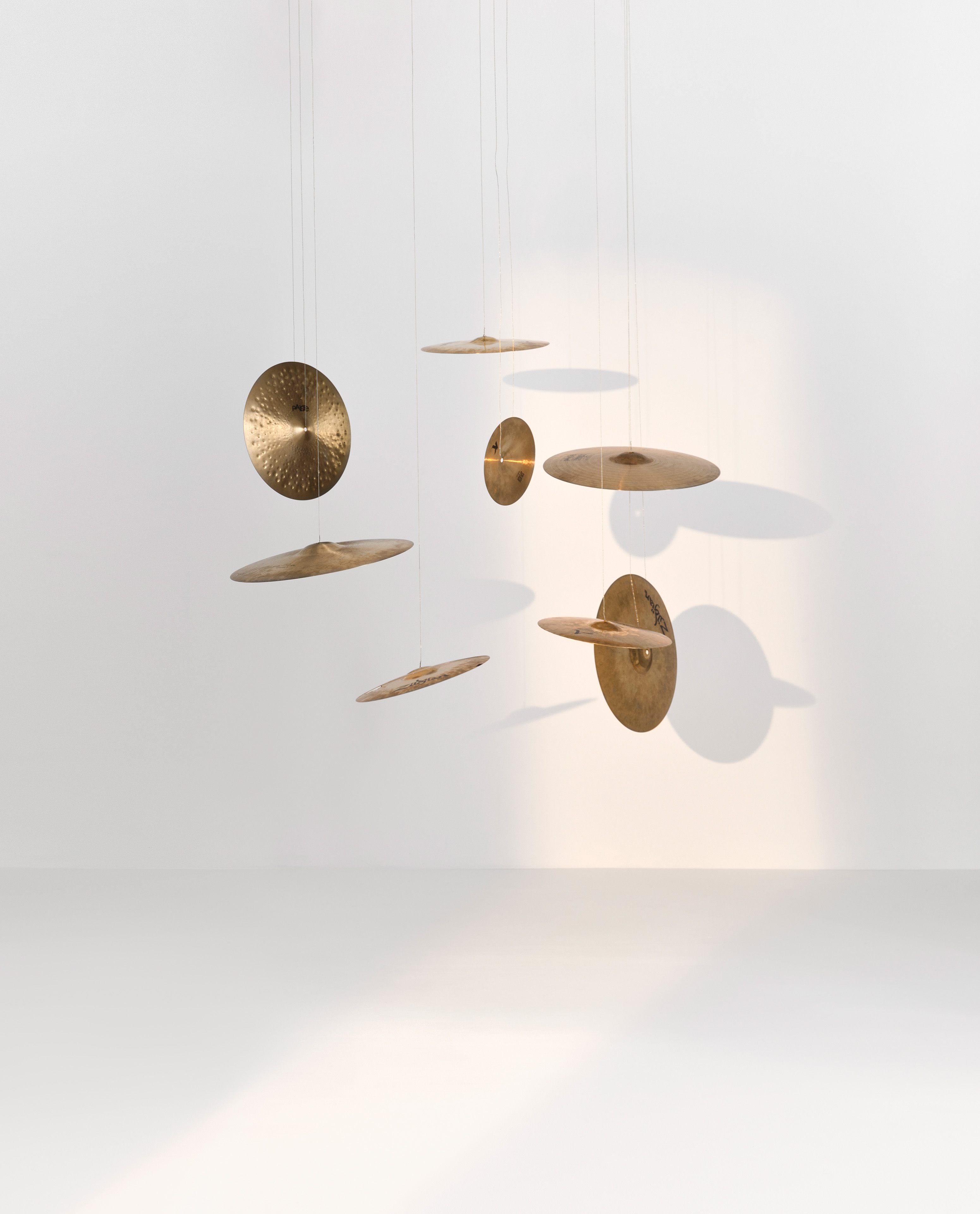
Every room has some degree of reverberation. This means that sound is reflected and thereby lingers in the room. To find out if a room has a long or short reverberation, you can test it with a simple hand clap. The quicker the sound fades away, the shorter the reverberation time of the room, which is good.
Echo is essentially the same phenomenon as reverberation. It also occurs when sound is reflected from a surface, but it is perceived again with such a delay that it is like a separate sound. Usually, a delay of a tenth of a second is required for it to be perceived as an echo, which means that the reflecting surface generally needs to be at least 17 metres away. However, quicker echoes can occur if the sound bounces several times between two surfaces at shorter distances. This is called flutter echo and can be experienced in pedestrian tunnels and similar places. The echo also becomes stronger if the reflective surface is curved.
Designing sounds
What are the benefits, how are the textiles constructed, and how do we test them to ensure they truly work?

Designing sounds
An important factor for well-being is pleasant acoustics. Here we share our combined knowledge and experience together with experts from various industries and fields.
Designing sounds
Sound-rated textiles from Svensson are available in absorption classes A-C. With the right fabric in the right place, you can create a pleasant sound environment.
