Our objective was very clear,. We wanted higher and more stable production during winter.
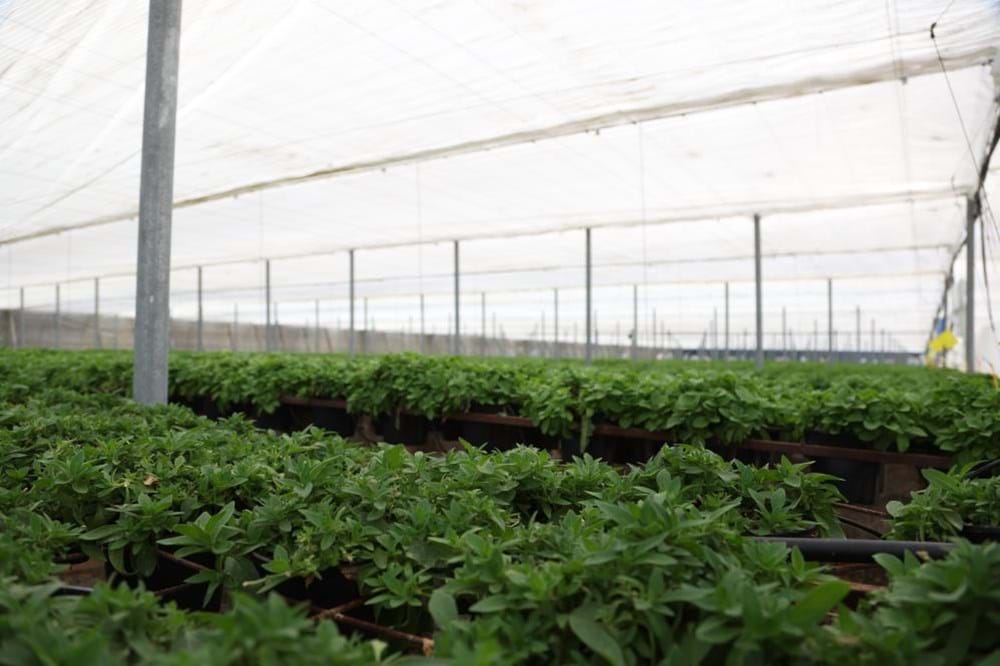
Increasing the temperature of a traditional sloping-roof greenhouse
-
- Greenhouse:
- Plantas de Andalucia
-
- Location:
- Andalucia, Spain
-
- Crop:
- Petunia
-
- Challenge:
- Raising temperatures to extend season
-
- Solution:
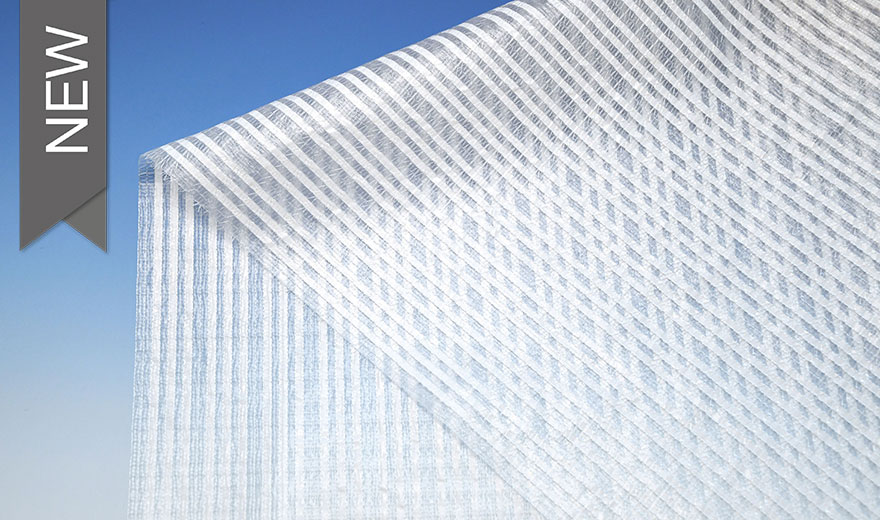
- Harmony 3845
SEPTEMBER 2023
Plantas de Andalucía specializes in the production of high-quality cuttings, including petunias grown for export to a Dutch customer. In the winter months of December, January, and February, maintaining a stable greenhouse climate can be particularly challenging in southern Spain. Corne Brooijmans, plant grower at Plantas de Andalucía, explains how installing a Svensson Harmony 3845 thermal and shade screen helped them manage low night temperatures, humidity, and energy use.
Managing winter conditions in Spanish greenhouses
“Winter is the most demanding period for us,” Corne explains. “Night temperatures in this region can drop to five or six degrees, which makes it difficult to maintain an active growing climate.”
Before installing a screen, the greenhouse team could only raise the internal temperature by one to two degrees. This limited both growth rate and plant quality during the coldest months.
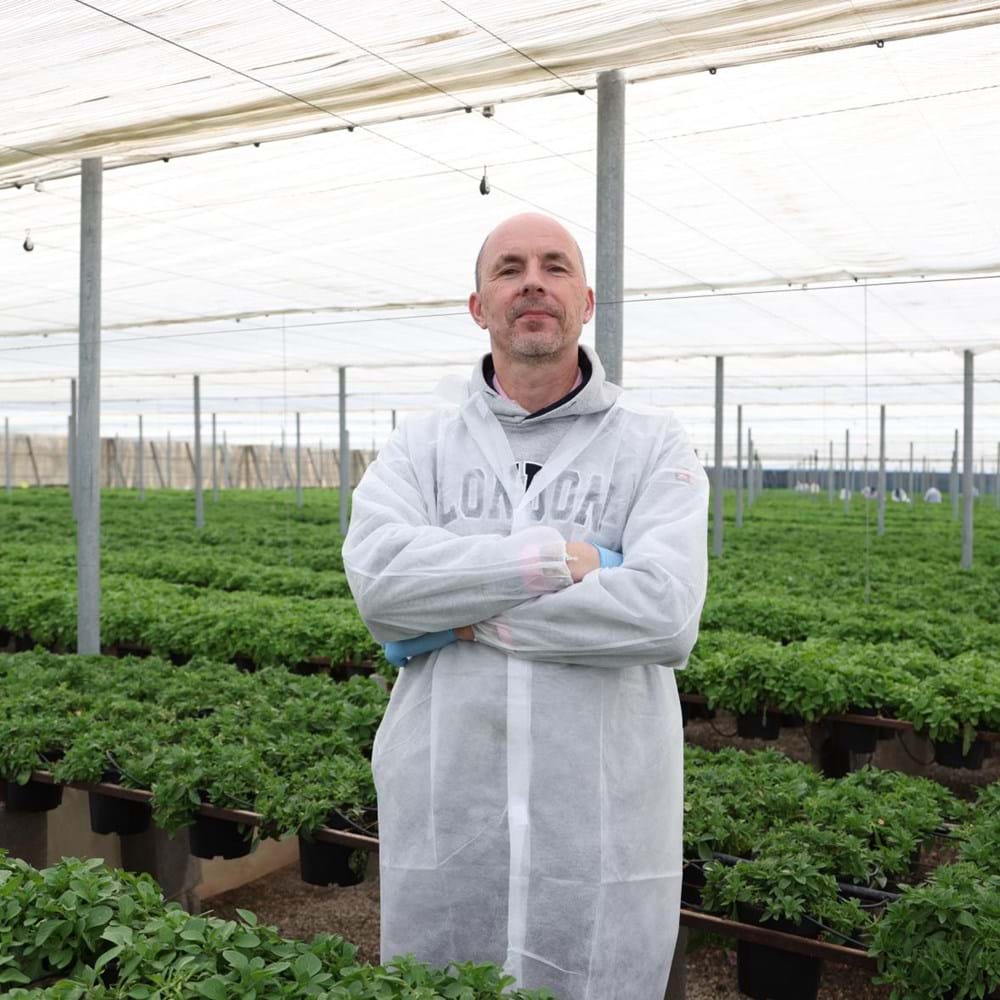
To improve winter climate control, Plantas de Andalucía decided to install the Harmony 3845 screen from Svensson in their petunia greenhouses. While traditional Spanish sloping-roof greenhouses have not always used internal screens, more growers are now adopting this approach, including in multi-tunnel structures, with strong results.
Selecting the right thermal screen
Corne and his team worked closely with Svensson to identify the most suitable screen for their greenhouse structure and production goals. “Our objective was very clear,” he says. “We wanted higher and more stable production during winter.”
The Svensson team visited the site to assess the greenhouse conditions and demonstrated how the Harmony 3845 performs in a comparable installation. Through on-site explanations and practical tests, the growers were able to understand the function and purpose of the screen before moving forward.
“Choosing this screen was easy,” Corne adds. “With the guidance from Svensson, we were able to make a quick and confident decision.”
Improved temperature retention and energy efficiency
The Harmony 3845 screen is mainly used at night. “We usually close the screen around six or seven in the evening, when the temperature starts to drop rapidly,” Corne explains. “With the screen in place, we can now reach nighttime temperatures of up to 16 to 18 degrees.”
Compared with plastic-only greenhouse structures, the woven screen fabric significantly reduces heat loss. “Before installing the screen, our energy costs were almost double what they are now,” says Corne.
When we didn’t have the screen, our energy costs were almost more than twice what we have now. The screen’s fiber retains the heat a lot compared to the type of plastic greenhouses that we have in Spain, where the heat escapes very quickly.
He describes the screen as acting like a thermal blanket. By retaining heat closer to the crop, the screen creates a more stable microclimate, which has had a direct impact on production performance.
Stronger plants and higher production quality
The more stable temperature has resulted in clear crop improvements. “We’ve seen production increases of up to 30 to 40 percent in some varieties,” Corne notes. “But the biggest difference is in quality.”
During previous winters, low temperatures caused cuttings to become overly hard. With improved climate stability, plants now develop more evenly, with better structure and vigor.
The Harmony 3845 screen has also contributed to better humidity management. “We’ve reduced humidity levels by up to 70 percent,” Corne explains. “That has helped us lower the risk of fungal diseases, particularly at night.”
Year-round flexibility
While the screen plays a critical role in winter, it also supports summer cultivation strategies. During warmer months, the Harmony screen is used to introduce diffused light into the greenhouse. This reduces the need for heavy roof whitewashing, helping maintain light levels while avoiding excessive radiation stress.
A successful step forward
“I’m very satisfied with the results from the Svensson screen,” Corne concludes. “Installing it was a new step for us, but it has clearly paid off.”