Based on monitoring and control data, thrips entry decreased by up to 50 percent compared to previous years
Greenhouse trials reveal the efficiency of svenssons insect control nets against thrips
-
- Greenhouse:
- Gomalor
-
- Location:
- Jalisco, Mexico
-
- Crop:
- Peppers
-
- Challenge:
- Temperature, thrips pressure
-
- Solution:
- Xsect X-air, Xsect Xtra, Xsect Balance, Solarwoven
SEPTEMBER 2023
To address persistent thrips pressure, Gomalor, a greenhouse pepper producer located in Tuxpan, Jalisco, carried out trials with Svensson insect control nets during the 2022–2023 production cycle. The primary goal was to improve pest control while maintaining a stable greenhouse climate, with minimal impact on temperature and airflow.
Based on the positive results from these trials, Gomalor decided to fully equip its new greenhouse expansion with Svensson climate solutions for the 2023–2024 production cycle.
A growing pepper operation in a challenging climate
Gomalor began operations 17 years ago in Tuxpan, Jalisco, a region characterized by high temperatures that can reach up to 34°C during the hottest months. The company initially started with a 2-hectare greenhouse and has expanded steadily since 2011. Today, Gomalor operates a total greenhouse area of 9.2 hectares.
In addition to peppers, the company also grows berries and avocados, both of which are highly attractive to pests. The proximity of these crops increases pest pressure on the pepper greenhouses, making effective insect control especially critical.
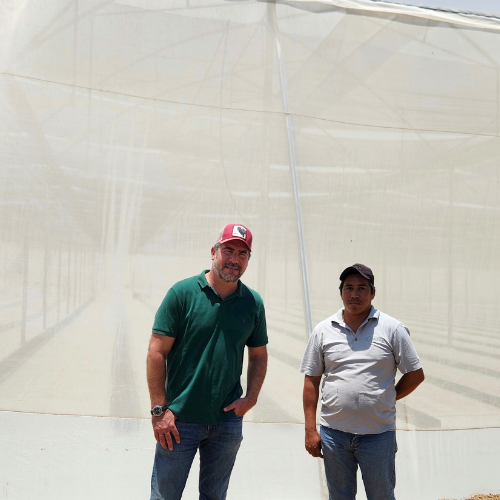
Thrips infestations can significantly reduce both yield and fruit quality in pepper crops. To tackle this challenge, Samuel del Toro, General Manager, and José Morán, Production Manager, initiated insect net trials with Svensson Xsect solutions, supported by Svensson’s LATAM climate consultant, Héctor Parra.
Trial setup and objectives
The trials were conducted during the 2022–2023 cycle in three different greenhouses, each using a unique configuration. The main evaluation criteria included:
greenhouse temperature stability
airflow inside the greenhouse
reduction in thrips entry
Greenhouse #6
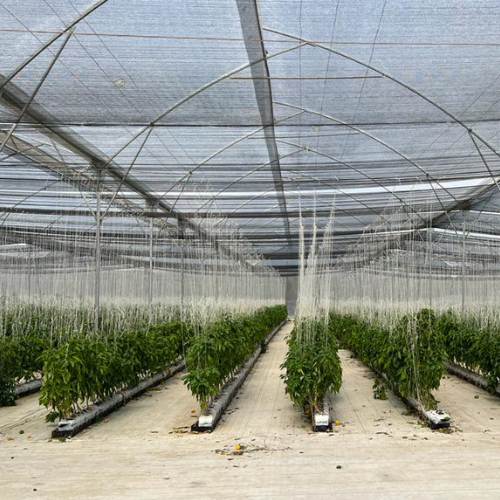
Greenhouse #6, built in 2022 as part of an expansion, was equipped with Xsect X-air installed around the perimeter and Xsect Balance installed on the zenith windows. The objective was to evaluate thrips exclusion while maintaining optimal climate conditions.
Greenhouse #3
In Greenhouse #3, which experiences the highest thrips pressure due to its proximity to berry and avocado fields, Xsect Xtra was installed on the lateral walls and the front of the greenhouse. This trial focused on pest exclusion in a high-risk area.
Greenhouse #4
The third trial took place in Greenhouse #4, where Xsect Xtra was installed only on the front of the greenhouse. The goal was to assess the impact of the insect nets on temperature and airflow.
Trial results from the 2022–2023 cycle
The results of the trials demonstrated clear improvements in both pest control and crop performance.
“Based on monitoring and control data, thrips entry decreased by up to 50 percent compared to previous years,” says José Morán.
Additional outcomes included:
improved thrips control in Greenhouse #3, the site with the highest pest pressure
improved crop quality due to reduced pest damage
85–90 percent healthy plants at the end of the production cycle
a 30 percent reduction in pesticide applications in Greenhouse #6, which was fully equipped with Svensson solutions
“The results from the trial cycle were very satisfactory, and this year we are implementing a new greenhouse that will be 100 percent equipped with Svensson climate solutions,” says Samuel del Toro.
Full implementation in the new greenhouse expansion
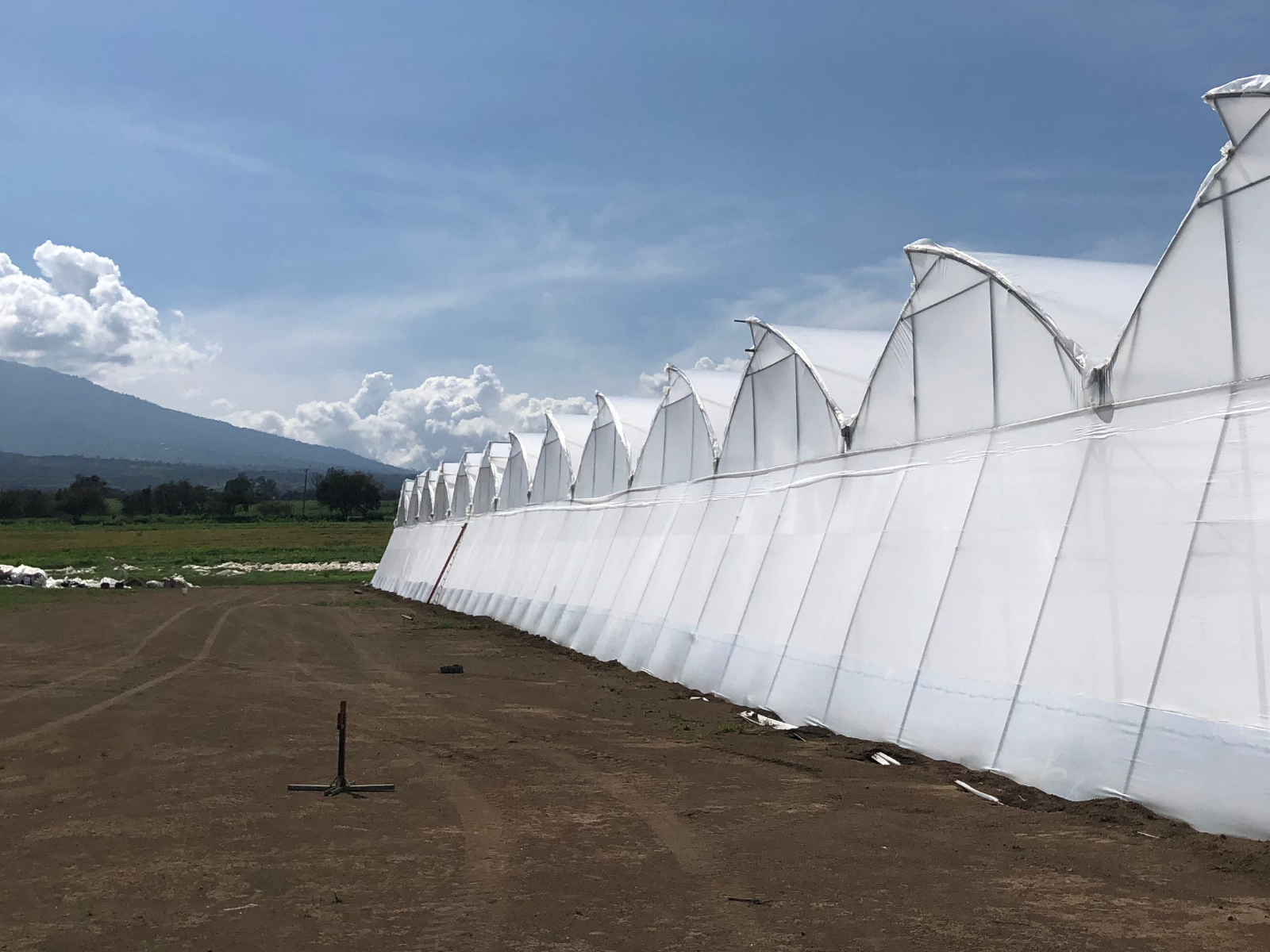
Based on the trial outcomes, Gomalor decided to fully equip Greenhouse #7, which began production in the 2023–2024 cycle, with Svensson insect control nets.
The configuration includes:
Xsect X-air on the zenith windows, lateral walls, and one front side
Xsect Xtra on the opposite front side
insect control nets integrated with a Solarwoven cover
José Morán explains the decision to integrate the insect nets with Solarwoven:
“By confecting the insect nets together with Solarwoven, installation was easier and offered operational and structural advantages, as the material is easier to handle once installed.”
Compared to previous cycles, plant vigor also improved noticeably.
“In earlier seasons, plants appeared more stressed during certain weeks. This cycle, plant vigor improved, and we achieved an additional week of production, thanks to a combination of factors, including Svensson’s nets,” José adds.
Advice for growers facing similar challenges
Based on their experience, Samuel and José offer the following advice to growers operating in hot climates with high thrips pressure:
“Although the cost of the nets may be higher than other products, the difference in results is significant. Try the nets and test their performance,” says Samuel.
José adds, “During trials, install the nets in areas with the highest thrips pressure, such as the front or lateral walls, and closely observe the results.”
Samuel concludes, “As customers, the results were very satisfactory. We will continue working with Svensson and evaluating new products.”
Trial results may vary depending on crop, greenhouse design, and local climate conditions. For optimal results, expert guidance is recommended. Svensson climate consultants can help tailor solutions to specific greenhouse challenges.
Curious what made it all work?