Treatments are much fewer, the plants grow better because we treat less: we’ve gone from treating 6 times a week to 2 or 3, which improves both quality and costs.
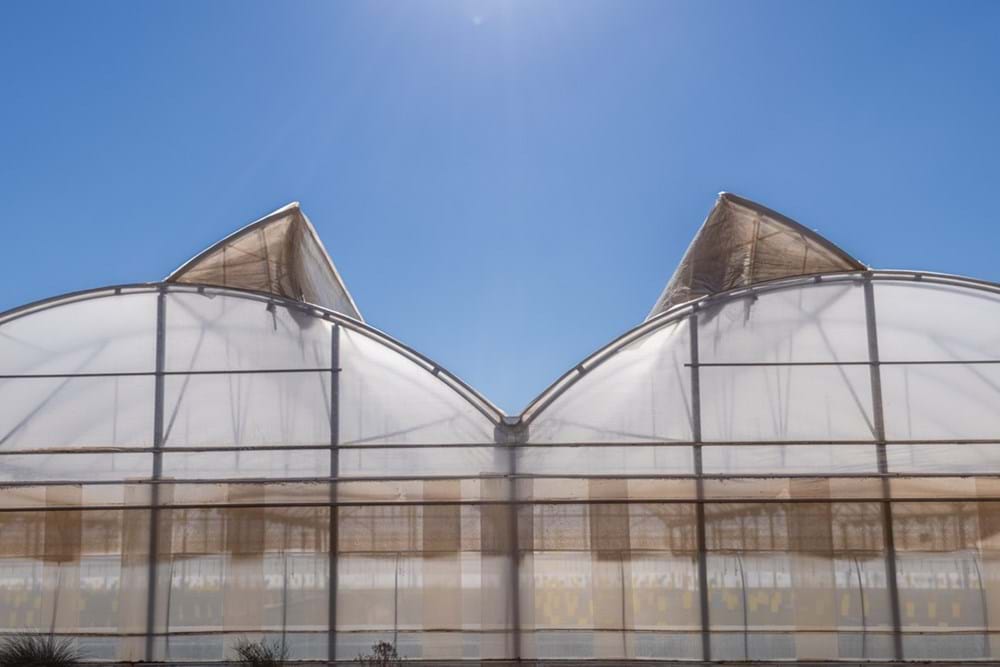
An insect-free Svensson protection chain from Vicaplant nursery to final grower
-
- Greenhouse:
- Semillero Vicaplant
-
- Location:
- Almeria, Spain
-
- Crop:
- Palermo pepper
-
- Challenge:
- Total insect protection
-
- Solution:
- Xsect Xtreme
APRIL 2022
Miguel Cabeo Fernandez starts the Svensson protection chain in his Vicaplant nursery with Xsect Xtreme nets. Paco Luque, an organic grower, collects his pest-free pepper plants from Miguel’s nursery and continues the protective chain in his greenhouse using the Xsect Balance Max net, a product launched by Svensson in 2022.
While Miguel installed the Xsect Xtreme net in his nursery to achieve extremely high insect protection, Paco installed the Xsect Balance Max net in his greenhouse in June 2021. The Xsect Balance Max net provides extreme protection against whitefly and similarly sized insects, and the airflow is higher with the Xsect Balance net.
Miguel, why did you decide to introduce Svensson’s Xsect Xtreme insect control nets in this new Vicaplant facility?
In our other buildings we had already tried Svensson products. In this one we wanted to use the nets to improve the problem of pest entry. We suffer from thrips, a pest very hard to eradicate, and since we started using Svensson nets two years ago, results have improved greatly.
When we used nets from other brands, insects got in and there was no way to eliminate them with the products we used. Since using Svensson nets, we have reduced weekly treatments. You can tell the plants develop much better and no insects enter the nursery at all.
This is our latest installation, which already comes fully equipped with Svensson products, and in all our greenhouses we now use their technology.
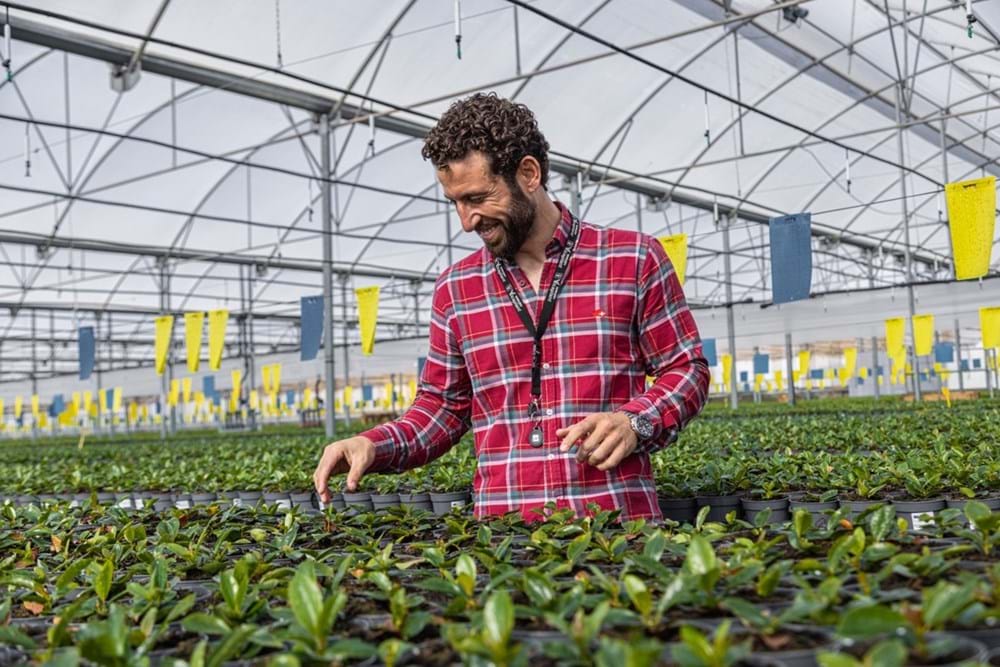
We then visited the nursery where Miguel first began using Svensson products and saw the results.
Miguel, we’re now in the facility where you began testing Svensson products. Tell us what it has meant for you.
This building was the first one. We saw a big difference from one year to the next, especially in insects. In this type of plant we’ve been producing here for four years, we always had problems with thrips: all the leaves were damaged, and it was impossible to release beneficials to try to manage without fungicides and insecticides. After switching nets, no problems at all. By switching the net, chemical use was reduced by 60%.
Regarding the sidewalls, the bands used to be smaller and the windows too. What we did was increase the openings: since nets reduce air entry, we added more net surface to improve ventilation.
This building used to be especially bad for growing peppers in summer due to pest issues and for growing this type of seedling in winter. The change was radical. Since we installed Svensson nets we haven’t had any pest problems. The plants grow healthier. And everything is more sustainable.
The change was radical. Since we installed Svensson nets we haven’t had any pest problems.
Paco Luque arrives, an organic grower who has been working with Miguel for a year. In addition to buying his young pepper plants from Vicaplant, he uses Svensson products in his own greenhouses, continuing the Svensson protection chain.
Paco, you’re here with Miguel, your supplier and reference nursery. Tell us how Miguel’s use of Svensson products in the nursery—and your own use of them in your greenhouse—affects your crops.
Today I couldn’t be more satisfied. We’ve come from some very difficult years with viruses, lots of Tuta, whitefly… Last year was particularly tough for me, so we decided to make a serious decision and look for nurseries using Svensson nets. That’s how we found Miguel, and we committed to his facilities.
Working with a nursery that uses Svensson products—how has that improved your insect problems?
For growers in this area, the most delicate moment is transplanting. Since we grow peppers and plant relatively late in the season, there are still many pests outside. Our biggest problem is viruses. Last year around the same date, after 15–20 days I had replaced around 30–40 trays. Each tray has 150 plants—around 4,000 plants. This year, over the entire cycle, I’ve replaced two trays. The change has been radical.
We lost about 7 hectares due to viruses last year, and this year across the whole farm we manage, we may have around 30 plants affected.
Same farm, same crop: loss of 7 hectares without Svensson products versus only 30 plants lost when using Svensson nets.
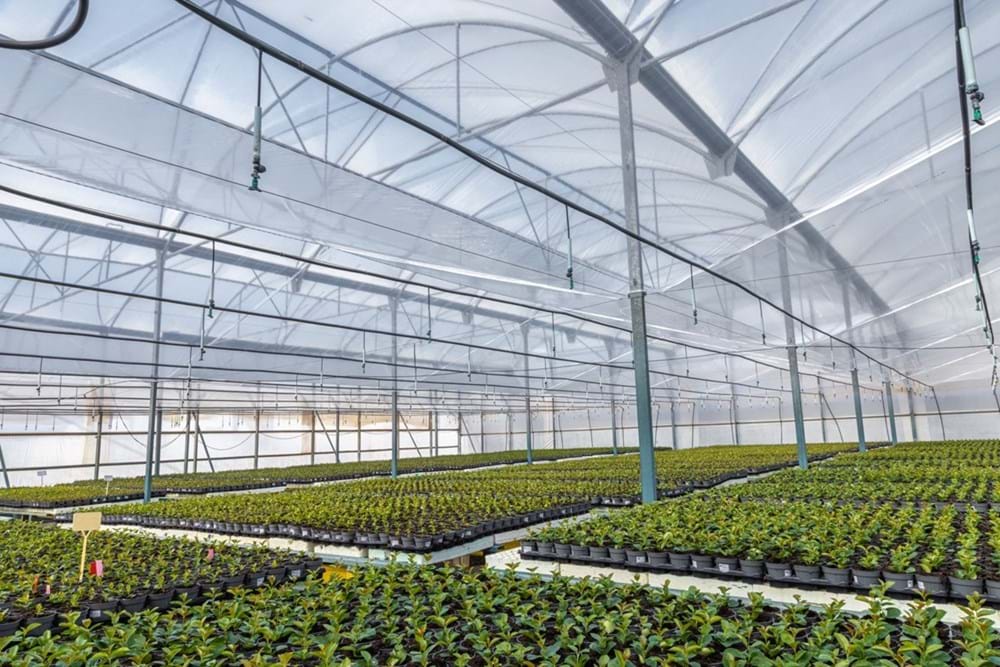
Miguel having these installations led me to start working with him. At first I tried with 5 hectares, and eventually we increased to 10 hectares of peppers because, in addition to the guarantee of having Svensson nets, confidence in Miguel’s work was decisive.
For my part, with the new Xsect Balance Max insect control net that I use in my greenhouse—continuing Svensson’s protection chain from the plants arriving from Vicaplant—ventilation is similar to the 10x16 net, but the wind is softer and more even inside the greenhouse. I can keep the windows open at night without harming the crop. With the 10x16 net, the wind was more turbulent and I had to close the windows more often. The 10x16 mesh trapped the wind more compared to Xsect Balance Max.
Paco, how do you think your crops have improved in terms of sustainability?
For several years we have been working toward producing higher-quality crops with the fewest treatments possible—what is known as zero residue. We’re also seeing more hectares moving into organic production.
There is still a way to go for growers to use Svensson nets. Personally, where I’ve installed them on the sidewalls and roof vents, I stand by my words: from having many problems last year to having practically none now.
“Previously, with other nurseries that didn’t have Svensson protection, the plants always came with viruses.”
Miguel adds that the effect of reduced treatments is even more noticeable in the nursery: going from treating 7 times a week to treating twice. The plants emerge earlier, healthier, more tender, with better root development.
We end our visit by saying goodbye to Paco, Miguel and the Svensson technical advisors, who ensure that their facilities are achieving optimal results.
Curious what made it all work?