Go to main content
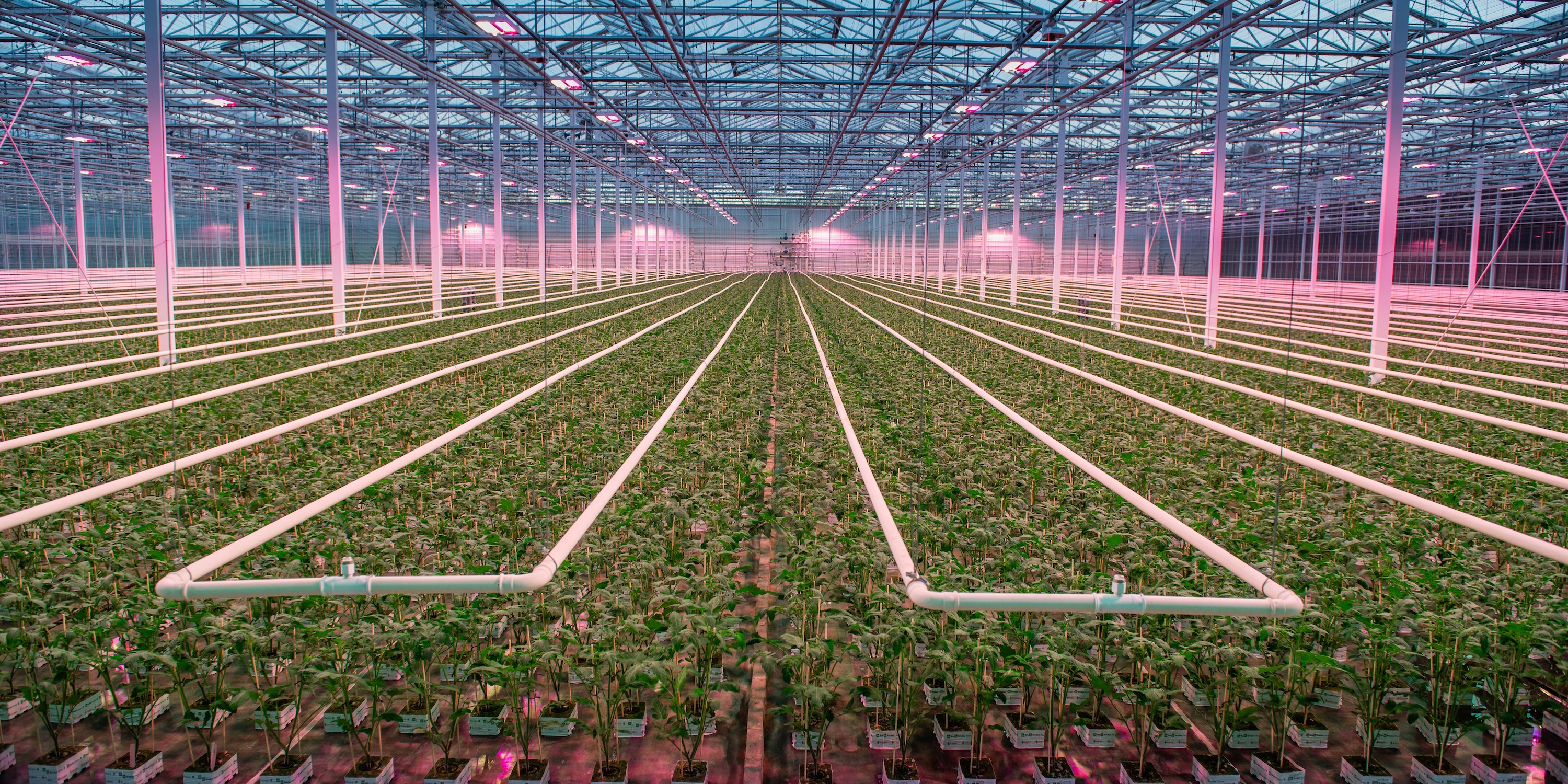
CT - Brabant Plant - November 2026 - Seedlings - Netherlands - Grower Story.jpg

A strong young plant begins with an understanding of the climate

How do you give a young plant the best possible start? And how do you account for a growing number of cultivars, changing cultivation conditions, and the pressure to use less energy? 

At Brabant Plant in Haarsteeg, researcher Marvin Verkuijlen works with questions like these every day. Through research, data, and a healthy dose of curiosity, he is helping refine the company’s climate strategy because, especially during propagation, even a small adjustment can have a significant impact on the plant.


Research that moves cultivation forward

Since late 2018, Marvin has been working at Brabant Plant, focusing on research and cultivation optimization. His role is to bring more structure to knowledge development and explore how the company can continue improving its propagation processes. 

“Research is never an end in itself,” Marvin explains. “We aim to translate everything we learn into practical knowledge—for our colleagues, for our clients, and ultimately to help the plants grow better. To me, that is the essence of our motto: ‘We share growing.’” 

Propagation is a particularly interesting area for research. Brabant Plant works with a wide range of crops and cultivars, each responding differently to its environment. At the same time, there is little room for error. Within a few weeks, or sometimes just days, a young plant must reach a specific stage of development. 

“We operate according to a strict cultivation schedule. At a certain point, a plant must be ready for the next stage. If you make a change to the cultivation strategy, it cannot simply shift the entire schedule. That makes innovation all the more challenging.”


From isolated data to a better understanding of the plant

One of the biggest developments at Brabant Plant has been the way cultivation data is brought together and used. Years ago, Marvin began connecting information that had previously been largely separate, including production planning, cultivation activities, and greenhouse climate conditions. 

“You want to know which plant was located where, what conditions it was exposed to, and how it subsequently developed. By bringing that information together, you can identify patterns that would otherwise remain hidden.” 

That insight is becoming increasingly important as the differences between plant varieties become more pronounced. Even within a single crop, varieties can respond very differently to the same temperature, light intensity, or humidity. 

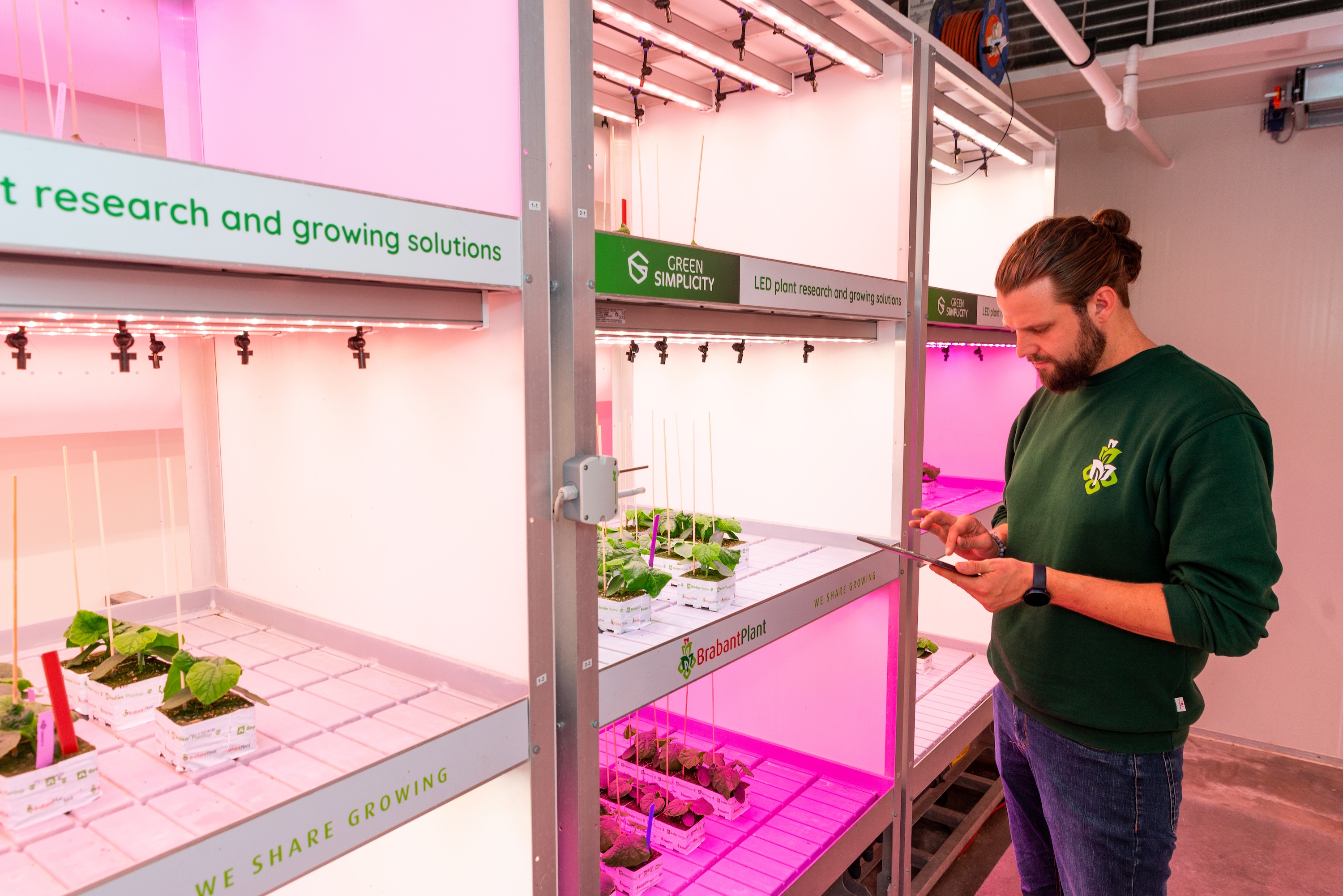
Using additional sensors, Marvin also monitors conditions closer to the plant, including plant and root temperatures and substrate moisture. This gives him a clearer picture of the relationship between the greenhouse climate and the conditions the plant is actually experiencing. 

“If a variety is struggling to grow, I want to understand why. The answer often lies somewhere in the combination of environmental conditions and cultivation practices. It’s a massive puzzle, but that’s precisely what makes it so interesting.”

CT - Brabant Plant - November 2026 - Seedlings - Netherlands.JPG

The switch to LED changed more than the light

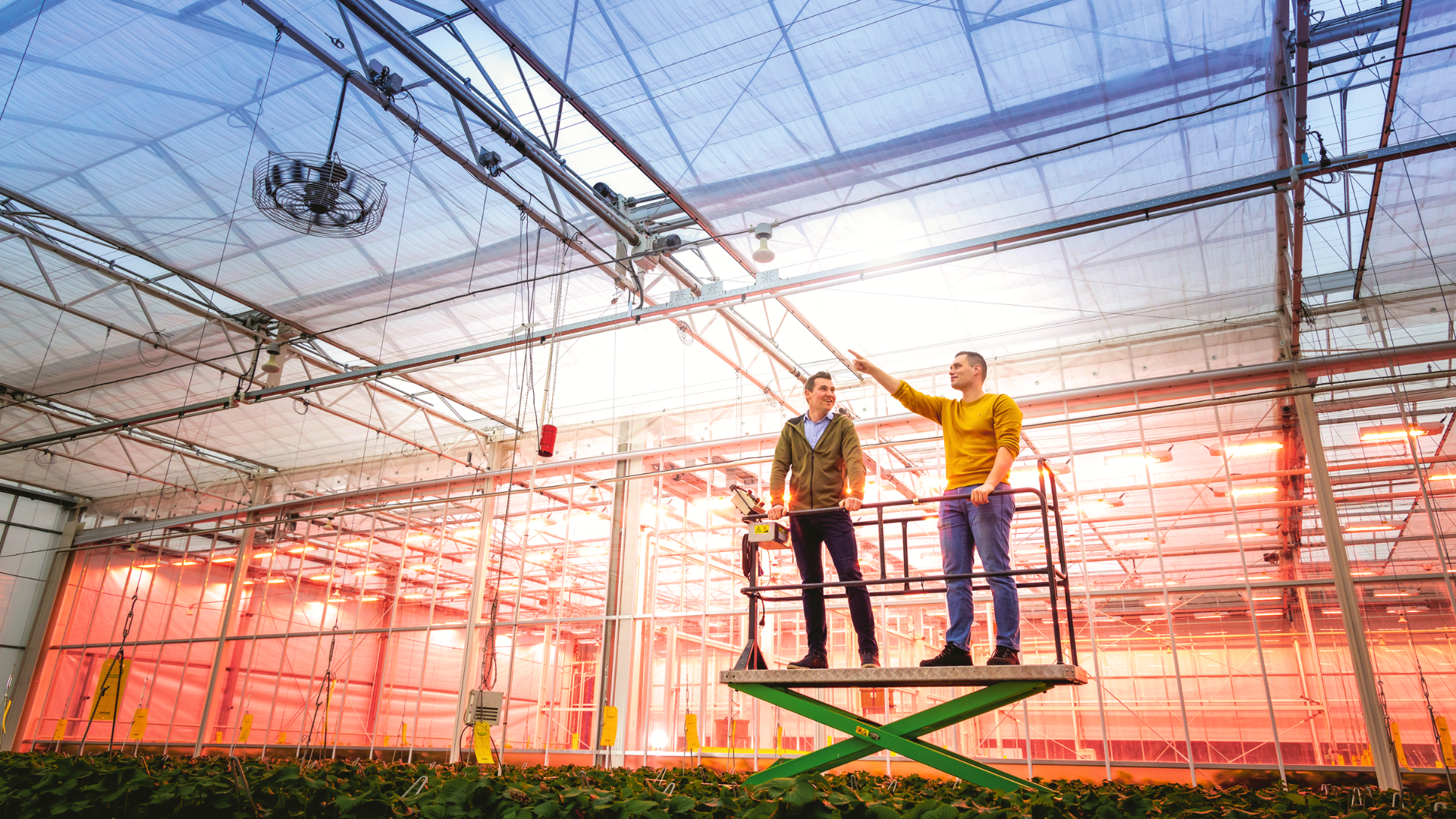
One of the key innovation projects Marvin has worked on at Brabant Plant is the transition from SON-T lighting to dynamic LED lighting. LED creates new opportunities to adapt light intensity and spectrum to the needs of the plant, but changing the light source also changes much more within the greenhouse. 

The move to LED has implications for both the heat balance and air movement, requiring a different way of thinking about the climate around the crop. 

“With SON-T, plants received a substantial amount of radiant heat in addition to light. This heat provided a certain level of stability to the microclimate surrounding the plant. With LED, much of that heat is lost. Consequently, you have to rethink not just your lighting strategy, but your entire climate strategy.” 

That becomes especially important during propagation. Young plants have relatively little leaf area, so greenhouse air temperature alone does not tell the whole story. The temperature immediately around the plant, including conditions closer to the floor and root zone, can also influence its development.


Finding the balance between plant quality and energy

For Marvin, an effective climate strategy is ultimately about balancing several interconnected factors. Energy consumption is an important part of that equation, but it cannot be considered separately from plant quality. 

Lighting provides a good example. From an energy perspective, it may seem attractive to spread lighting across more hours, including at night. But what makes sense financially does not automatically create the best conditions for the plant. 

“You have to constantly ask yourself: for how many hours are you actually keeping the plant in the desired state of balance? If a plant remains in less-than-ideal conditions for too long, it may adapt to them—whereas you actually want it to remain active and continue developing well.” 

For Marvin, this calls for a broader view of climate management. Light, temperature, humidity, transpiration, and energy use all influence one another. Change one part of the greenhouse climate, and the effects can carry through the rest of the system. 

“Energy costs are, of course, extremely important. But if you base your management decisions on them, you must also keep a close eye on the impact on plant quality. Ultimately, you have to find a way to bring the two into alignment.”


Continuing to search for the right approach

As cultivation becomes more complex, Marvin sees research becoming even more important. Growers are being asked to improve sustainability, adopt new technologies, manage energy carefully, and maintain plant quality at the same time. Doing that successfully requires knowledge, time, and collaboration. 

Climate solutions, including Svensson climate screens, are part of that bigger picture. Rather than looking at an individual technology in isolation, the focus is on understanding how each part of the greenhouse contributes to the conditions the plant needs. 

For Marvin, the challenge is to keep refining those conditions for an increasingly diverse range of varieties. The goal is not necessarily to create the absolute ideal environment for one individual variety, but to develop a reliable climate strategy that works across the range of plants being grown. 

“You cannot create the perfect set of conditions for every single variety. That is why we are constantly searching for the right balance: what works for the various plants, what is practically feasible, and how can we continue to improve?” 

At Brabant Plant, that search continues with every crop, every measurement, and every adjustment. Alongside young plants, the team is continually growing its understanding of the climate each plant needs to get the best possible start.

More ways to understand your climate.

Explore practical insights on light, temperature, humidity, energy, and the conditions around your crop.

CS - LEDs - Philips Photo - The Plant Company - USA - 2026.png

28 Jul 2026 | Know-how

Your greenhouse just got LEDs. Here's what changes in the climate.?

You installed LEDs expecting better efficiency, more control, and stronger crop performance. The light looks right. The system is running. But something in the greenhouse feels different.

CS - ClimaFlow - LEDs - Double Screens - Highlight - 2026.png

09 Jul 2026 | Know-how

More air movement, fewer gaps, more energy savings

Vertical ventilation, in combination with a double screen, can lead to up to 20 percent additional energy savings, because growers can keep their screens and vents fully closed for more hours.

CS - Climate Screens - Greenhouse.jpg

10 Dec 2025 | Know-how

Guidelines for smarter climate screen selection

Improve greenhouse efficiency with better climate‑screen selection. Learn which screen types deliver superior shading, diffusion, and environmental stability for high‑value crops.

CS - Luxous 1147 - Screens - Product Photo

05 May 2025 | Know-how

Selecting the ideal climate screen by understanding light properties

Short description about the story that will show as a preview on the card. Remember to tag the correct crop and climate challenges.

CS - Highlights - Tangchao - Double Screens - China - Flowers - PARperfect.png

30 Apr 2025 | Know-how

11 reasons that double screens are a game-changer for modern growers

Volatile energy costs, unpredictable weather, and ever-higher consumer expectations are pushing growers to seek out better product and quality results. One proven solution? Double screening.

CS - Ton Habraken in greenhouse.png

10 Apr 2025 | Know-how

Energy and climate requires expert guidance

As greenhouse climate control systems become more complex, cultivation managers are seeking expert guidance more than ever. Many growers are not fully aware of how technologies like LED lighting, double screens, or vertical fans affect the greenhouse climate. They also may not know how to optimize these systems to maximize energy savings without compromising crop quality and production, says Ton Habraken, greenhouse climate expert at Svensson.

cs - hugo pic.png

03 Nov 2023 | Know-how

More savings with dual screens

Learn how dual climate screens create an insulating air layer, reduce heat loss and improve crop conditions

CS - Soft Fruit Trial - Netherlands - 2023 - Joris Vermonden and Grower.png

10 May 2023 | Know-how

Screening and energy savings in soft fruit

In the soft fruit sector, climate screens are not yet as widely used as they are in vegetable cultivation. However, this sector is starting to consider utilizing climate screens in it’s applications, mostly because of high has prices. At Delphy ISFC in Horst, tests are being conducted to determine if the sustainable cultivation of strawberries - with intensive use of climate screens and vertical fans - can be done with half the gas. The initial results are promising.

CS - Florida Trials Preview - Flowers - 2026 - US.png

07 Mar 2016 | Know-how

Which shading is the winner in Florida trials?

Diffused light results in more active leaves and better usage of light. When it comes to shading, which type performs best in greenhouses? Two recent studies conducted in Florida set out to find the answer by comparing the properties of three 60 percent shades commonly used for nursery and greenhouse production.