Go to main content
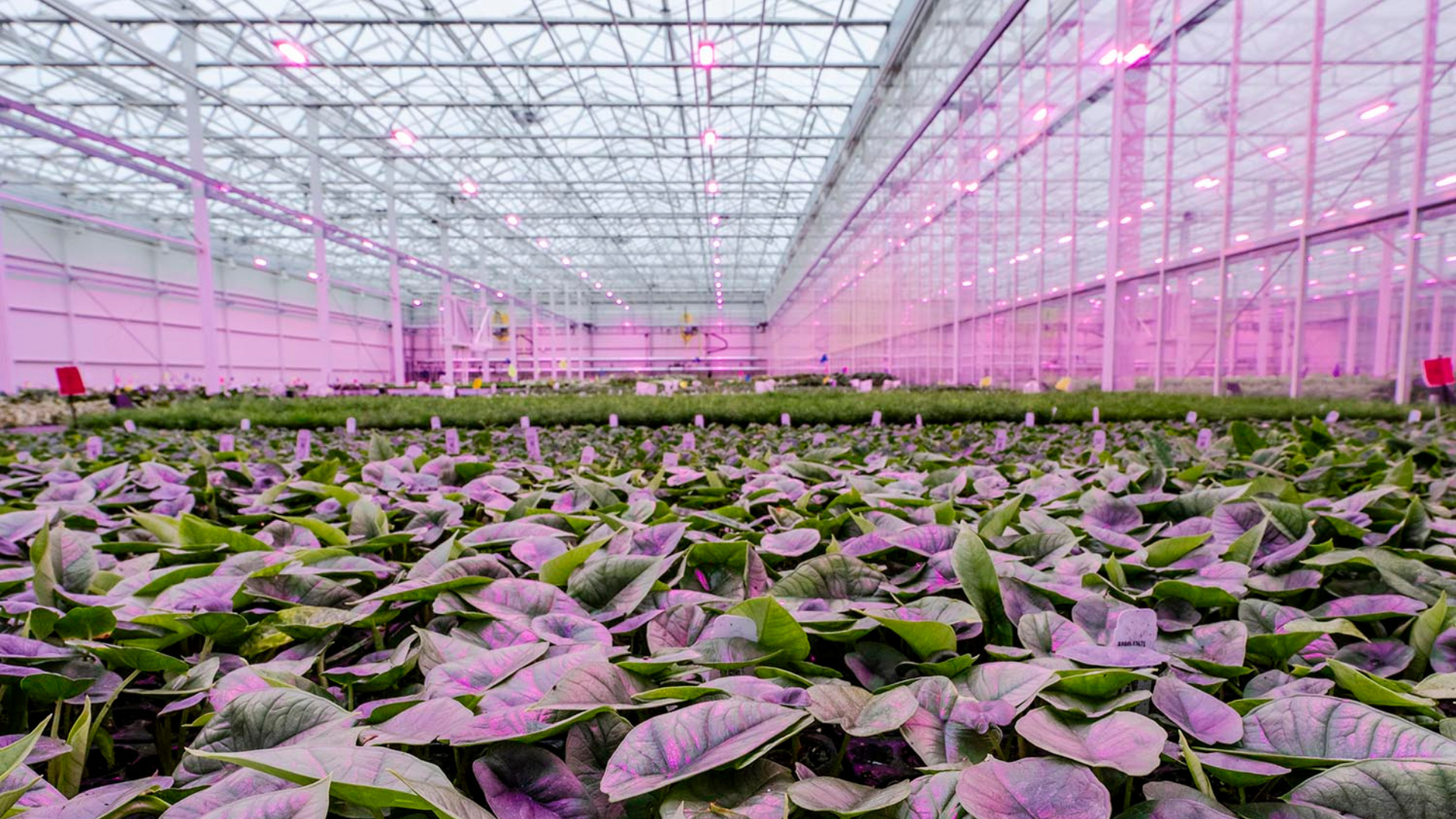
CT - Whitewash vs Screens - November 2026 - Highlights - Flowers - Whitewash.png

Comparing climate screens and whitewash for greenhouse shading

High summer radiation can increase greenhouse temperatures and expose crops to more light than they can effectively use. But simply blocking as much light as possible isn’t the goal. Natural light is still valuable when conditions allow. 

Both climate screens and whitewash can reduce excessive solar radiation and help manage summer greenhouse temperatures. The main difference is control: whitewash stays on the greenhouse once applied, while a retractable climate screen allows growers to adjust shading as light levels, weather, and crop needs change. 

For growers considering their greenhouse shading strategy, that flexibility can make a climate screen a more versatile approach to summer greenhouse cooling and year-round climate management.


How does whitewash work for greenhouse shading?

Whitewash is applied to the greenhouse exterior to reduce incoming solar radiation, helping limit excessive light and heat. In hot geographic regions, it can address persistent high radiation, while cold zone growers often use it to manage peak summer conditions.

Its limitation is that once applied, the shading remains in place as conditions change. As Peter Hatzis, Climate Consultant at Svensson, explains, “The coating remains in place whether the day is sunny, cloudy, or rainy.” 

Whitewash also requires application and, in seasonal climates, removal. Application may not always be uniform, potentially creating differences in radiation across the greenhouse. 


How do climate screens work for summer shading?

Climate screens allow growers to adjust greenhouse shading based on actual conditions rather than committing to one level of shade for the season. The screen can be deployed during high radiation and retracted when the crop can benefit from more natural light. 

Screens can also influence how light reaches the crop. As Paul Arena, Climate Consultant at Svensson, explains, “Reflective screen materials can help limit excessive solar radiation, while diffusion spreads the light that does enter more evenly through the crop canopy.” 

Because screens can work alongside ventilation and cooling, they can become part of a broader greenhouse temperature control strategy, rather than simply providing light reduction.


The advantage of a solution that works beyond summer

The difference between whitewash and a climate screen extends beyond how they provide summer shade. Whitewash primarily reduces incoming solar radiation, while a climate screen can support multiple aspects of greenhouse climate management throughout the year. 

Depending on the screen and crop strategy, screens can provide adjustable shading, light diffusion, energy savings, heat retention, and light deprivation. Growers can change how the screen is used as conditions, seasons, and crop needs change. 

As Paul Arena, Climate Consultant at Svensson, puts it, “Whitewash is very effective at reducing the radiation from coming inside the greenhouse to prevent too much heat from building up inside the greenhouse, but that's the only thing it's good for. Screens will give you the same effect and provide benefits outside of the summer months.” 

That broader functionality is an important distinction when comparing the two investments. Whitewash addresses a specific shading need, while a climate screen can become a year-round tool for managing light, temperature, and energy.

CT - Harmony - LSNL 2026 - Potted Flower Plants - Potplants - Whitewash Article - Highlights.png
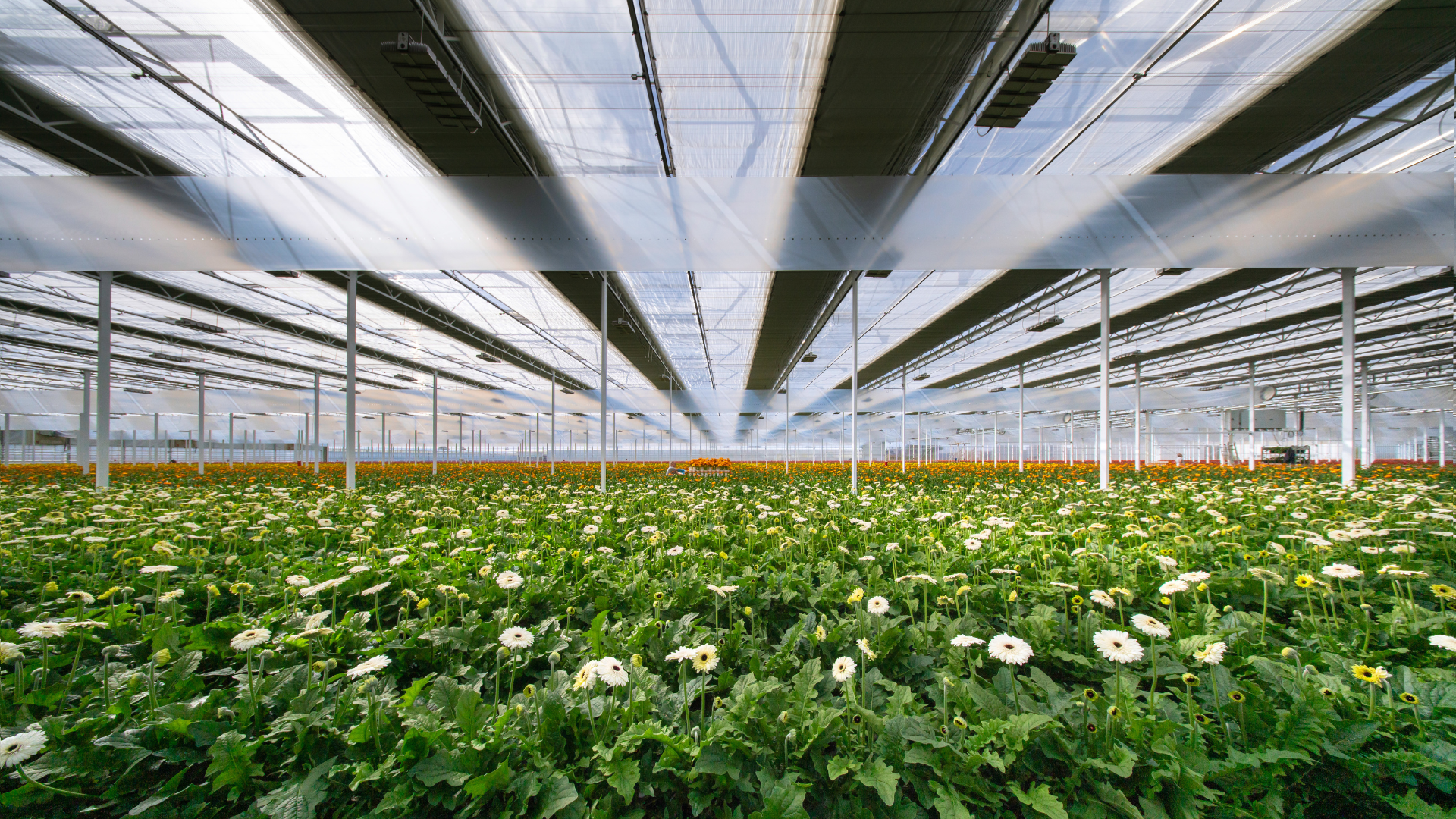
The deployed diffusion screen creates a more uniform light environment, minimizing harsh shadows and concentrated bright spots across the crop.

Can climate screens replace whitewash?

Yes, in some greenhouses a properly selected climate screen can reduce or eliminate the need for whitewash, particularly when combined with effective ventilation and cooling. 

In Canada, Peter Hatzis has worked with growers who skipped whitewash and relied instead on their PARperfect screen systems, reporting a good year of crop growth using the screens alone. 

That doesn’t mean growers always have to choose one or the other. Whitewash can still complement a climate screen during particularly high-radiation periods. The right strategy depends on the crop, climate, greenhouse structure, screen selection, ventilation, and cooling capabilities. 

As Peter Hatzis puts it, “The more tools you have, the less need there is for whitewash.”


Climate screens vs. whitewash: Which is better?

For growers looking for greater flexibility and year-round climate control, a climate screen offers advantages over whitewash. Both can reduce excessive summer radiation, but a climate screen allows growers to adjust shading as conditions change, make better use of available natural light, and use the same system for additional climate functions beyond summer. 

Peter Hatzis sums it up: “Screens give you a more versatile approach to growing. You’re able to use the natural elements to your advantage rather than block everything out. And when you need it most, you’re able to use what you need to use to grow.”


Find the right shading strategy for your climate

The right greenhouse shading strategy depends on your crop, greenhouse, local climate, ventilation, and cooling systems. Svensson’s Climate Consultants can help you determine how a climate screen can work within your broader climate strategy. 

Talk with a Svensson Climate Consultant to find the screen strategy that fits your greenhouse and the climate your crop needs.

Book a meeting with a Svensson Climate Consultant

More ways to make your climate work.

Explore greenhouse know-how from Svensson.

CS - LEDs - Philips Photo - The Plant Company - USA - 2026.png

28 Jul 2026 | Know-how

Your greenhouse just got LEDs. Here's what changes in the climate.?

You installed LEDs expecting better efficiency, more control, and stronger crop performance. The light looks right. The system is running. But something in the greenhouse feels different.

CS - ClimaFlow - LEDs - Double Screens - Highlight - 2026.png

09 Jul 2026 | Know-how

More air movement, fewer gaps, more energy savings

Vertical ventilation, in combination with a double screen, can lead to up to 20 percent additional energy savings, because growers can keep their screens and vents fully closed for more hours.

CS - Zuidplas - Harmony 1315O - Luxous 1147 - Obscura WB+BW - Gerbera.png

17 Feb 2026 | Product

Greenhouse screen replacement: When to replace, what changes over time, and how to plan ahead

Greenhouse screens play a critical role in managing light, temperature, humidity, and energy use. While they are built to last, their performance does not remain constant forever. Screens age gradually, and as they do, the greenhouse climate becomes harder to control with the same precision.