
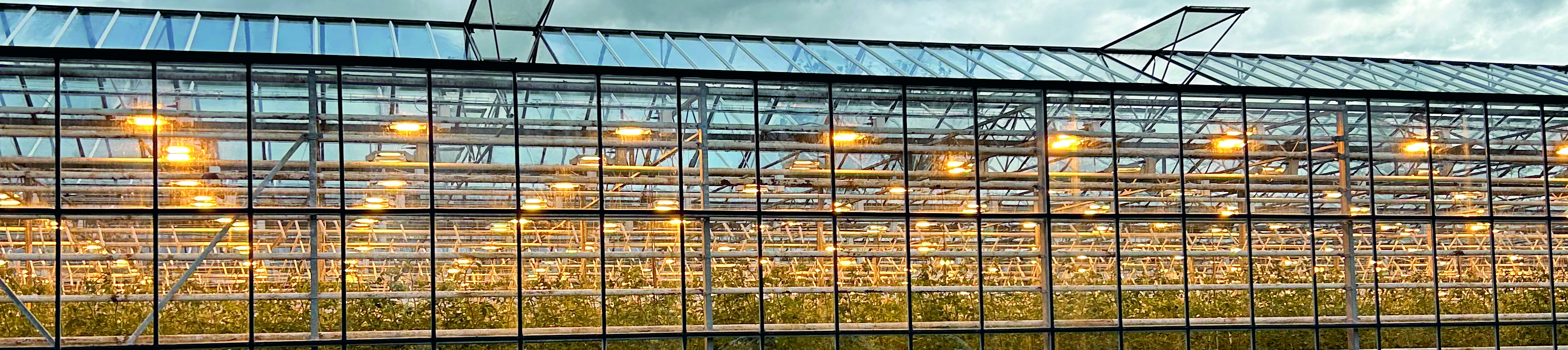
How Dutch fans reached an Icelandic tomato nursery

-
- Greenhouse:
- Friðheimar
-
- Location:
- Reykholt, Iceland
-
- Crop:
- Tomato
-
- Challenge:
- Transition from HPS to LED
-
- Solution:
- ClimaFlow
SEPTEMBER 2026
How do fans manufactured in Bleiswijk end up in a tomato greenhouse in Iceland? The answer takes us on a journey through Finland, Berlin, and beyond. Dominique Blok, Account Manager at Svensson, shares the story behind this remarkable project.
Growing with innovation
Tomato nursery Friðheimar, whose name translates to "peaceful world," is located just over an hour from Reykjavik. At 1.7 hectares, it would be considered a modest operation by Dutch standards. Yet the company is known for its innovative mindset and willingness to explore new ideas.
Owners Knútur Rafn Ármann and Helena Hermundardóttir are constantly looking for ways to improve their greenhouse operations. Last year, they began exploring the use of circulation fans through a Finnish company that maintains a strong relationship with Svensson. It was through that connection that Svensson's ClimaFlow Fans first came to their attention.
The conversation continued in February at Fruit Logistica in Berlin, where Dominique Blok, Account Manager at Svensson, provided additional insights and demonstrated the system at the Svensson stand. The demonstration left a strong impression. Soon after, Friðheimar placed an order for ten ClimaFlow Fans as a trial installation. The results in the greenhouse were so encouraging that a second order for another ten fans quickly followed.
New lights, new challenges
The journey began nearly two years ago when Friðheimar made the transition to LED lighting. In northern countries such as Iceland, Finland, and Norway, long, cold, and dark winters create unique greenhouse climate challenges. In Iceland, for example, greenhouses often have an extensive network of heating pipes, many of them located high above the crop.
“That presents significant challenges regarding humidity,” Ármann explains.
With a background in agricultural science, Ármann appreciated the opportunity to discuss those challenges on a technical level with the Svensson team. The LED transition was driven primarily by rising energy costs, but maintaining production was just as important.
“LED lights are much colder than the lights we had before. We wanted to switch to LED because of energy costs, but without losing kilos.”
Today, the vertical air circulation system is delivering the results the team had hoped for. Over the next two years, all of Friðheimar's tomato greenhouses, covering a total of 11,000 m², will be equipped with LED lighting and ClimaFlow Fans.
The company also grows strawberries under glass. That greenhouse covers approximately 6,000 m² and is scheduled to transition to LED lighting next year.
“The same challenges await us there as with the tomatoes, so we will get to work there with the same technology and ClimaFlow Fans.”
Rethinking air movement
Mechanical vertical air circulation is still a relatively new greenhouse technology. Traditionally, air movement within the crop, essential for maintaining an active and healthy plant, was created naturally. Warm air from the heating pipes rises through the greenhouse, helping to keep the crop moving.
"It's an inefficient, one-way process where a significant amount of energy is lost as warm air accumulates at the top of the greenhouse," explains Dominique Blok.
In 2016, vertical fans were first introduced to recirculate that warm air back into the growing environment. Since then, the technology has continued to evolve. Svensson's ClimaFlow Fan creates a gentle airflow through the crop, promoting evaporation and supporting natural plant processes. The increased transpiration helps improve calcium transport and nutrient movement to the fruit. At the same time, a more uniform greenhouse climate can contribute to fewer disease and fungal pressure issues.
A motor built for efficiency
Vertical air circulation delivers clear benefits in crops such as tomatoes, strawberries, flowers, and gutter-grown lettuce. And thanks to the use of brushless, high-efficiency EC motors, energy consumption remains remarkably low.
“If you rely on heating pipes for crop activity, with a pipe temperature of 45°C, energy consumption can exceed 40 watts per square meter,” says Blok. “With our fans, consumption is less than 1 watt per square meter.”
Interest in vertical air circulation has grown rapidly in recent years. Interestingly, growers outside the Netherlands have been among the earliest adopters of the technology.
“Germany, Poland, Canada, Belgium... that's where most of the demand is coming from today,” Blok explains. “Vertical air circulation is particularly popular in strawberries. Because every greenhouse and every crop is different, we develop a tailored air circulation plan for each project.”
Successful implementation requires more than simply installing fans. According to Blok, many growers are eager to run them at maximum capacity from day one, but that is not always what the crop needs.
“Growers usually want to go full throttle immediately once they have fans, but that is often to the detriment of the crop. Our fans deliver the best results when running at 50 to 70 percent of their capacity. We always help growers switching to vertical ventilation to reconfigure their climate computer. And we teach them that it pays to run the fans 10 percent faster shortly before sunrise to make the crop more active. Yes, it looks like a simple fan at first glance, but you can do a lot with it!”
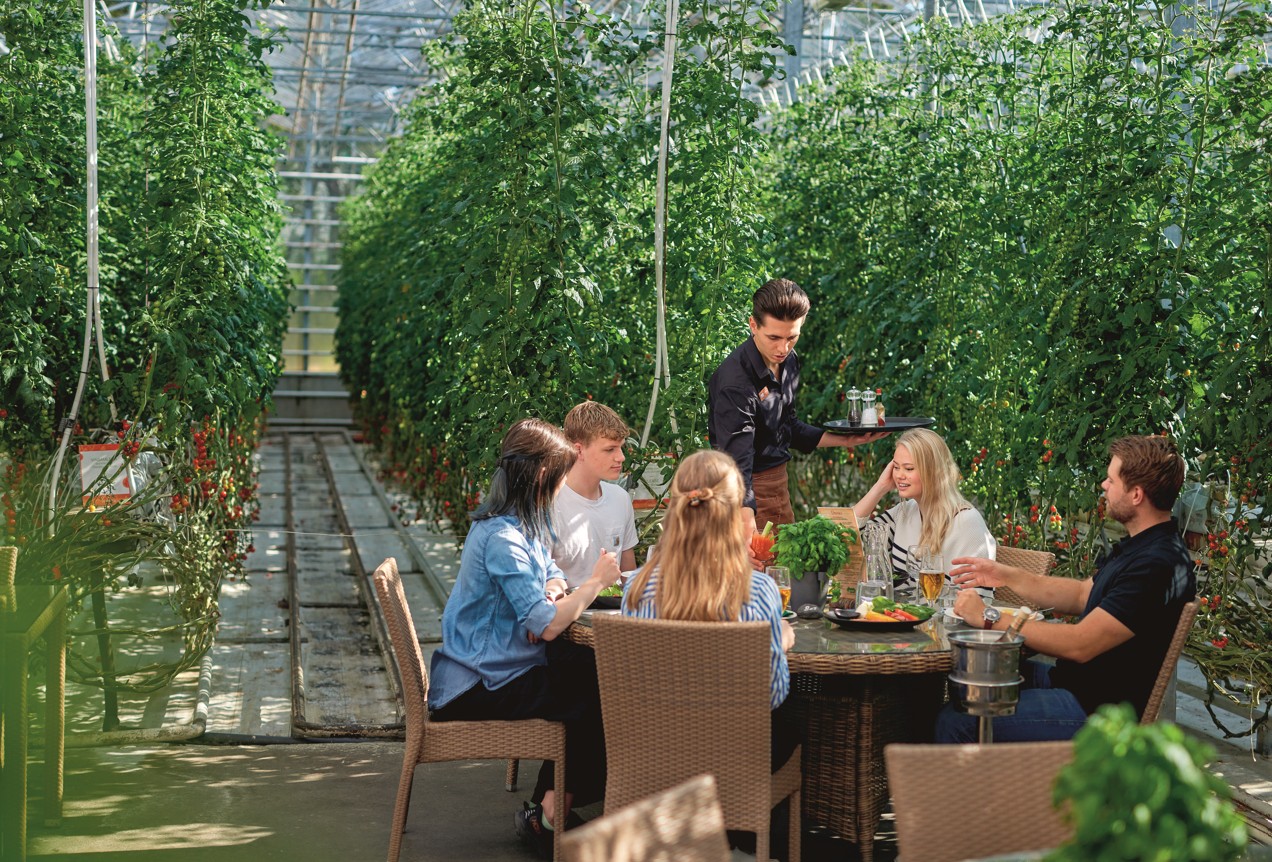
Dining among the tomato plants
Lunch, dinner, or even a wine tasting among the tomato plants? At Friðheimar, it's all part of the experience. One of the nursery's oldest greenhouses is home to Vínstofa Friðheima, a restaurant and wine bar where guests dine surrounded by rows of thriving tomato crops.
The kitchen is led by chef Jón KB Sigfússon, who previously cooked for world leaders and other distinguished guests. Naturally, tomatoes take center stage on the menu. The restaurant's signature tomato soup has become a local favorite, prepared with ingredients such as prawns, cream, and cognac-infused olive oil.
And the creativity doesn't stop there. Guests can sample tomato ice cream served with a variety of sauces, while dessert lovers can indulge in cheesecake paired with homemade tomato jam. It's a fitting showcase for a nursery that has built its reputation on innovation, both inside and outside the greenhouse.