With ClimaFlow, we saw greater homogeneity in the greenhouse, more uniformity, and better ventilation between the plants.
Climate strategy for strawberries: how Berry Hill in Tepatitlán, Jalisco, creates more uniform greenhouse conditions
-
- Greenhouse:
- Berry Hill
-
- Location:
- Jalisco, México
-
- Crop:
- Strawberry
-
- Challenge:
- Airflow and humidity management
-
- Solution:
- ClimaFlow & Luxous 1547 D FR
JUNE 2026
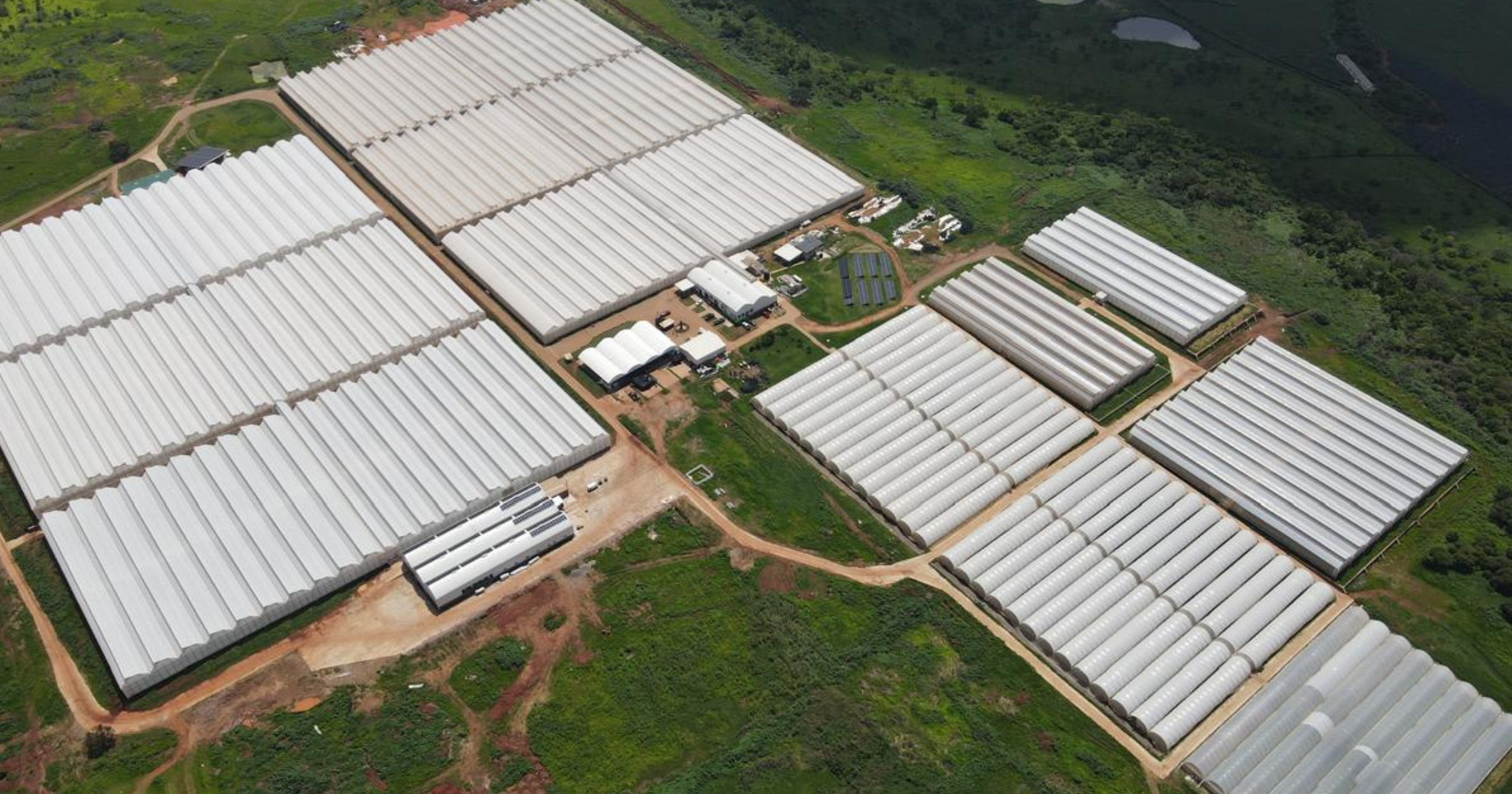
In Tepatitlán, Jalisco, Berry Hill produces strawberries for export across 12 hectares of greenhouse production, mainly for the United States and Japan. The company works under a model that seeks to do things differently within strawberry production in Mexico, with a clear vision for sustainable growth.
From the beginning, Berry Hill has focused on technology and on better understanding the conditions the crop needs. The first stone of the project was laid in 2019, planting began in 2020, and in just a few years, the company has built an operation focused on organic production and efficient use of resources.
For Jose Ignacio Castillo Acosta, Executive Director at Berry Hill, the goal is not only to produce more strawberries, but to create conditions that work for the plant, the team, and the business. This vision has led the company to evaluate different greenhouse solutions.
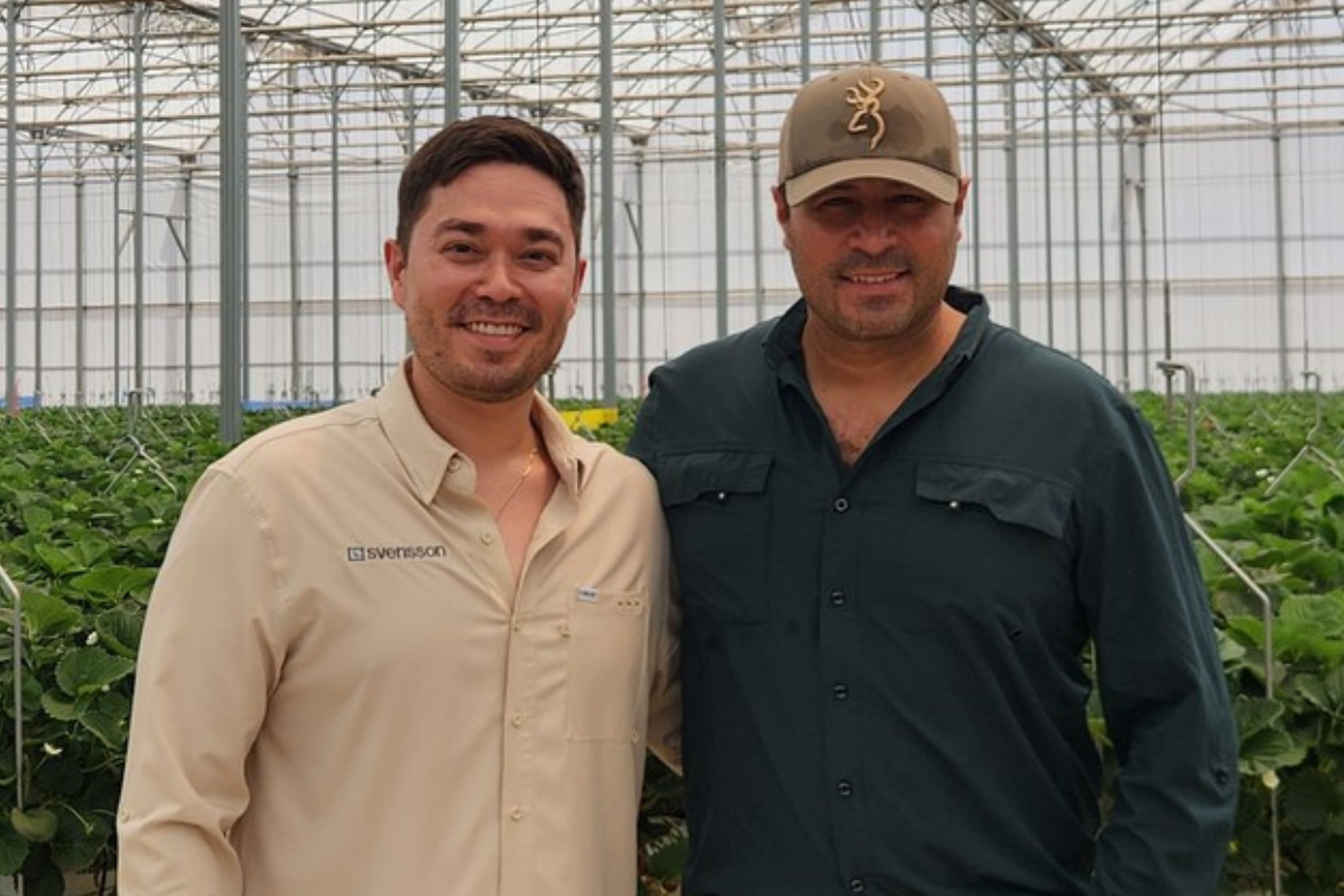
Understanding how air moves within the strawberry crop
At Berry Hill, the crop is grown in a system where different zones exist within the same environment: under the growing gutter, around the plant, and above the crop. Each one can behave differently in terms of temperature, humidity, and air circulation.
As Ignacio explains:
“Moving air in a strawberry crop is complicated because you do not have just one condition inside the greenhouse: there is humidity and temperature under the growing gutter, around the plant, and above it.”
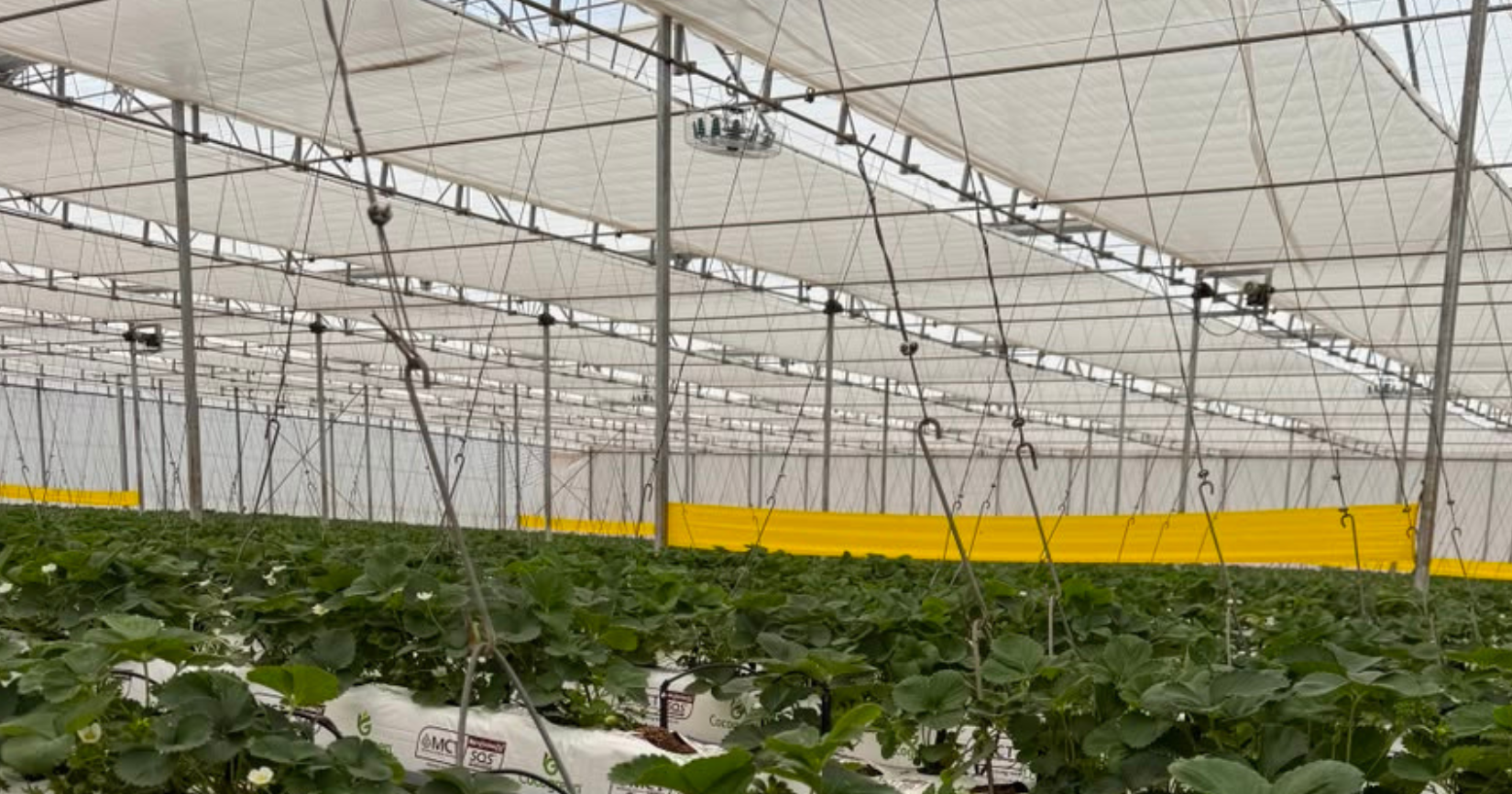
In addition, Berry Hill does not have heating, which makes air and temperature management a fundamental part of its climate strategy. In this context, moving air does more than support ventilation; it also helps create more homogeneous conditions within the crop and improves humidity management.
With support from Svensson, Berry Hill integrated ClimaFlow as part of its climate strategy within the strawberry crop. For Ignacio, the difference has been in the way ClimaFlow contributes to air movement in areas where airflow tends to be limited, becoming a tool that helps create more stable conditions for the crop.
Results: more uniform conditions and better humidity management
After implementing ClimaFlow, the Berry Hill team observed greater uniformity inside the greenhouse and better ventilation between plants. Ignacio explains that air movement helped create a more uniform environment, especially in a crop where humidity can behave differently depending on the area of the plant.
In addition, as Ignacio shared, Berry Hill also observed a lower incidence of humidity-related issues such as powdery mildew and Botrytis. Without attributing this to a single factor, more uniform air movement, together with integrated crop management, helped create better conditions for controlling humidity and reducing fungal pressure inside the greenhouse.
The proper way to understand this result is not as the isolated effect of a single tool, but as part of a complete climate strategy. The value of ClimaFlow lies in helping create more consistent conditions so the team can make better decisions inside the greenhouse.
Managing light and temperature with Luxous 1547 D FR
In addition to ClimaFlow, Berry Hill also installed the Luxous 1547 D FR screen as part of its climate strategy. Ignacio mentioned that, since the greenhouse does not have heating, the screen is used especially at night to help retain temperature inside the greenhouse.
During the day, the screen is used based on the crop’s light requirements. This has been part of Berry Hill’s climate learning process: understanding when to provide shade, when to allow more light in, and how to manage temperature.
The combination of airflow, light, and temperature management reflects the idea that it is not about using one solution, but about understanding how each decision helps create conditions that work for strawberries at every stage of the cycle.
Making climate work in a sustainable way
During the interview, Ignacio mentioned that Berry Hill continues to integrate sustainable practices such as water recirculation, the use of solar energy, and rainwater harvesting. For the company, using technology does not only mean incorporating tools into the greenhouse, it also means building an operation that is more responsible toward the environment, people, and the future of the project.
For Svensson, this case reflects the value of working side by side with growers: understanding the real conditions inside the greenhouse, supporting their decisions, and creating more stable conditions for the crop, the team, and the business.