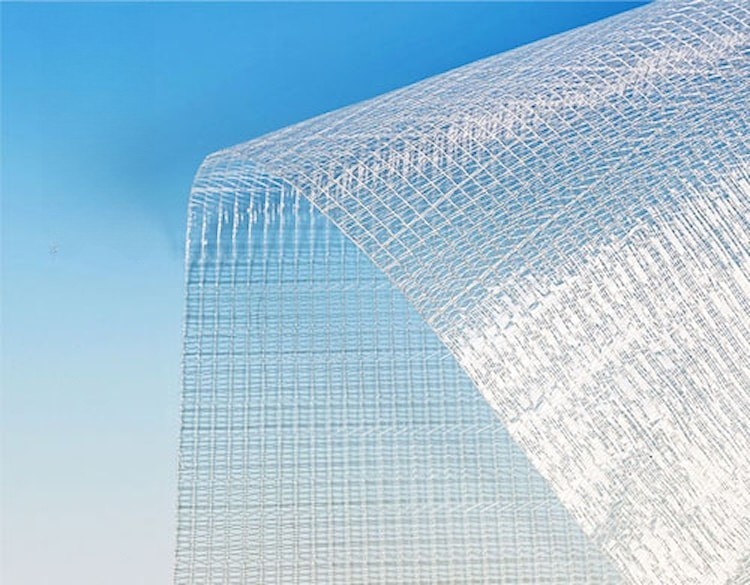
Westburg opts for double Luxous 1147 H2no FR in new build

-
- Greenhouse:
- Westburg
-
- Location:
- Grubbenvorst, Netherlands
-
- Crop:
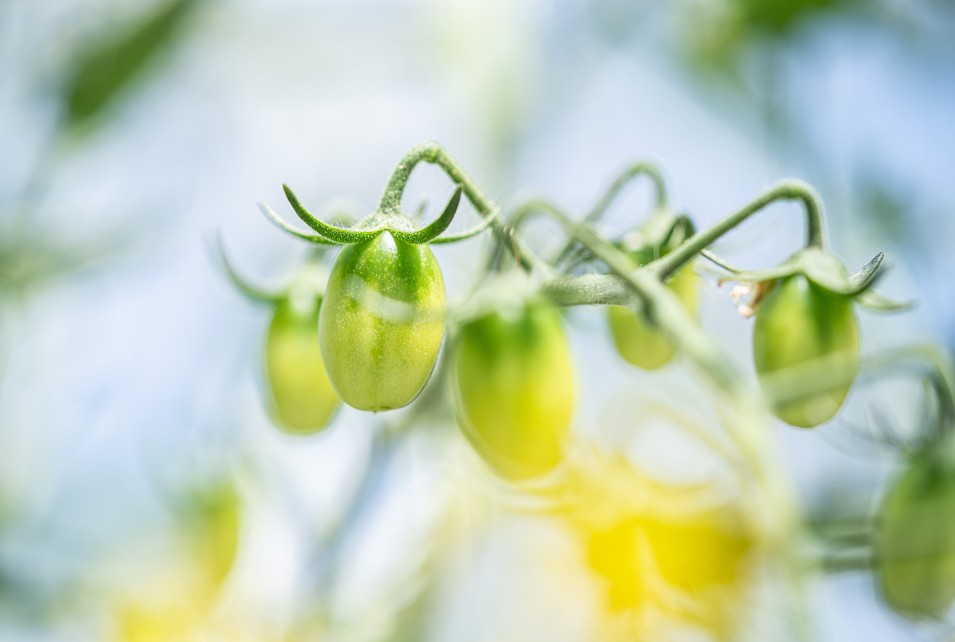
- Snack tomato
-
- Challenge:
- Shade longer, drain moisture and more light
-
- Solution:
- Double Luxous H2no FR
JULY 2026
When you say Westburg , you say snack tomatoes. The family business of brothers Bas and Ton van Leeuwen has fully specialized in the cultivation and processing of top-segment snack tomatoes. Cultivation now takes place on approximately 20 hectares from multiple locations, with quality, uniformity, and efficiency at the forefront.
To continue guaranteeing that quality in the future, Westburg continuously invests in modern technologies. A fine example of this is the recent new construction site, where a double screen installation with two Luxous 1147 H2no screens was chosen for the first time.
Trust from practice
The choice of Luxous 1147 H2no FR did not come out of the blue. Westburg has already been working with H2no screens at two existing locations for several years. Those experiences formed the basis for the choice in the new construction. “We already had clear screens installed before that,” says Bas. “At the time, we consciously switched from a diffuse fabric to a clear screen. By the time you apply the screen, the light outside is often already diffuse. In that case, we prefer to opt for as much direct light in the greenhouse as possible.” When Luxous 1147 H2no FR subsequently became available, the step was quickly taken. “The benefits were clear. You can use the screen for longer, remove more moisture, and at the same time retain more light. That appealed to us immediately.”
Cleaner screen, more light
Although the exact effect of a screen fabric is difficult to isolate within a complete cultivation strategy, Bas does see clear benefits in practice. “The most concrete thing we see is that the screens stay nice and clean. That might sound simple, but a clean screen also means more light in the greenhouse.” He does emphasize, however, that a screen is only one part of the total climate management. “Of course, you have to handle it properly. If you cultivate in conditions that are too humid, you will eventually get every screen wet. It starts with the right climate strategy.”
First location with dual screens
For Westburg, the new construction represents not only an expansion of the site but also a new step in climate control. For the first time, the company is working with a double screen system. “At our existing locations, the H2no screens are single-sided. In the new building, we opted for two energy screens.” A conscious choice that, according to Bas, offers new possibilities. “With a double screen system, we expect to gain more flexibility during the winter period. This allows us to start heating later and better control the energy rate.”
New construction at record speed
The construction of the new greenhouse proceeded remarkably quickly. Just sixteen weeks after the start, the first plants were standing on rockwool mats in the new greenhouse. For the screening installation, Westburg once again collaborated with Maurice Kassenbouw. The project was supervised by Jos Groenewegen. Although Jos has since retired, he remains a trusted point of contact for Westburg regarding renovation projects. A fine example of the sustainable relationships the company likes to build upon.
In other areas as well, a deliberate choice was made in the new building to prioritize energy conservation and an optimal greenhouse climate. For instance, the facades are constructed with extra-insulating five-walled polycarbonate sheets instead of the standard three-walled version. “Saving energy and ensuring a uniform climate starts with good insulation of your greenhouse,” explains Bas.
Curious what made it all work?