How Lans Tomatoes gains more control during hot summer days

-
- Greenhouse:
- Lans Tomatoes
-
- Location:
- Dinteloord, Netherlands
-
- Crop:
- Tomato
-
- Challenge:
- More control during summer days
-
- Solution:
- Harmony 2315 O FR, Obscura 9950 FR W
SEPTEMBER 2026
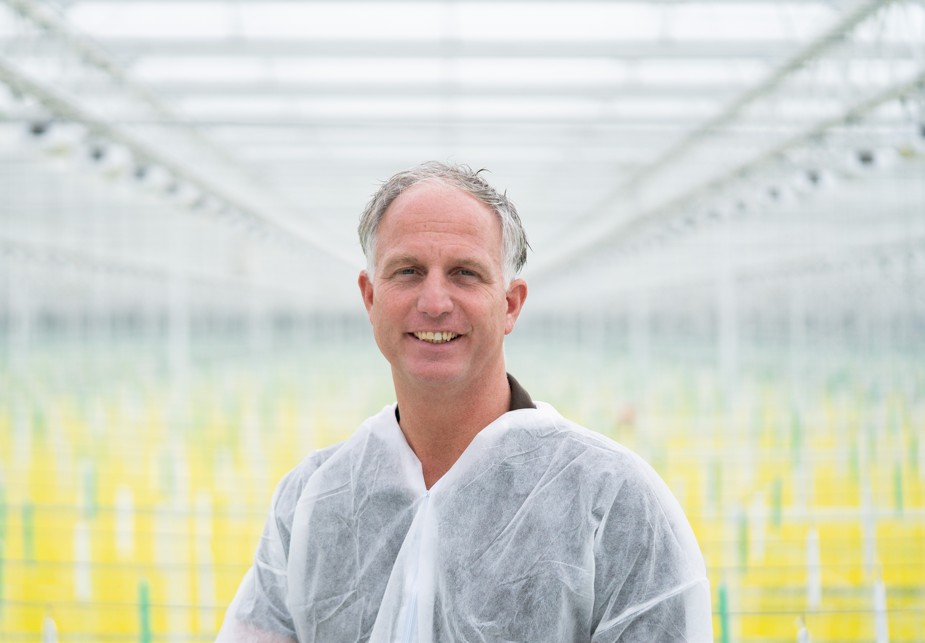
Warm, sunny summers are creating a familiar challenge for growers: keeping crops in balance while avoiding growth and quality issues. Since 2021, Lans has relied on a movable summer screen from Svensson to help manage these conditions. What began as a solution for a single greenhouse has since expanded to approximately 40 hectares. Vincent van der Lans, Director of Cultivation and Energy, shares his experience.
Lans was first introduced to summer screening while looking for a solution to a practical challenge. “In Rilland, we have a 1.5-hectare test greenhouse that contained a mechanical cooling system,” explains Vincent. “At a certain point, it stopped working properly. Because this greenhouse has limited ventilation capacity, we had to come up with something else to compensate for the loss of the cooling.”
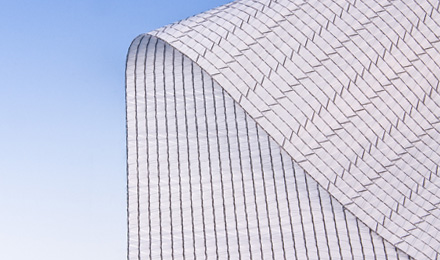
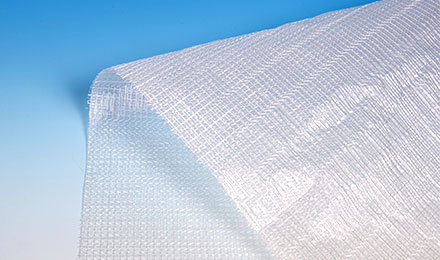
Together with Hugo Plaisier from Svensson, the team explored alternative options and ultimately selected the Harmony 2315 O FR diffuse summer screen. “The idea was to use it to keep out a portion of the solar energy that we previously had to cool out of the greenhouse with the cooling system.”
The results were immediate. “We soon realized that such a screen could also be interesting for our other greenhouses.”
40 hectares equipped for summer
Following the success of the initial installation, Lans began adding summer screens to more illuminated greenhouses starting in 2023. The expansion included both existing facilities, where only a blackout screen had previously been installed, and new greenhouse projects.
In the new greenhouses, Lans adopted a double-screen strategy, combining the Obscura 9950 FR W for blackout and the Harmony 2315 O FR for summer shading. Today, summer screens are installed across approximately 40 hectares of illuminated cultivation.
Especially valuable for illuminated cultivation
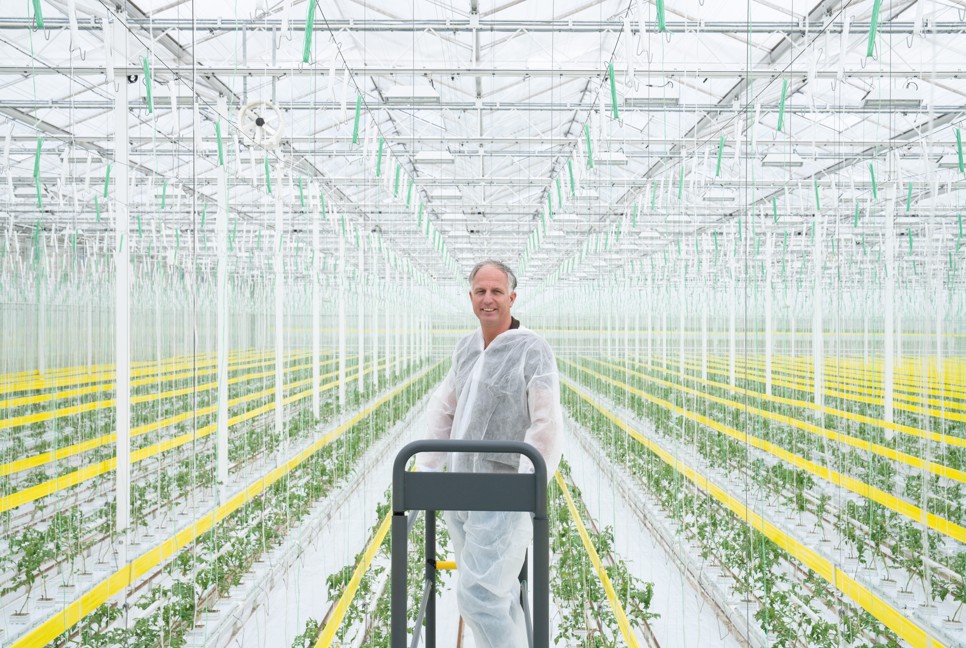
According to Vincent, the summer screen delivers the greatest value in illuminated crops. “The crop enters the summer in poorer condition than with non-illuminated cultivation, simply because it has already been in the greenhouse for well over half a year. Such a crop cannot evaporate sufficiently in warm and sunny weather, with all the associated consequences. You then have to either whitewash or use shading.”
For Lans, the key advantage of a movable screen is its flexibility. “On sunny days, we only use it for a few hours in the middle of the day. On cooler and more cloudy summer days, the screen remains open, allowing us to let in maximum light.”
This flexibility allows the team to adapt to changing conditions throughout the summer, providing protection when needed while maximizing available light whenever possible.
Less blossom end rot, better plant balance
The benefits of summer screening are reflected in the crop as well. During recent heatwaves, Lans observed improved control of blossom end rot in greenhouses equipped with the summer screen.
The screen also plays an important role after summer crop changes. “Then we protect the young plants from excessive sunlight. That promotes growth and helps to achieve the right plant balance,” Vincent explains.
Based on these experiences, Vincent considers the summer screen a valuable part of Lans' climate strategy, particularly as growers face increasingly hot summers.
No fixed setting, but keep watching
Installing a summer screen is only part of the equation. Using it effectively requires continuous adjustment based on both greenhouse conditions and crop needs.
At Lans, screen control is guided by irradiance and temperature, but the crop itself remains the most important factor. As conditions change throughout the season, screen strategies change as well. Rather than relying on fixed settings, the team continuously measures conditions, monitors crop performance, and adjusts screen use as needed to maintain the right balance.
Beyond summer benefits
The value of the summer screen extends well beyond the summer season. Thanks to its open structure, the Harmony 2315 O FR can also be closed at night to provide additional energy savings.
Used alongside the blackout screen, it helps reduce both energy consumption and heat loss from the greenhouse. As a result, the same screen supports multiple climate objectives throughout the year, making it a versatile part of Lans' climate strategy.
Another choice for non-lit cultivation
According to Vincent, the story is different in non-illuminated cultivation. Because crop rotations take place in winter, growers enter the summer with a younger, more vigorous crop, reducing the need for summer screening.
In these greenhouses, Lans prefers a transparent energy screen as the second screen. “In an unlit crop, you have a small plant in the winter that does not yet evaporate much. A closed energy screen fits well with that.”
For Vincent, the goal is not to apply the same screen strategy everywhere, but to select the right combination for each crop, cultivation schedule, and climate objective. That ability to tailor climate control to specific conditions is what has made summer screening a standard practice in Lans' illuminated crops.
Curious what made it all work?